
The Regret of a Creator: The Man Behind the World's Deadliest Weapon
AK47 making history

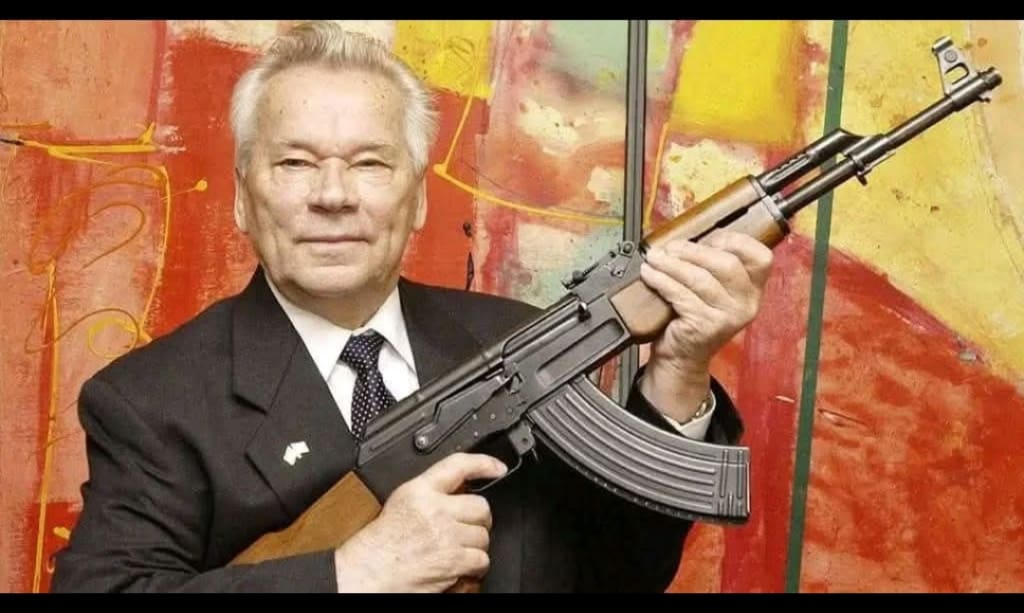
In 1947, deep within the Soviet military-industrial complex, a young Russian military engineer named Mikhail Kalashnikov gave birth to a weapon that would eventually shape modern warfare—and haunt his soul for the rest of his life.
Kalashnikov, a lieutenant general in the Soviet Army and a self-taught mechanical genius, was driven by a singular vision: to create a simple, reliable weapon to protect his homeland. War had already carved its scars into his life. He had seen fellow soldiers fall in battle, many due to malfunctioning or overly complex rifles. That pain led to innovation. From his hands, the AK-47 was born—a compact, durable, easy-to-use assault rifle that could function in mud, sand, water, or snow.
The rifle carried his name: Avtomat Kalashnikova 1947—the AK-47.
It was an invention meant for defense, a tool to safeguard a nation. But what Kalashnikov didn't anticipate was how the world would seize his creation—and turn it into a symbol of death.
Over the next few decades, the AK-47 exploded across the globe. From deserts to jungles, civil wars to gang wars, revolutions to terrorist attacks—the unmistakable outline of the AK-47 became a fixture in countless conflicts. It wasn't just a weapon; it became an icon. Cheap to manufacture, easy to operate, and devastatingly efficient, it was quickly adopted by armies, militias, warlords, guerrilla fighters, and criminals alike.
More than 100 million AK-47s (and its variants) are estimated to exist today. It is the most widely used firearm in the world.
But while the world held his weapon high, Kalashnikov himself began to feel the heavy weight of his creation’s legacy.
"I wish I had invented a lawnmower instead."
This haunting sentence, often quoted in interviews, reflected the deep regret that slowly consumed him. What began as a patriotic endeavor had spiraled into a global catastrophe of violence—and he felt helpless watching it unfold.
Mikhail Kalashnikov never profited from the weapon. He lived a modest life, honored in Russia as a national hero, but internally tormented. His was not the guilt of someone who sold death for money—but of a man who felt betrayed by humanity’s misuse of his intentions.
He often stated, “I created the weapon to protect the borders of my country. I never imagined it would be used by terrorists, bandits, and criminals.”
As the years went on, the bloodshed mounted. Kalashnikov watched images of child soldiers holding his weapon. He saw drug cartels flaunt it. He heard stories of massacres committed using his invention. And the question began to gnaw at him:
“Am I responsible for all these deaths?”
In 2013, just a year before his death, Kalashnikov—then 93 years old—wrote a deeply personal letter to the head of the Russian Orthodox Church. In it, he poured out his heart:
“My spiritual pain is unbearable. I keep asking myself the same question—if my rifle took people’s lives, am I responsible for their deaths... even if they were enemies?”
It was the confession of a man facing the end of his life, haunted not by war, but by the moral ambiguity of creation.
In that letter, he questioned not only himself but also the nature of mankind:
“Why did God allow man to have envy, aggression, and evil in his heart?”
These weren’t the words of a cold inventor or a proud soldier. They were the reflections of a man who had witnessed the darkness of human nature far too closely—and had become a reluctant symbol of it.
It’s important to remember: a weapon doesn’t pull its own trigger. Kalashnikov understood this too. He often emphasized that the rifle itself had no will, no intention. It was humanity’s choices—driven by power, greed, revenge, and fear—that transformed a tool into an instrument of mass killing.
He once said, “Blame the politicians, not the engineer.”
Still, despite that logic, his soul found no peace. He believed in duty. He believed in country. But he also believed in humanity, and he never expected it to fall so far.
Kalashnikov died in 2014, honored as a hero by the Russian state, but carrying a wound that medals could not heal. He was the creator of one of the deadliest weapons in history—and a man broken by the very legacy he left behind.
🖋️ "Mistrust the creation, if it ever overshadows the creator."
— A lesson from a man who invented a rifle, but longed only for peace.
About the Creator
Israr khan
I write to bring attention to the voices and faces of the missing, the unheard, and the forgotten. , — raising awareness, sparking hope, and keeping the search alive. Every person has a story. Every story deserves to be told.
Keep reading
More stories from Israr khan and writers in Fiction and other communities.
The Farmer, the world War2, and the Clever Plow
The world was at war. Borders were burning, cities were crumbling, and loyalties were being tested in the harshest of ways. In a quiet village, far removed from the battlefronts but not the consequences, lived a humble farmer. Like many others, his only concern had always been his land, his crops, and his family. But even remote lives get caught in the webs spun by great powers.
By Israr khan5 months ago in Fiction
So You Decided To Become a Nurse Practitioner:
So you decided to become an "Advanced Practice" nurse. Congratulations!... is what I would say if this was a good idea. Grad school? In this economy? What were you thinking? Likely it was something along the lines of either 1) “I've seen these other chucklefucks do it— Why can't I?” or even 2) “I've got a nice career, I should shake it up. I miss feeling like I have no clue what I'm doing.”
By Sandor Szabo2 days ago in Fiction


Comments (1)
deer kha