

The doctor stared pensively at his computer monitor for a short while before looking up at the worried woman seated before him.
“I’m sorry, Mrs. Weaver, but I’m afraid it’s exactly what I suspected.”
Her countenance quickly shifted from one of calm optimism to abject dread. She gripped the armrests of the clinic chair and struggled to compose herself. “Please, just tell me what’s wrong with my son."
The boy sat beside her, his seemingly vacant gaze fixed on the floor. He was clearly in his teens, yet displayed none of the youthful energy typical of somebody his age. He had also been silent since he arrived.
The doctor took off his glasses and placed them on the desk. “Your son has what we call ‘The Reach.’”
“The Reach?” she said. “What on Earth is that then?” She had brought her son in hopes of finding out why he had become so disengaged with life, not to be given some new, bizarre-sounding diagnosis.
“It’s a condition we’ve been seeing more frequently, particularly among adolescents.” He could see the woman growing increasingly anxious, but he continued, maintaining his measured tone. “It starts with apathy and a lack of motivation. They begin to withdraw from activities they once enjoyed. Schoolwork suffers, their attention span becomes almost nonexistent, and even simple conversation becomes an uphill struggle.”
She swallowed hard. “But I don’t understand what’s caused this. It’s like the lights are on but nobody’s home.”
The doctor glanced at the boy, who hadn’t said anything yet but had begun to shift his hands nervously. “It’s not a viral disease, nor is it a chemical imbalance. It’s more of a behavioral nature, but it’s still a sickness all the same.”
The boy’s fingers began to twitch.
Unable to contain her fear, she raised her voice. “What does that even mean? Are you saying he has depression or some kind of neurological disorder? Make this make sense to me!”
The doctor sighed under his breath. Then, with a knowing look, he nodded toward the boy. “Just watch.”
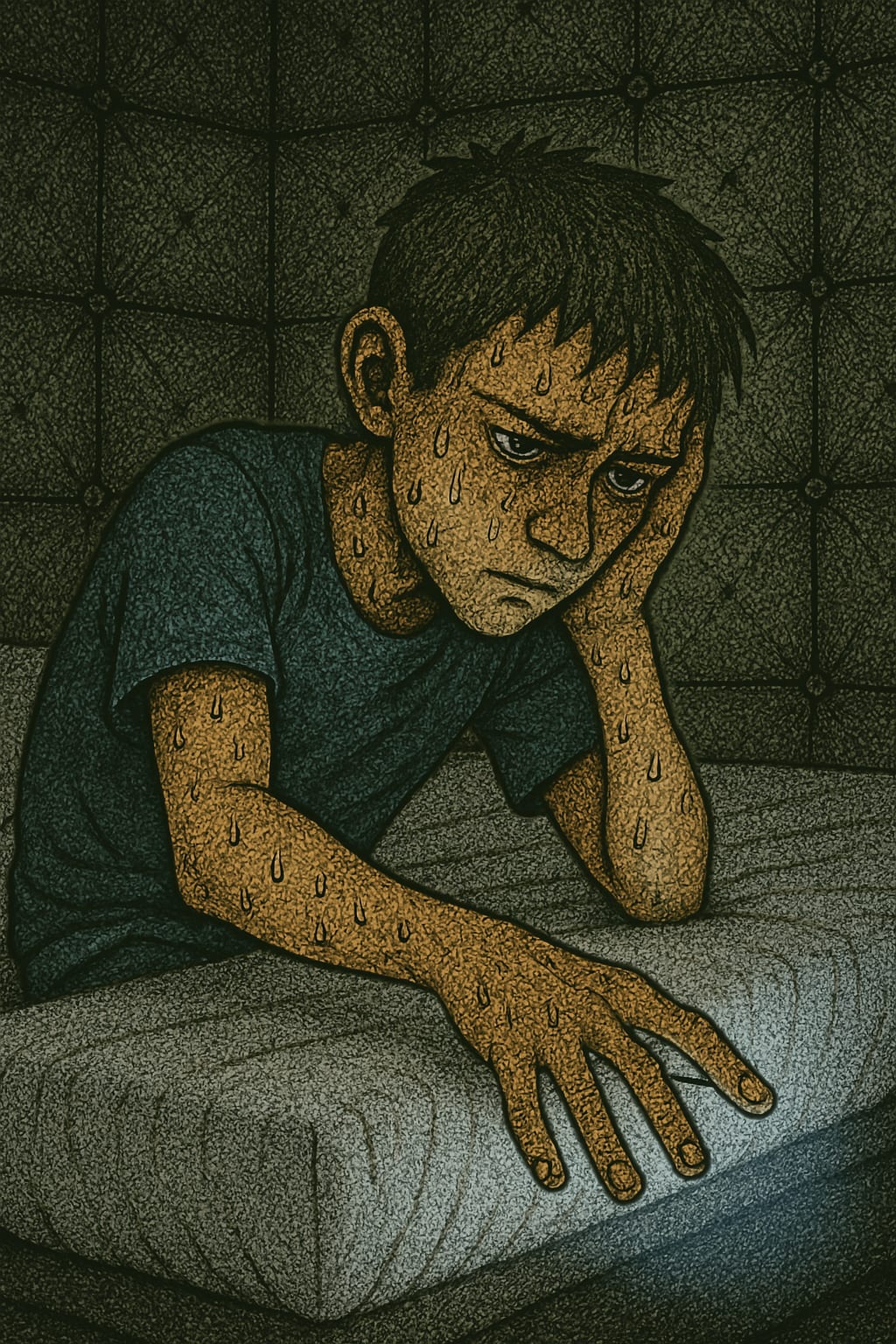
Almost paralyzed with dread, she slowly turned to her son. His hands had been in his lap since the moment he sat down, but they had become increasingly restless. Droplets of sweat had appeared on his forehead too. She could hear him breathing as if he was trying to resist any kind of movement and then noticed his empty gaze become one of laser focus. With a sudden tension of his fists, his right hand darted into the pocket of his jeans and pulled out his smartphone. In seconds, his distant expression vanished and his thumb was frantically moving up and down the screen.
The doctor turned his attention back to the woman. “The Reach,” he repeated. “A compulsion. An addiction. A complete rewiring of the brain.”
The mother began to sob. The boy didn’t even notice.
About the Creator
Mewstein Brandt
Breaking down 40 years of fear and finally putting pen to paper to see if I have what it takes to become a writer. Any advice or criticism welcome!
Keep reading
More stories from writers in Fiction and other communities.
So You Decided To Become a Nurse Practitioner:
So you decided to become an "Advanced Practice" nurse. Congratulations!... is what I would say if this was a good idea. Grad school? In this economy? What were you thinking? Likely it was something along the lines of either 1) “I've seen these other chucklefucks do it— Why can't I?” or even 2) “I've got a nice career, I should shake it up. I miss feeling like I have no clue what I'm doing.”
By Sandor Szabo2 days ago in Fiction




Comments (1)
I love this. The concept of "The Reach" is so familiar in today's world, where so many people seem to withdraw and lose themselves in screens. I've definitely been guilty of it!