
The Power of Fiction: Escaping Reality to Understand It Better
Fiction is often seen as a realm of imagination, a universe of made-up worlds, characters, and events

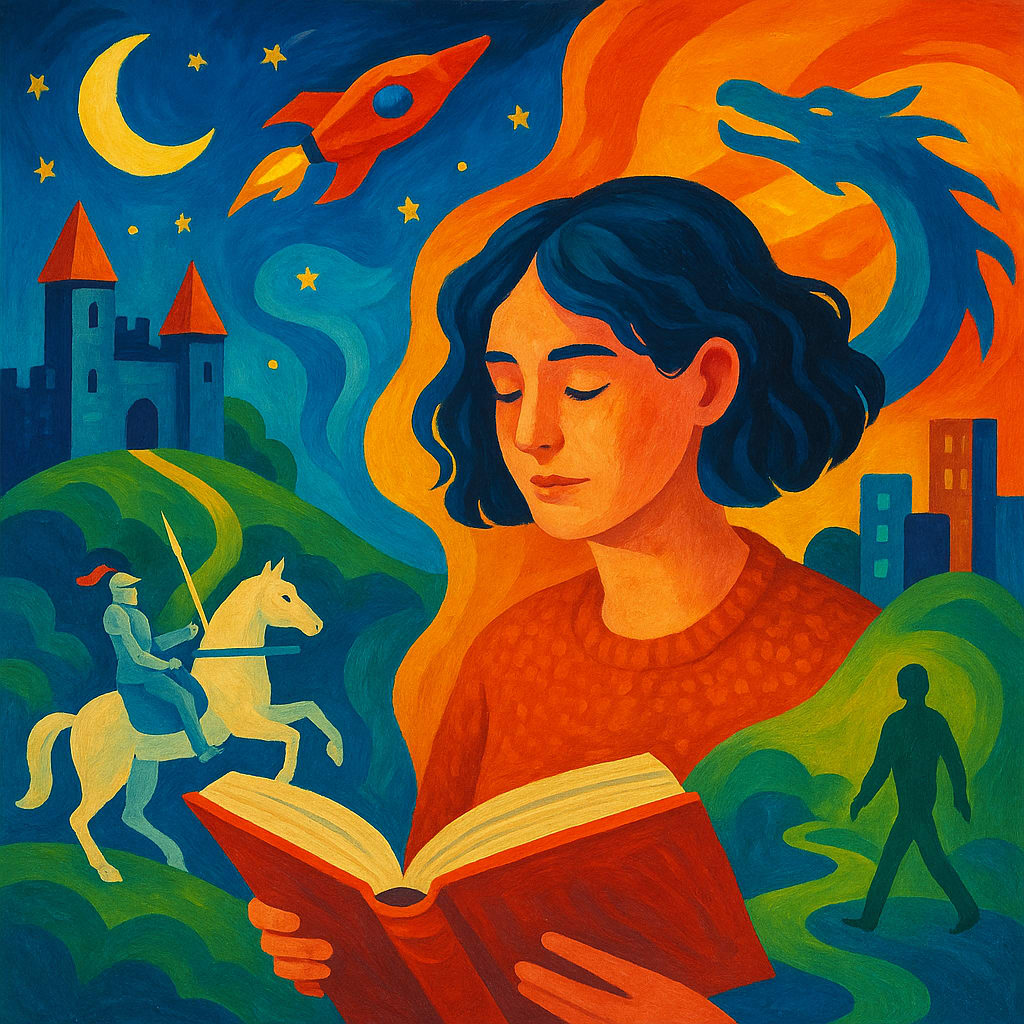
Fiction is often seen as a realm of imagination, a universe of made-up worlds, characters, and events. At its core, fiction is the art of storytelling—narratives not bound strictly to facts, but rather to possibilities. While it may appear to be an escape from reality, fiction has always played a significant role in shaping human thought, culture, and empathy. From ancient myths and fables to contemporary novels and short stories, fiction continues to influence how we perceive the world and ourselves.
One of the greatest strengths of fiction lies in its ability to transport readers to different realities. A novel can take you to medieval kingdoms, futuristic cities, or the mind of a misunderstood outcast. This journey into the unknown does more than entertain—it builds empathy. When readers engage with fictional characters, they experience emotions, struggles, and perspectives different from their own. Through the eyes of Atticus Finch in To Kill a Mockingbird, we explore justice and racism. Through the voice of Offred in The Handmaid’s Tale, we confront issues of gender and freedom. Fiction allows us to feel what it’s like to live another life, and in doing so, it deepens our understanding of the human condition.
Moreover, fiction acts as a mirror to society. Writers often reflect the political, cultural, and social realities of their time, disguised in narratives that captivate and provoke thought. George Orwell’s 1984 was not just a dystopian novel—it was a warning against authoritarianism. Chinua Achebe’s Things Fall Apart told the story of colonialism and its impact on African identity. Fiction enables writers to criticize, question, and even rebel against the world around them without direct confrontation. The symbolic and imaginative nature of fiction gives it power: the power to speak truths that are hard to hear.
Another compelling aspect of fiction is its role in personal growth and creativity. For many readers and writers, fiction serves as a form of therapy—a way to process trauma, dream of better futures, or explore “what if” scenarios. Writing fiction allows individuals to channel their emotions, experiences, and fears into narratives that give meaning to their inner world. Reading fiction can do the same. Research has shown that people who read fiction regularly tend to have stronger emotional intelligence and better interpersonal skills. These benefits come not from the plot itself, but from the act of engaging deeply with characters and their emotional journeys.
Fiction also plays a central role in education and intellectual development. Stories are one of the earliest ways we learn about morals, history, and society. Fables teach lessons about honesty, kindness, and courage. Historical novels bring past eras to life, making them more relatable and memorable than textbooks. Science fiction challenges readers to think about ethics in technology and the future of humanity. Fiction thus becomes a bridge between knowledge and imagination, facts and feelings.
In today’s digital world, fiction has expanded beyond books and entered multiple formats—films, web series, graphic novels, video games, and virtual reality. The core remains the same: storytelling. Whether it’s Harry Potter, Marvel superheroes, or a gripping Netflix drama, fictional narratives dominate popular culture. This popularity is a testament to our need for stories. Despite advancements in technology and science, humans still crave connection, wonder, and meaning—needs that fiction fulfills brilliantly.
However, fiction is not without its criticisms. Some argue that excessive immersion in fictional worlds can detach people from reality or create unrealistic expectations. Romantic novels, for example, are sometimes blamed for fostering idealized views of love. Action and fantasy genres can promote escapism over real-world action. But such concerns highlight not the flaws of fiction itself, but rather the responsibility of readers and writers. Fiction should inspire reflection and creativity, not delusion. When engaged with critically, fiction can enhance—not replace—reality.
In conclusion, fiction is more than just entertainment. It is a vital form of expression that bridges the gap between reality and imagination. It enables us to explore different perspectives, confront complex issues, and understand ourselves better. Whether read for pleasure, insight, or inspiration, fiction enriches the human experience in countless ways. As long as people seek to tell stories and to listen, fiction will remain a powerful force in literature and in life.
About the Creator
Sabrina
A curious soul weaving words across emotions, ideas, and the world around us. Her writing seeks meaning in the everyday and beauty in the untold.
The Devil's Cut
“Comrade, finally you’re awake.” The voice was smooth, sensual. A flickering incandescent bar was all that lit the white, sterile room. All Vladimir remembered was everything going black. He tried to move his arms and found them strapped to the gurney.
By Matthew J. Fromm3 days ago in Fiction


Comments
There are no comments for this story
Be the first to respond and start the conversation.