
The Pink Heart in the Cage: Escaping Society’s Expectations
Why your dreams don’t need permission to breathe

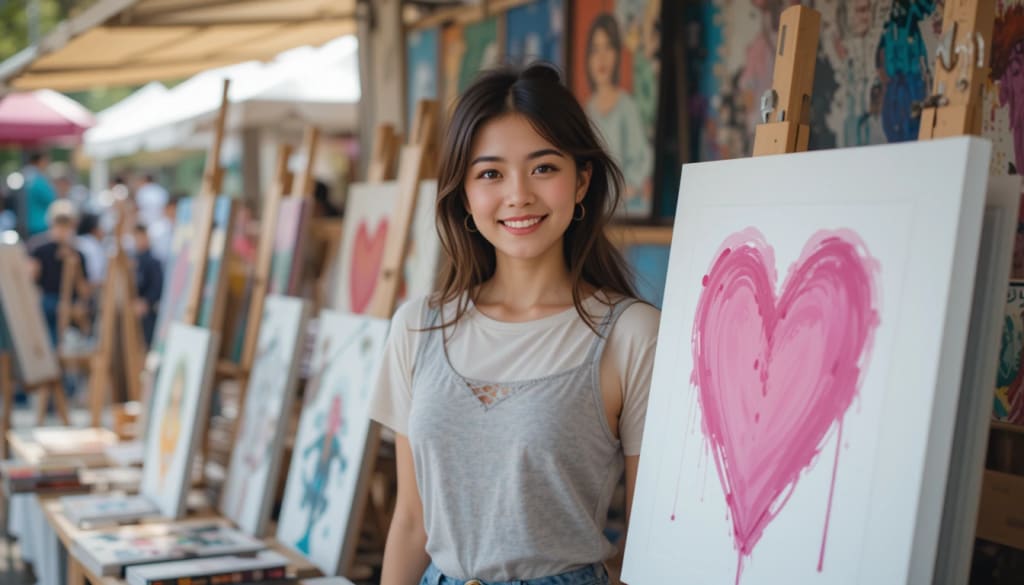
The morning sun spilled over Melbourne’s skyline, painting the Yarra River in hues of rose and gold. Zara stood on her balcony, a chipped mug of coffee in hand, her eyes tracing the city’s pulse. At 26, she was a graphic designer at a sleek advertising firm, her days filled with client briefs and tight deadlines. Her apartment was a Pinterest board come to life—minimalist furniture, pastel cushions, a vision board pinned with quotes about “hustle” and “success.” But inside her chest, a pink heart beat wildly, trapped in a cage of expectations she hadn’t built but felt bound to. Today, that heart was stirring, demanding to be let out.
Zara’s mornings were a ritual of precision. By 7:00 a.m., she was dressed in tailored trousers and a crisp blouse, her dark hair pulled into a neat bun. Her phone buzzed with notifications—emails from her boss, reminders for a pitch meeting, a text from her mother: Dinner Sunday? Your brother’s bringing his fiancée. Zara sighed. Her family was proud of her—first-generation Australian, a degree from RMIT, a job that paid for this view. But pride came with a script: climb the ladder, settle down, don’t rock the boat. The pink heart, the one that dreamed of painting murals and traveling without a plan, had no place in that story.
At the office, Zara sat in a glass-walled meeting room, her laptop open to a campaign for a luxury skincare brand. Her designs were sharp, on-brand, exactly what the client wanted. Her boss, Elise, nodded approval, but her praise felt hollow. “Great work, Zara. You’re our rising star.” The words should have warmed her, but they didn’t. They were another bar in the cage, another reason to stay small.
During a break, Zara scrolled through X, her feed a mix of influencers selling ambition and artists sharing raw, unfiltered work. A post stopped her: a vibrant mural of a pink heart bursting through a cage, captioned, “Your dreams don’t need a resume.” The image hit like a spark. She saved it, her fingers lingering on the screen. She’d always loved painting—big, messy canvases in her uni days, splashes of color that felt like freedom. But she’d traded that for a “real” career, one that checked society’s boxes. Now, the pink heart was screaming, and she couldn’t ignore it.
Back at her desk, Zara opened a blank file, not for a client but for herself. She sketched a heart, pink and pulsing, its edges fraying like it was breaking free. It wasn’t polished, but it was hers. Her coworker, Liam, leaned over, peering at her screen. “That’s new,” he said, his tone curious. “Not your usual style.”
Zara hesitated, then smiled. “Just messing around. Something for me.”
Liam raised an eyebrow. “You should do more of that. You light up when you’re not designing for suits.”
His words stayed with her as she left the office, the city buzzing with late-morning energy. Zara walked to a café near Flinders Street Station, her sketchbook in her bag. She ordered a flat white and sat by the window, watching commuters rush past. Her phone buzzed again—her best friend, Aisha, sending a link to a local art market. You should apply for a stall. Show your stuff. Zara’s first instinct was to say no—she wasn’t ready, her work wasn’t good enough. But the pink heart thumped, defiant. She typed back: Maybe I will.
The idea felt reckless, like stepping off a cliff. Zara hadn’t shown her art publicly since uni, when a professor had called her work “promising” but “unfocused.” She’d taken it as a verdict, proof she wasn’t a “real” artist. Society’s expectations—stability, success, a clear path—had been easier to follow. But easy wasn’t enough anymore. She opened her sketchbook and drew, the pink heart growing wings, its cage cracking. The lines were bold, unapologetic, and for the first time in months, Zara felt like she was breathing.
At home that evening, Zara spread her old canvases across her living room floor. They were vibrant, chaotic—portraits of strangers, abstract cityscapes, a pink heart woven into every one. She’d hidden them in a closet, afraid they didn’t fit her polished life. Now, they felt like pieces of herself she’d locked away. She stayed up past midnight, painting a new piece: a heart breaking free, its colors bleeding into a starry sky. It was messy, imperfect, but it was alive.
The next morning, Zara woke to a text from her mother: Your cousin’s engaged now. When’s your turn? The words stung, another reminder of the script she was supposed to follow. She didn’t reply. Instead, she emailed the art market organizers, attaching photos of her work. Her hands shook as she hit send, but the pink heart beat stronger, drowning out the doubt.
Days passed, and Zara’s routine shifted. She still went to the office, still met deadlines, but she carved out time for her art—mornings before work, evenings after dinner. She painted in her tiny balcony, the city’s hum her soundtrack. Her colleagues noticed a change—Liam called it a “glow,” Elise said she seemed “distracted.” Zara didn’t care. She was done asking permission to dream.
The art market acceptance came a week later, a simple email that made her heart race. She had a stall, a chance to show her work to strangers. Panic set in—What if no one liked it? What if she failed?—but she pushed it down. The pink heart didn’t need validation; it just needed to be seen.
The market was on a Saturday, under a canopy of trees in a Fitzroy park. Zara arrived early, her stall a riot of color—canvases propped on easels, prints stacked neatly. The pink heart painting was the centerpiece, its cage shattered, its wings wide. People drifted by, some pausing, some passing. A teenage girl with blue hair stopped, her eyes wide. “This is dope,” she said, pointing to the heart. “It’s like… it’s fighting to be free.”
Zara smiled, her chest warm. “That’s exactly it.”
An older man, his coat dusted with paint, lingered next. “You’ve got something here,” he said. “Reminds me of Basquiat, but softer. Keep going.” He bought a small print, and Zara tucked the cash into her bag, not for the money but for the connection. Each comment, each glance, felt like a crack in the cage.
By noon, the market was packed—families, artists, hipsters with reusable coffee cups. A woman in her forties, her arms full of market bags, stopped at Zara’s stall. “This one,” she said, touching the pink heart painting. “It’s like you painted my life. I’ve been stuck in a job I hate, doing what everyone expects. This makes me want to… I don’t know, try again.”
Zara’s throat tightened. “I get it,” she said. “I painted this because I was stuck too.”
The woman bought the painting, and Zara watched her walk away, the canvas under her arm. It wasn’t just a sale—it was proof that her dreams could breathe, could touch someone else. She pulled out her sketchbook and wrote: The cage isn’t real. It’s just the story we tell ourselves.
That evening, Zara went to dinner at her parents’ house, a cozy terrace in Brunswick. Her mother served lamb curry, her father asked about her job, her brother teased her about being “too artsy.” Zara didn’t argue. She told them about the market, about the people who saw themselves in her work. Her mother’s eyes softened. “I didn’t know you were still painting,” she said. “I’m proud of you, Zara.”
The words were small, but they were enough. Zara drove home under a sky streaked with pink, the city alive around her. She thought of the X post, the mural of the heart breaking free. She opened her phone and posted a photo of her stall, the pink heart painting glowing in the sun. Her caption read: “Your dreams don’t need permission. Let them breathe.” Comments poured in—friends, strangers, the teenage girl from the market. One wrote, “This is everything. Thank you.”
Zara didn’t quit her job. She didn’t need to. The cage wasn’t her career or her family—it was the idea that she had to choose one version of herself. She could be a designer and an artist, a daughter and a dreamer. The pink heart was hers, and it was free.
The next morning, Zara woke to the same sunrise, the same city. But she felt different, lighter. She painted before work, a new canvas of a heart soaring over Melbourne’s skyline. At the office, she pitched a bold campaign idea, one that felt like her art—vibrant, unafraid. Elise raised an eyebrow but approved it. Liam grinned. “There’s the Zara I knew was in there.”
The pink heart kept beating, through days of deadlines and nights of painting, through family dinners and solo walks along the Yarra. It didn’t need permission, didn’t need a script. It just needed Zara to listen, to let it out of the cage. And in its freedom, she found her own.
About the Creator
Shohel Rana
As a professional article writer for Vocal Media, I craft engaging, high-quality content tailored to diverse audiences. My expertise ensures well-researched, compelling articles that inform, inspire, and captivate readers effectively.
Keep reading
More stories from Shohel Rana and writers in Fiction and other communities.
The Baroque Mirror: What Classical Art Tells Us About Today
The morning sun poured through the tall windows of the art gallery, casting golden streaks across the polished wood floor. Lena stood before a massive Baroque painting, her sketchbook tucked under her arm, her eyes tracing the swirling drama of Caravaggio’s The Calling of St. Matthew. At 28, she was an art history graduate student, part-time curator, and full-time searcher for meaning in a world that felt increasingly fractured. Today, in this quiet Chicago gallery, the painting was more than a masterpiece—it was a mirror, reflecting truths about her life and the chaos of the present.
By Shohel Rana8 months ago in Fiction
The Devil's Cut
“Comrade, finally you’re awake.” The voice was smooth, sensual. A flickering incandescent bar was all that lit the white, sterile room. All Vladimir remembered was everything going black. He tried to move his arms and found them strapped to the gurney.
By Matthew J. Fromm7 days ago in Fiction


Comments (1)
Zara's story hits close to home. I've felt that cage of expectations. Seeing that mural made me think we should all break free and follow our real dreams.