
The Perfect Pear
a heartbreak you didn't know you could overcome

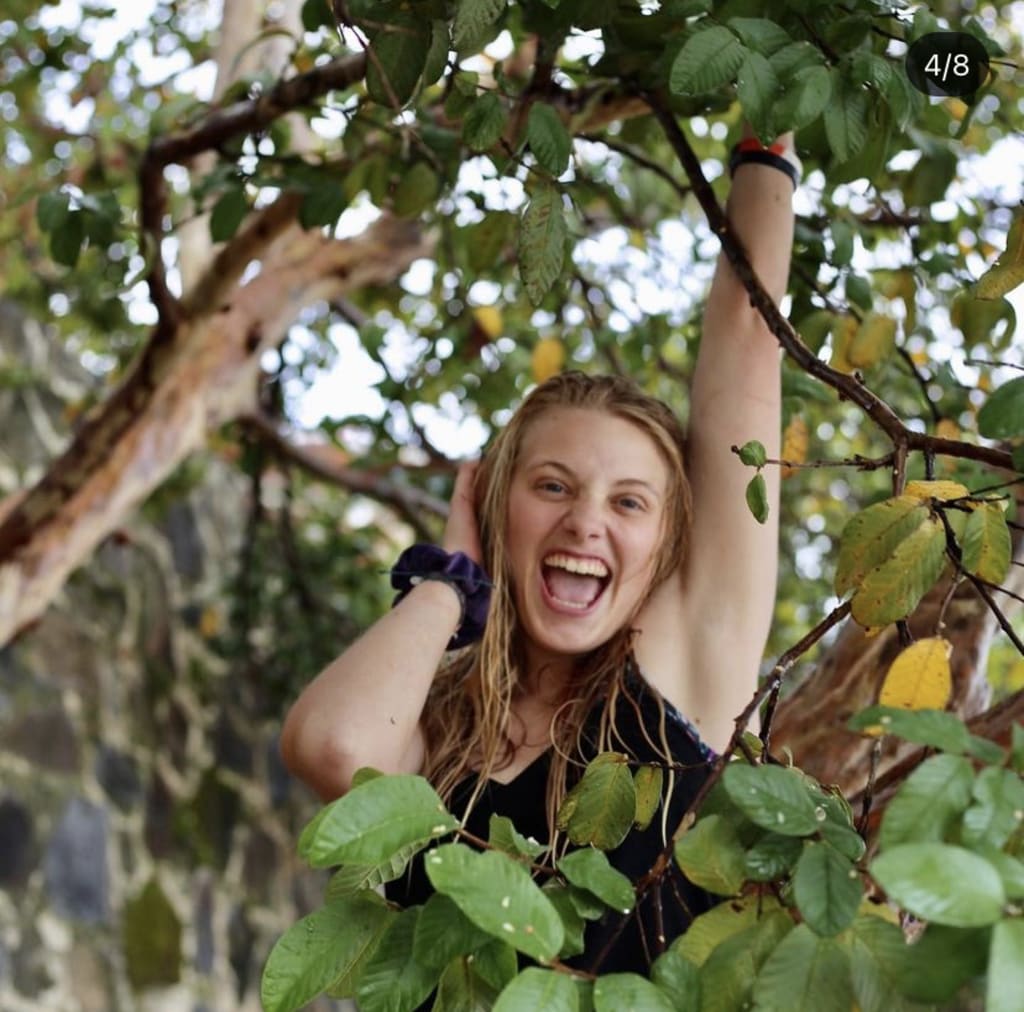
I can still hear her melodious laughter in my dreams.
I long to stay under the blanket of slumber to see her face again, feel her touch, hear her lilting voice; but my buzzing alarm clock screams its objections.
With a groan, I slap the old-fashioned black box: the enemy of my dreams.
“Don’t let it beat you, Jonah,” my dad would say. “You still have bills to pay.”
I roll out of bed and trudge to my closet. The dull clothing options─white button-down and khaki slacks─match my melancholy.
I put little effort into getting ready for work, drive to my office building, drink crappy coffee. I squeeze into the crowded elevator and get off on the third floor. I don’t speak to my coworkers as I move numbly to my cubicle.
When did my best friends fade into work acquaintances? When did I stop talking to the two comrades with whom I started this job?
When Emily left.
Every day it’s like this. I stare at a blank page, a blinking cursor reminding me of the work piling up, wishing for her.
My phone rings, and I answer quickly, thankful for the distraction from my daunting task.
“Hello?”
“Mr. Bailey.”
My boss.
“Yes, sir?”
“Meet me in my office when you have a spare moment, would you?”
I agree, hang up, stand. I wipe my sweaty palms on my pants before entering the office. My boss, James Cook, offers me a seat.
“Mr. Bailey, I’m worried about you. We all are. You’re not yourself and haven’t been for weeks. I think it would be best if you took some time.”
I stare with wide eyes. “Do you mean...am I fired?”
Mr. Cook exclaims, “Hell no! I’m not firing you, Bailey. I just think you should take some time to recover. Try to rest. Eat a vegetable. Hide the alcohol. Whatever you need to do, you have three weeks.”
None of this feels real. My mind is a million miles away; I watch myself stand and shake Cook’s hand. I thank him. Cook’s eyes are full of pity as he watches me walk back to my cubicle.
I look one last time at that blank page. I’ll miss it least of all.
Coffee forgotten, I find the elevator and leave without an explanation toward my coworkers. The Jonah of two years ago would never have predicted that one day he’d be given paid leave to cope with a broken heart.
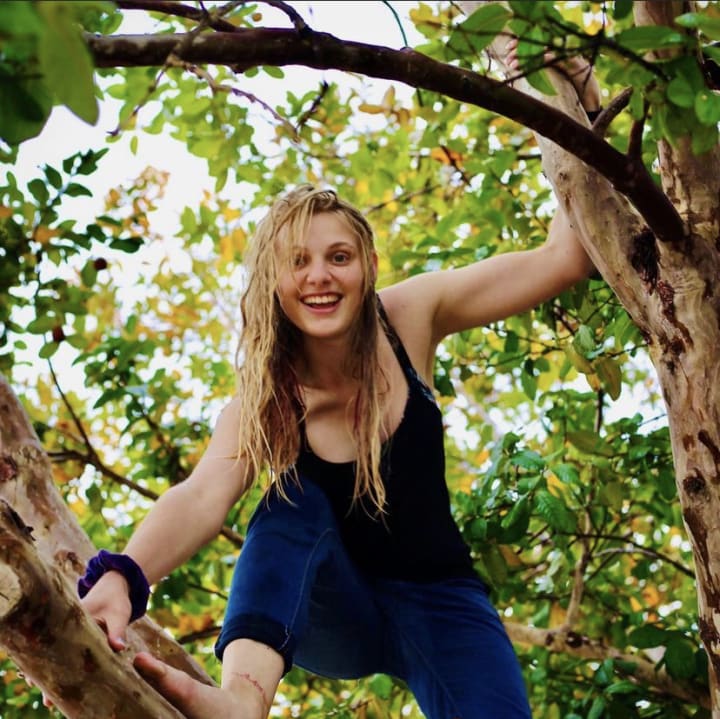
I met Emily Walker when I started kindergarten. We sat next to each other in class and played together at recess. Our moms met at the birthday party of a classmate. Once they became friends, they scheduled more playdates for Emily and me. Emily was more outspoken than I was. From the moment that we became friends, she took on the role of leader.
Emily was an enigmatic mix of dress-wearing princess and mud-throwing, toad-catching tomboy. She challenged me, beat me at every contest, and planned elaborate schemes seemingly just to prove she could.
“Jonah. Meeting. Now,” Emily hissed from underneath a large bush in her backyard that served as our hideout. Bulky frames took up half her face, and she held a dirty notebook in her hands for scribbling our fake meeting notes.
I stopped the little game I was playing and crawled into the meeting space.
“Witch’s fat cat broke his collar on a fence, and he got a brand new one.” Emily was talking about her neighbor, a skinny woman with short, tight curls and a pointy nose. “The point is, Fat Cat’s new color has a magical gemstone in it.”
I gasped, staring at Emily. She never failed to amaze me with all her eclectic knowledge.
“You see,” she continued, “my dad was watching Natural Gegraphic, and these arch-ologists are searching for the exact artifact that is embedded in Fat Cat’s new collar.”
“We could get rich!” I exclaimed. “All we--”
“No, you dummy!” Emily interrupted. “We are stealing that artifact. Do you know how much power we would have? Probably only the Witch herself has access to such magic.”
“What spells would we cast?” I asked.
Emily rolled her eyes. “Have a little imagination, would you, Jonah? We could do anything we wanted! Your mom would buy you a trampoline! We could eat candy forever. We could hypnotize our parents into letting us stay up all night, and we’d never have to brush our teeth, and I could have Pepsi!”
“What are our obstacles?” I asked in my most official-sounding voice.
“Dad says that we have to stay out of Witch’s yard. That means we have to lure Fat Cat to us.”
For weeks, Emily and I tried everything to trick Fat Cat into coming into her yard. We trapped a bunch of toads and let them loose as soon as Fat Cat came around, but the lazy thing wasn’t interested. Emily bought cat treats at the dollar store with her mom’s money, but Fat Cat just turned up his nose at us! Lazy as he was, we couldn’t even catch him while running our fastest.
“Don’t you see, Jonah?” she would ask me. “He has to be magic. How else could he outrun us and fit through those hiding spots?”
Eventually, we tired of the mission and moved onto something else.
In an attempt to finally beat Emily at something, I tricked her. If I couldn’t run faster, I would have to outsmart her. I declared a race to the veterinary clinic but cut through another yard to get there. No one lived in this particular house, so the grass was nearly as tall as my shoulders, but I was determined to win.
The grass made it impossible to see the actual ground, and before I knew it, I had slipped on something with a nauseating squelch. I landed face-first on the ground, the towering grass making me feel like a tiger in the savannah. As I pushed myself up to my hands and knees, I noticed a brown, rotting pear next to my hand. With a yelp, I jumped up.
It was clear where it came from: a mature pear tree just a few feet away from me. Race forgotten, the first thing I thought was, “Emily’s going to love this.”
“Jonah!” Her voice echoed in the distance. She probably heard my cry when I almost touched that rotting fruit.
“I’m...over here!” I headed in the direction of her voice. “Emily?”
“Jonah!”
We played this game of Marco Polo until she finally found me at the edge of the yard.
“Jonah, what are you doing? Did you forget about our race?” she asked with sass, her hand on a popped hip.
“Come here. I want to show you something.”
I haughtily led Emily to my pear tree discovery.
“Cool!” she breathed in awe, slowly stepping toward it. Then suddenly, “Race ya to the top!”
I stumbled forward in an attempt to compete, but I was no match. Emily grabbed onto a low-hanging branch and began her ascent before I even made it to the trunk.
“Have you eaten one of these?” she asked, picking a pear from the top. I shook my head. She grabbed another and handed it to me. “On the count of three. Ready?” I waited for her cue. “One...two...three!”
We each bit into our fruit, only to spit it out immediately.
“Yuck!” I shouted, scraping my tongue to get the bugs out of my mouth.
Emily squealed with laughter. “New rule. We have to cut open the pears before taking a bite.”
The discovery of the pear tree only fed Emily’s adventurous spirit.
We forged weapons using flimsy branches and vines. Emily suggested we “close the borders” of our hideout, so, after finding a way into the old house, we stole cabinet doors and nails to block out the bottom branches
“But Emily,” I asked, “How are we going to get up there?”
She thought for a moment. “A rope ladder, of course!”
At 11 years old, not much had changed, except Emily had only gotten faster. Still wearing dresses and combat boots, she became the target of petty rich girls whose daily goal was to make Emily cry. To my amazement, she never did. Emily didn’t break down in front of anyone. She kept a stiff upper lip, said their shallow words didn’t hurt her. I never knew if they did or not.
Every day after school, Emily and I raced to the pear tree, our secret hideout. Sometimes we would do our homework there, either hidden up in the branches or sitting on the ground, our backs supported by the sturdy trunk.
The condemned house in front of it still hid us from the highway, but since becoming city property, the lawn was required to be trimmed neatly. This proved to be a plus for Emily and me; we returned home with noticeably fewer ticks and other bug bites. We still battled the ants for the pears, but we admitted that some wars couldn’t be won.
“I have the mission of a lifetime, Jonah,” Emily announced one day, gliding effortlessly to the top of the tree, glaring into the distance. She had my attention. “My mom is leaving. For real this time. She told me last night after dinner.”
I felt a pang in my chest at the news. I’d heard my parents gossip about “how they could put their daughter through this,” but I didn’t understand until now.
“We just need to remind them that they’re in love...and that they love me, and then Mom can’t leave.”
I had never heard Emily so unsure. And despite all our efforts, we realized again that not all wars could be won.
When Emily’s mom moved away, Emily came to my house for dinner every night, and my parents welcomed her with open arms.
One hot afternoon at the tree, Emily was swinging from a rope she’d tied to one of the higher branches. She asked me. “Do you think Witch’s mom ever moved out?” She answered herself: “Probably not. Do you know why? It’s because she can do magic.”
That evening, after dinner, Emily snuck into my mom’s flower garden and picked petals off different flowers.
“Emily,” I hissed, glancing toward the kitchen window, “What are you doing? My mom’s gonna flip.”
“Yeah, well my dad doesn’t garden, and I need to make my potions somehow.”
Emily checked out books about household magic, potions, and spells. She saved every glass bottle and ravaged the public recycling bin for other things she could use. She made necklaces from glass shards, claiming that it was a “conductor of magic.” She spent more time than ever watching her neighbor and copying what she did. Because if she was thinking about magic, she wasn’t missing her mom.
“If you hang the flowers upside-down, they dry out without dying,” she told me, using a scrunchie to secure a stolen bouquet to the blinds in her bedroom window.
When none of her spells worked, she would grumble in her neighbor’s direction, “I need that artifact.”
Three years later, I knew our dynamic was shifting. We still went to the pear tree every day after school, but Emily was changing. She straightened and highlighted her hair. She wore skinny jeans and Converse every day. Her ears were pierced, and she stopped believing in magic. The most different thing about her was that she had gotten quiet. I had considered her the leader for so long, I didn’t know what to do without her announcements and missions.
Instead of racing and throwing mushy pears at each other, we quietly did our homework before splitting to our own homes. We didn’t eat dinner together or scheme against the world. We didn’t wrestle anymore, but I wasn’t sure if we were allowed to. Why did high school have to change everything?
For the entirety of our 14th year, I tried my hardest to adjust to our new normal. I was just getting used to the awkward silences when once again, Emily changed things.
We were sitting underneath the pear tree, my science textbook open on my lap. Emily wasn’t working on anything. When I asked where her homework was, she mumbled and shrugged.
My heart skipped a beat when I felt Emily’s warm, slender body slump against me. I tried to peek at her and saw that she was asleep, her head resting against the tree trunk.
Emily and I had been inseparable for nine years, having sleepovers and being each other’s lighthouse in an otherwise dark ocean. But this felt different. Suddenly, I saw Emily as a girl--not just a friend.
Our parents were less than shocked when they noticed our handholding and deep blushes. They talked together about how they saw it coming all along.
“I hear wedding bells,” our moms would tease.
They weren’t far off. We were only 16, but within two months, we knew it was love. We even had our first kiss right there in the dependable branches of the pear tree.
On our first anniversary, Emily said to me, “You know what we have to do, right?”
We ran to the pear tree with her dad’s pocket knife and did what every cliche couple did--we marked the tree as ours, carving our initials and a jagged heart around them.
Graduation was hard on us, hard on our relationship. We attended different four-year colleges. Communication was strained, and the heavy schoolwork was getting to us. Emily had made new friends, half of them male. I, of course, made friends too, but it felt different. I just wanted to walk campus with my arm around her, letting all the other guys know that she was taken.
We fought, cried, and talked about breaking up, but on Christmas break our junior year, I asked her to go on a walk with me. I held her close as our muscle memory took us to the pear tree. We trudged through the damp snow to get to the base of the tree. Emily took a seat on the sturdy swing that replaced the unstable rope from our childhood. My hands were shaking but not from the cold. Emily and I hadn’t spoken the entire walk, and I was nervous that she was going to do it--going to break up with me.
I forced myself to speak up before she had the chance to.
“Emily, I know these last few years have been rough. It’s hard not being able to see you every day, and even though I trust you, it hurts knowing you have other guys by your side at every moment. I’m jealous because I want to be there, too.” She watched me, tired from having the same conversations about fidelity over and over again. “The point is, Em, that I want to promise that I’m not going anywhere. That even if we spend the next year and a half yelling over the phone at each other, I want that because I want you. Love isn’t easy, but I’m not going to bail. I’m not quitting. I promise.”
As I emphasized that last word, I pulled a small silver band from my pocket and handed it to her. I recited the inscriptions:
“Emily and Jonah, the perfect pear.”
Tears in her eyes, she chuckled slightly, admiring the mock peridot and white topaz.
“Thank you,” she whispered.
She had stayed so still and quiet, I was caught off guard when she jumped up and threw her arms around me, repeating her thanks as we rocked back and forth.
With the new hope that we wouldn’t break up, my trust in her grew, as did her patience for me. Our relationship was better than ever.
That summer, we returned to the pear tree to see that the old abandoned house had been torn down. We stared at the space where it once had been and took a moment of silence to mourn. Emily didn’t know it at the time, but I had planned on using that old house for my own secret mission later in the summer.
In late July, I stayed at the tree for hours, mowing the lot, then building an extravagant archway from chicken wire. My parents helped me turn the atmosphere into something magical. Dad found a way to keep the archway sturdy, and Mom helped me cover it with silk foliage and pieces of our past.
From each branch of the pear tree, I tied a string attached to a picture of Emily and me, ranging from our first year of friendship, all the way up to the present.
“It looks great, baby,” my mother assured when I finished, wrapping me in a hug.
“I’m proud of you, son,” my father said with a hand clap to my shoulder.
The next morning, I picked Emily up from her dad’s house just before the sunrise, the morning dew still glistening.
She groaned as I shook her awake, “If the sun isn’t awake, then neither am I.”
“Please get up,” I beckoned. “Take a walk with me.”
“Fine.” She smirked, throwing her pillow at me.
Hand in hand, we approached our hiding place just as the sun had risen above the trees. Emily said nothing as she admired all my hard work from the day before. She walked through the archway, taking in the nostalgia. She laughed when she noticed some of her handmade weaponry leaning against it. She picked up the bow and pretended to shoot at me.
Emily carefully set it down as colorful shards of glass glistened in the sun, hanging from the wire, reminding us of all those necklaces Emily used to make.
After passing through, she slowly climbed the tree branches to examine each picture. When she turned around to descend, she saw me on my knee, a velvet ring box in my shaking hands.
“Jonah,” she whispered, climbing down.
“Emily. I love your laugh, style, adventurous spirit, and how bold you are. You take charge of your future, which is one of the reasons I realized I needed to do this before you did.” She chuckled softly, adoration in her eyes. “I’ve loved you forever, Emily. Every memory I have glows with your presence. I would be empty without you. I can’t even picture my life without you. Even when things got hard…” My voice broke, and I swallowed. “...I knew I would be ruined if I lost you. I still remember drawing up our future at 16, planning for this moment.” I swallowed again. “I wouldn’t change a thing about our story--the plots and pranks, the sleepovers, stealing from the Witch’s backyard…”
Emily threw her head back laughing at the mention of the cruel nickname we had given her innocent neighbor in our youth. That laugh was music to me.
“Emily Walker...will you keep writing me into your future? Will you daydream with me while we picnic in the soft grass? Will you marry me?”
Emily nodded, tears streaming down her face and dripping off her chin. She didn’t focus on the diamond ring in my hand. She knelt on the ground, held my face in her hands, and planted the sweetest, most delicate kiss on my lips. My heart pounded. I needed to hear it.
I studied her as she pulled away, still staring at me.
“Emily?” I prompted softly.
“Yes,” she breathed, a huge smile on her face. “I want to write you into my future. Yes, I will marry you.”
A sigh of relief left me, and I pulled her into my arms, not wanting to let go. I didn’t mind losing my balance, falling backward into the damp grass, laughing as we tried to catch ourselves.
I looked into Emily’s eyes once we were still and blinked slowly.
“I could get used to lying next to you.”
After graduation, our parents once again assisted in making our special day perfect. We decorated the open lot, the home of the pear tree, with flowers, tulle, and ribbons in pink hues. Our families and college friends attended our private ceremony, and Emily and I became husband and wife right in front of the carving of our initials on the tree. It was the most magical moment of my entire life.
We rented a house there in our small town and befriended other young couples in the neighborhood. We made an effort to socialize by hosting dinners and game nights, to make up for the way we reclused ourselves during primary school.
Emily and I regularly dreamed of buying the lot where we spent our childhood and building a house and raising kids who could play where we did. We drew up many versions of our future home, saving paint swatches to plan the interior decor. We debated on whether we wanted a fenced-in yard or open, if we wanted pets or no, but our heaviest conversations involved our future children. How many? When should we start? Would we homeschool or public school?
We never reached any answers as each argument would end in jokes, laughter, and affection.
“Emily? I just got to the car. I’ll meet you in an hour.”
“At the pear tree, Jonah. Meet me at the tree.”
I had just flown back from a cousin’s wedding. Emily had to stay home for work, so I hadn’t seen her for a week. As soon as I picked up my luggage, I raced to the car, cursing the hour-long drive.
I set cruise control seven miles-per-hour above the limit, eager to see my wife of two and a half years. I saw the storm clouds to the north but didn’t note them. I had one thing on my mind: Emily.
“Almost there,” I whispered to myself every 15 minutes.
Twenty miles outside of town, rain started to pelt my windshield. I grabbed my phone to call Emily with an update.
“My love, I’m about 20 miles away. Do you still want to meet at the pear tree?”
“Yes,” she agreed, her voice light. “Be careful, though, Jonah. It’s pouring here.”
“Yeah, I noticed,” I mumbled as the wind picked up. “I’ll call you when I get to town, okay? You be careful, too.”
Despite all the dreaming we did, we hadn’t actually visited the pear tree in over a year. With our own space, we didn’t feel the need to. I wondered what Emily had planned.
Just outside of town, I slowed down to inch around a car accident. The rain was coming down so hard, I could barely see two feet in front of me. That paired with the high winds made driving almost impossible.
I pulled into a parking lot and called Emily. She didn’t answer. I swore under my breath and tried again. I thought about running the rest of the way there. I couldn't have been more than a mile away.
Before I made a decision, a collection of sirens wailed into the air. My stomach knotted with anxiety thinking about the accident I had just passed. It wasn’t long until I saw the ambulance, police car, and firetruck to my left.
I knew that area.
Leaving my keys and phone behind, I leaped out of the car, breaking into a sprint immediately.
When I got there, all I could see beyond the flashing lights was the pear tree, snapped in half. I didn’t realize at first that the police were holding me back. Their mouths were moving, but I didn’t hear a sound. I yelled for Emily. My stomach twisted at the sight of a gurney being hoisted into the ambulance. I broke free from the officers and bolted toward the paramedics.
“Who is it?” I shouted, grabbing a paramedic by the shoulders.
In an instant, I was yanked backward, restrained by two officers. I screamed and yelled, demanding to see in that zipped-up bag. Unbearable pain settled in my chest. I knew.
My knees gave way, and I hit the ground, slipping through the officers’ hands. I sunk my fingers into the cold, wet earth balling my fists. Guttural, hopeless cries escaped me. I didn’t even taste the dirt on my lips; every sense was damped by the ripping pain in my chest.
Firm but loving hands grabbed my shoulders. When did my dad arrive?
“Come on, son. It’s time to go.”
My surroundings blurred as my father ushered me into his car.
“Could you meet us there?” an officer asked. My father agreed. “Here...She, uh...she had this with her.”
My dad choked out a curse, biting back tears of his own.
A home pregnancy test told me that we were going to have a baby.
I stayed with my parents for a while. They were scared to leave me alone. But whatever I did, I kept that drug store test in my hand or my pocket, desperate to feel close to her, begging God to give me back my wife. To give me back my future.
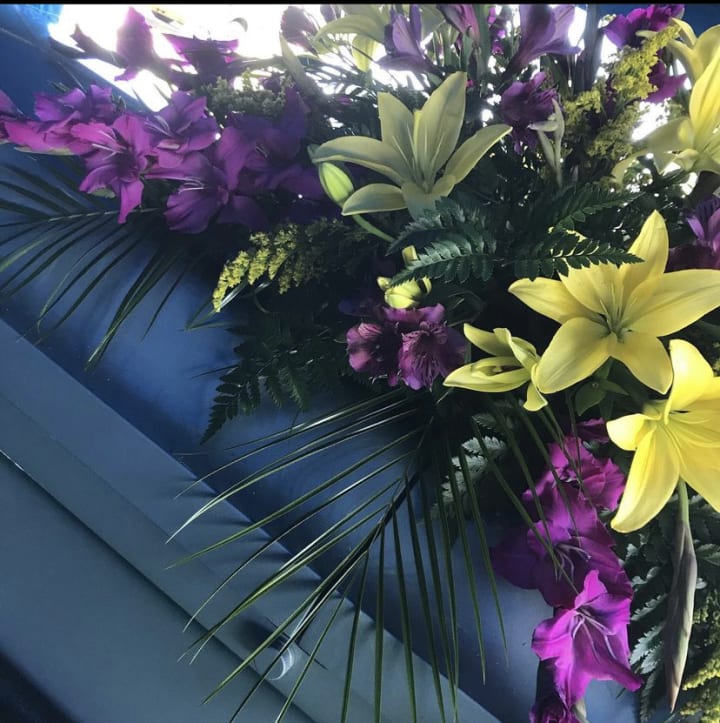
When I get home from the office, I slam the door shut behind me. What does Mr. Cook expect me to do with my time? With nowhere to go, all I can do is wallow. It takes three days for me to finally roll out of bed.
After one month, I still growl into the mirror, “If you hadn’t gone to that wedding, if you had gotten home faster, your wife would be alive, and you’d be expecting a child.”
But I did go to that wedding. And even though I wake up every day hoping to hold Emily in my arms just one more time, I know that I can’t turn back time.
You can’t let it beat you, Jonah.
What does Dad mean by that?
I want to lie in bed and cover my head with blankets, but a thought buzzes in my mind, demanding to be entertained. What would Emily do if the roles were reversed? She would get up, take charge. She would wring grief by the neck and do something productive.
So, I slowly enter my wife’s study and sit at her oak desk. My breath hitches; I can almost feel her.
For the first time in over a month, I work--I use the notebook where my wife and I doodled floor plans for our dream house, and I draw up the key to my healing: a memorial celebrating the life of the greatest woman to ever grace this town.
About the Creator
Hannah Pugh
“So many scenarios, characters, and ideas live inside my head. I can’t possibly keep them there. Putting them on paper is my way of giving them life.”
That’s why I write.
Keep reading
More stories from Hannah Pugh and writers in Fiction and other communities.
What It Takes to Be a Bear
My Bedtime Anytime Storybook by V. Gilbert Beers is a collection of stories that follows six friends—Bru the bear, KaWally the koala, McWhiskers the mouse, PJ the zebra, Puddles the hippo, and Tux the penguin—who learn lessons about friendship, sharing, forgiveness, and working together. It’s a fun storybook with the occasional subtle nod to God being the Creator of all living things.
By Hannah Pugh5 years ago in Fiction
Wild Card Weekend Recap: What Happens Now?
I think I figured out why I love Wild Card Weekend so much. It's because it's the first playoff anything of the calendar year. The NFL season starts in the fall, and once upon a time, the champion was crowned either on or slightly before New Year's. The evolution of the NFL schedule has resulted in the playoffs starting just into the New Year, and currently, the final week of the season falls on the first weekend of the New Year, with Wild Card Weekend coming a week after that. So yes, chronologically, the NFL's Wild Card Weekend serves as the first playoff anything of the calendar year.
By Clyde E. Dawkins3 days ago in Unbalanced



Comments
There are no comments for this story
Be the first to respond and start the conversation.