
It was in the first months of the fifth century Hijri when the Chief Justice of Damascus, Qazi al-Qudat Yahya bin Qasim, received a royal summons. The king wanted him to come to the palace.
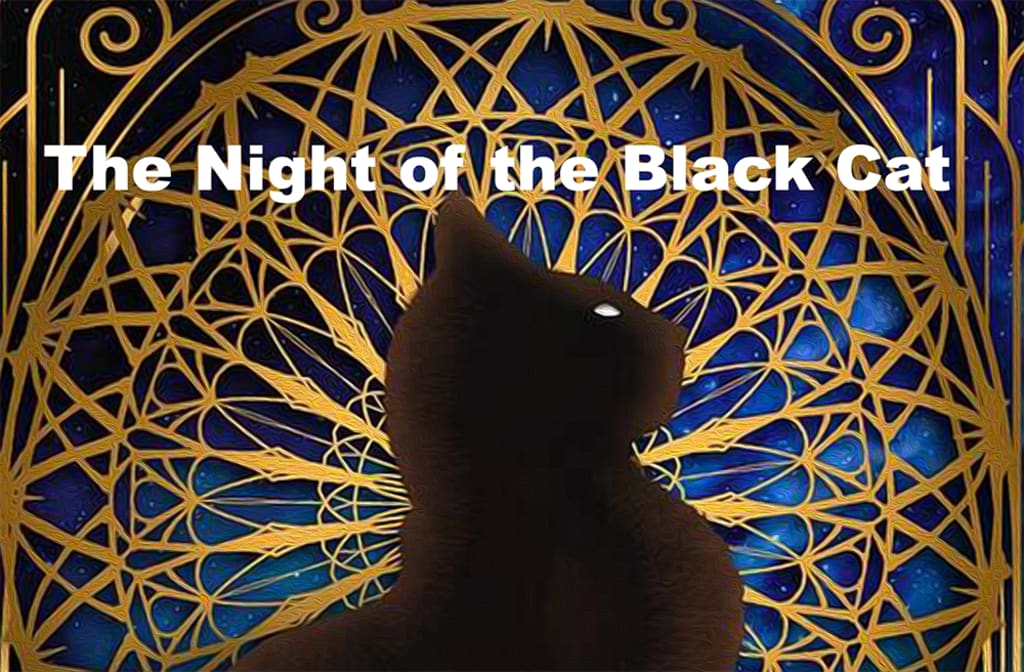
Writers of that time say that Yahya got ready with great care that morning. He put on the dark robes of his office, straightened his turban, and began to comb his hair. As he did, a faint smile appeared on his face. How strange, he thought, that his hair was still black at this age. The thought reminded him of the king’s great black cat, the long-haired creature that was always beside him.
The king was known for his kindness to animals. His mercy toward all living beings was famous in the city. Many courtiers, wanting to imitate him, had also begun keeping cats and dogs.
But why had the king called him today? Yahya had attended many royal events before, ceremonies, feasts, religious meetings, but today there was none. The palace bells were silent. The summons felt heavy and uncertain.
Many thoughts passed through his mind, some dark, some calm, but he was a man of discipline. He straightened his shoulders, stepped into his two-horse carriage, and set out for the royal palace.
He was received with great courtesy. Servants led him through marble corridors into a waiting room that smelled of amber and rosewater. A high-backed chair stood near a large window overlooking the courtyard.
When Yahya looked down, his heart tightened. In the middle of the courtyard stood a figure made of straw, dressed exactly like him in the robes and turban of the Chief Justice.
At first he thought it was some decoration. Then a group of archers appeared and began shooting arrows into the straw figure. Each arrow struck with a dry sound. Yahya felt sweat roll down his face. Each time an arrow hit the figure, it felt as if it had struck him.
Moments later, a rider galloped across the courtyard and cut off the straw head with a single stroke of his sword. Yahya’s throat went dry. He closed his eyes. Fear filled his body like cold water.
His mind began to wander through the past. Every verdict that had angered the throne came back to him. Every decision made for justice rather than power. Yet his conscience whispered softly, “Yahya bin Qasim, you judged with fairness, not favour. Be at peace.”
But peace did not come. Should he obey the king or keep his honour and face death? The thought of death made him tremble, but the voice of conscience was stronger than fear.
From the corner of his eye he saw a guard draw his sword. Yahya turned toward the window. The courtyard was empty now, except for the straw body and its severed head lying in the dust. His vision blurred. The figure seemed to become his own. He could almost feel the weight of that head as if it were his.
Two hours passed before a messenger came and told him to go to the royal chamber.
The king stood beside his throne, gently stroking the silky black fur of his cat. His voice was calm and almost kind.
“Qazi Yahya,” he said, “you should resign. It would be better for both of us. Your long speeches on justice have reached even the palace walls.”
Yahya said nothing.
“Perhaps you need time to think,” the king said. “Go to the next room and wait. I will call you again.”
Yahya bowed and went back to the waiting room. Soon a group of guards entered with swords in their hands. They stood near him and watched him closely. Yahya closed his eyes and began to pray.
Should I give up or stand firm, he thought. He saw his wife’s face and heard his children’s laughter. Then a voice inside him said, Better they remember a father who died with honour than one who lived in fear.
Four long hours passed. He understood that the king was not testing his mind but his patience.
At last, he was called again. The king was standing when Yahya entered. His tone was no longer calm.
“Have you decided?”
Yahya’s voice trembled, but his words were firm. “I have. I will not resign.”
Anger filled the king’s face. He drew his sword, the blade shining like lightning. Yahya closed his eyes, waiting for the blow. But it did not come.
Instead, the king turned and struck his beloved cat, cutting off its head.
Blood spread across the marble floor. The king dropped the sword and walked out without a word.
For a long time Yahya stood still beside the dead cat. Then the servants came, lifted the body, and carried it away. A guard appeared and said coldly, “You may go.”
Yahya left the palace. His legs shook as he walked through the long corridors. The sound of his own footsteps echoed like the hiss of arrows. But no arrow came.
Perhaps, he thought, the king fears the scandal of blood inside his own walls.
Outside, his carriage was waiting. He climbed in, drenched in sweat and gasping for air. To ease his chest, he loosened his robe and took off his turban, placing it beside him.
Then he looked into the small mirror inside the carriage and froze.
In one afternoon, between fear and courage, between conscience and death, his hair had turned from black to white.
About the Creator
Mansoor Afaq
Mansoor Afaq, a renowned Urdu and Saraiki poet, writer, and columnist, has authored 14 books and created 85 plays and 6 documentaries. His work bridges tradition and modernity, enriching South Asian literature and culture.
Keep reading
More stories from Mansoor Afaq and writers in Fiction and other communities.
Beyond the Door
In a quiet village in Norfolk, an old cottage stood near the edge of the fields. The sea breeze often reached it, carrying the smell of salt and damp wood. In the southern room of the house, there was a door that was never fully closed. It always stayed half open, as if someone had left it like that on purpose, or simply forgotten to shut it.
By Mansoor Afaq3 months ago in Fiction



Comments
There are no comments for this story
Be the first to respond and start the conversation.