


In a quiet village in Norfolk, an old cottage stood near the edge of the fields. The sea breeze often reached it, carrying the smell of salt and damp wood. In the southern room of the house, there was a door that was never fully closed. It always stayed half open, as if someone had left it like that on purpose, or simply forgotten to shut it.
Inside, the room was small and simple. There was a wooden chair, a folded blanket, an old chest, and a brown felt hat hanging on the wall. Margaret stood there, facing the door. Her eyes were calm but uncertain, her fingers shaking a little. It felt as if she was waiting for something she could not name.
Outside, a child’s laughter came from far away, but inside the cottage, the sound faded into silence. Dust covered the edge of the door, and when Margaret stepped closer, her footprints appeared for a moment before the wind blew them away. The door seemed more than just wood and hinges. It was part of her story, a chapter half written and half forgotten.
She whispered, “How many years have I looked at you? And every time, you seem to speak.”
The door creaked softly. Margaret froze.
“Edward? Is that you?” she said in a low voice. Then she laughed to herself. “No. Edward left long ago.”
A voice inside her replied, quiet and sharp. “Yes, he left, but you never did. You stayed right here.”
Margaret touched the door. The cold wood brought back a picture from the past. Edward had once walked through this same door. A travel bag on his shoulder, a faint smile on his lips. He had turned and said, “You’ll come someday, won’t you, Margaret?”
She had not answered. She had only stood there between yes and no, trapped in silence. Since that day, the door had never been fully opened or closed.
She said softly, “When you left, everything stopped. The air, the evenings, even me.”
The inner voice said, “No. You didn’t stop. You only forgot to move.”
Margaret picked up the hat, brushed off the dust, and put it back. “Maybe life is just this,” she murmured, “smoothing the wrinkles of small things while the big ones inside us stay tangled.”
She pushed the door a little wider. Cold air came in, smelling of wet earth and fresh bread from the bakery down the lane. A man’s voice called, “Hot buns, fresh and warm!” The sound made her smile. “The same voices,” she said. “Only I have grown old.”
Her inner voice replied, “No, you are not old. You are sleeping.”
Margaret turned quickly. “Who are you?”
“I am you,” the voice said. “The part you stopped listening to.”
She sat down on the chair. “Out there, there’s noise and risk and people. In here, there’s peace. But sometimes peace feels like still air, not life.”
She lifted the curtain. The stone bench outside was empty, but she could still see Edward in her mind, sitting there, playing his guitar, humming that same tune. She smiled faintly. “You used to say life isn’t about being neat, it’s about feeling everything. I never understood that.”
The door moved again. A black cat slipped in and rubbed itself against her legs. “Oh, it’s you again,” she said kindly. The cat jumped onto the chair. The room felt a little warmer.
Voices came from outside. Two men were talking.
“This house will sell cheap. The old lady lives alone. She’ll need the money.”
Margaret’s face hardened. She walked to the door and pushed it open. The two men were already walking away, their shapes fading in the mist.
“Alone? In need?” she whispered. “You have no idea.”
The voice inside her spoke again. “If you are not afraid, then go.”
Margaret sighed. “I am afraid, but I can’t stay here forever.”
“Then take one step. That’s enough,” the voice said.
She placed one foot outside. The wind touched her face. For a moment, she felt light, almost free. Then she heard a sound from behind, a thud from the chest. She turned. Everything was still, but on the chair lay a white shawl, the one Edward had once given her. She picked it up. It smelled faintly of lavender and time.
The inner voice said, “He never left. You just stopped meeting him.”
There was a soft knock at the door. A young girl stood outside with an envelope. “Miss Margaret, could you please sign this? It’s my college form.”
Margaret smiled. “You want to study?”
“Yes, I do.”
She signed the paper. “Go, then. Don’t wait as I did.”
The girl thanked her and said, “There’s a school play this Sunday. Please come.” Then she ran off, laughing.
Margaret looked at the door. “Sometimes,” she whispered, “to step out, all you need is an invitation.”
She put on her hat and looked in the mirror. Her face had grown older, but her eyes were brighter.
The voice said, “You’re changing.”
She replied, “Maybe I’m just remembering.”
The night grew darker. The street lamp outside sent a soft glow into the room. Through the mist, she thought she heard Edward’s voice. “Will you come, someday?”
Margaret said, “Yes. But in my own way.”
The voice inside laughed. “You finally said it.”
In the morning, sunlight touched the roof of the cottage. Margaret opened the door but did not lock it. The air was fresh and smelled of sea salt. Down the lane, two boys were playing flutes. She walked over and asked, “Who taught you?”
“No one,” one said with a grin. “We just tried.” He handed her the flute. “Try it yourself.”
Margaret laughed and blew into it. The first note was shaky, the second clearer, and the third turned into an old familiar tune , Edward’s tune. The boys clapped. Margaret laughed again. “His song still lives in the air,” she said.
The voice whispered, “See? The door opens both ways.”
Later, she bought flower seeds, lavender and forget-me-not, and walked home. The door was still half open, but it no longer looked like a wall. It looked like a bridge. She ran her fingers along the frame and said, “We never find a perfect path. Fear and hope, silence and movement , they give meaning to each other.”
The voice asked, “So what will you do now?”
Margaret said, “I will live. Inside and outside.”
That night, she stood again by the door. She was not fully in, not fully out. Her heart beat fast, not from fear, but from something new , possibility. Mist covered the fields, but her eyes held light.
The voice said quietly, “You must be going mad, Margaret.”
She smiled and replied, “Maybe I am. But perhaps madness is what happens when you finally open the door inside yourself.”
And the door moved a little, as if it smiled back, in the soft wind that filled the room.
About the Creator
Mansoor Afaq
Mansoor Afaq, a renowned Urdu and Saraiki poet, writer, and columnist, has authored 14 books and created 85 plays and 6 documentaries. His work bridges tradition and modernity, enriching South Asian literature and culture.
Keep reading
More stories from Mansoor Afaq and writers in Fiction and other communities.
Overcoat of Ghulam Abbas
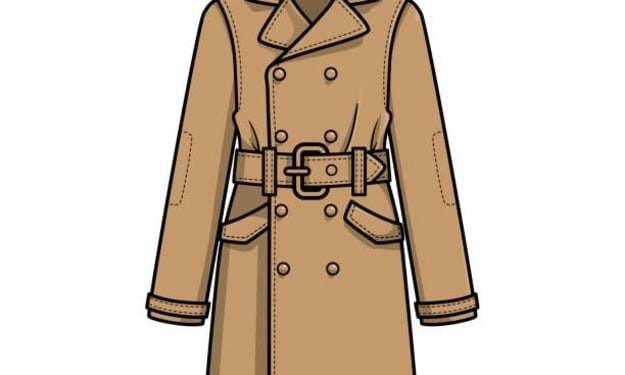
On a January evening, a well-dressed young man walked down Davis Road, turned onto Mall Road, and began strolling leisurely along the tramline toward Charing Cross. From his appearance, he looked quite fashionable: neatly trimmed long sideburns, shiny hair, and thin mustaches so fine they seemed drawn with a kohl stick. He wore a light brown overcoat with a pale rose tucked into the buttonhole, a green flat hat tilted stylishly on his head, and a white silk scarf wrapped neatly around his neck. One hand rested in his coat pocket, the other held a small cane which he twirled playfully from time to time.
By Mansoor Afaq3 months ago in Fiction


Comments
There are no comments for this story
Be the first to respond and start the conversation.