
The Morning of Sacrifice
A Day That Begins with Faith and Ends in Gratitude

The Morning of Sacrifice: A Daily Life Reflection on Eid-ul-Azha
The morning air smelled of dust and dew. In our quiet corner of the city, where laundry lines swayed between rooftops and street vendors lit their first fires, the day had already begun—but not like every other day.
It was Eid-ul-Azha, the day of sacrifice. And though our world was small, the meaning of the day was vast.
The Wake-Up Call
My father woke before the sun. I heard the floorboards creak under his feet as he moved toward the washroom. Then came the soft sound of running water, the quiet chant of “Allahu Akbar” under his breath, and the faint rustle of his white panjabi being laid out on the bed.
By the time I rubbed the sleep from my eyes, my mother was already boiling milk in the kitchen, the scent of cardamom rising like incense. “Eid Mubarak,” she whispered, kissing my forehead. “Go get ready.”
It wasn’t just a command. It was a ritual, passed down every year—wake up, cleanse yourself, wear something clean, and greet the day not with laziness, but with reverence.
The Walk to Prayer
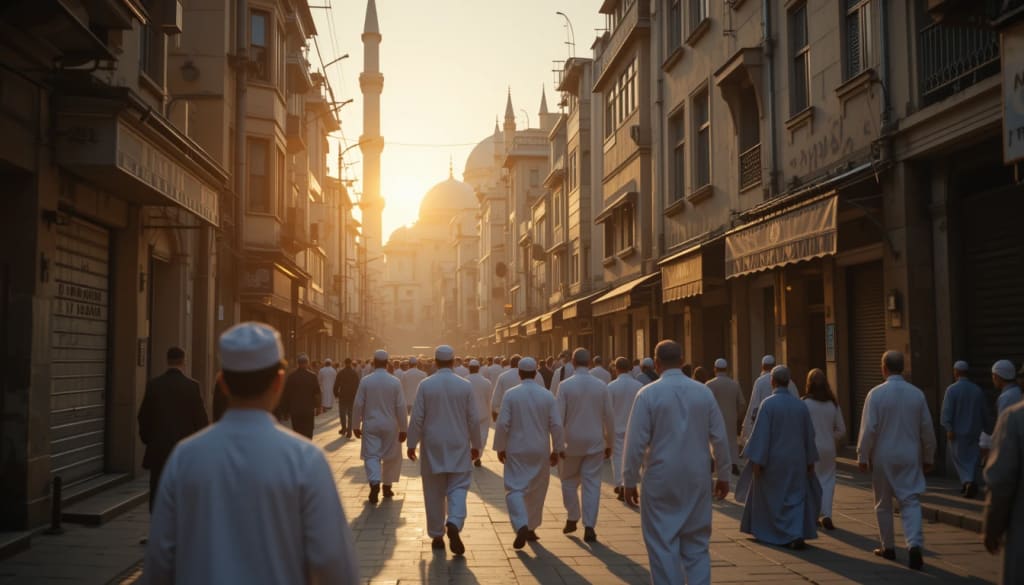
Our masjid was only a few blocks away, but the walk felt sacred. I walked with my father and younger brother, both wearing simple white, blending into a sea of white—boys, men, elders.
The streets were quieter than usual, but full of purpose. From every alley, people emerged, some carrying prayer rugs, some just their hearts wide open. The takbeer floated in the air:
"Allahu Akbar, Allahu Akbar, La ilaha illallah..."
When we reached the open field beside the mosque, I saw rows forming like waves—men shoulder to shoulder, strangers and friends. There was a kind of unity I never felt any other day. A kind of peace.
A Story from Long Ago
The Imam’s khutbah was about Prophet Ibrahim (AS) and his test. I’d heard the story before—how he was ready to sacrifice his beloved son, Ismail (AS), out of complete obedience to Allah. And how Allah, in His mercy, replaced the boy with a ram.
But somehow, that day, as the sun climbed above us and the imam’s voice echoed, the story felt realer.
Maybe because my father held my hand tightly.
Maybe because my brother asked, “Would you do that for me?”
Maybe because sacrifice didn’t feel like an ancient thing anymore.
It felt close. Present. Personal.
The Sacrifice at Home
Back home, the courtyard was swept clean. The qurbani cow—a calm, spotted creature we’d cared for over the past week—stood quietly, munching grass. My younger siblings had even named him: Badshah.
When the time came, we all stood by. My father whispered a prayer, stroked Badshah’s head, and handed the rope to the butcher.
No one laughed. No one played. We watched, not out of horror, but out of respect.
Because this wasn’t just about meat. This was a reminder of what it means to give up something you love for something greater.
And when it was done, we offered thanks. Not because it was over—but because we had the ability to give.
A Table Full of Blessings
By noon, the house smelled of fried onions, turmeric, and slow-cooked meat. My mother had magic in her hands. She cooked not just for us, but for the neighbors, the poor man who sat near the tea stall, and the widowed woman in the next building.
Plates were packed and handed over like gifts. No names, no favors expected. Just the spirit of Eid.
And when we sat together to eat, cross-legged on the floor, I noticed something different. It wasn’t the food—it was the feeling.
- Gratitude.
- Warmth.
- Togetherness.
More Than a Ritual
That evening, the kids played with balloons, the men talked politics, and the women compared recipes. Someone brought sweets, someone else brought tea.
But in the back of my mind, I kept thinking—what if Eid wasn’t about the meat, or the clothes, or even the food?
What if it was about this daily moment of reflection, this quiet reminder that faith isn’t just prayer—it’s action? It’s giving. Sacrificing. Trusting.
That night, as I looked out from our rooftop, I saw lights from a hundred homes flickering across the neighborhood. I imagined them across cities, countries, continents—all carrying the same story in their hearts.
A Final Thought
Eid-ul-Azha doesn’t always come with fireworks or parades. It’s not loud.
But it stays with you.
In the early morning prayer.
In the silent sacrifice.
In the plate you offer someone who has less.
And in the small, unspoken promise:
To live a life that means something.
About the Creator
Shohel Rana
As a professional article writer for Vocal Media, I craft engaging, high-quality content tailored to diverse audiences. My expertise ensures well-researched, compelling articles that inform, inspire, and captivate readers effectively.
Keep reading
More stories from Shohel Rana and writers in Fiction and other communities.
The Two Eids
The Two Eids of Muslims: A Journey Through Joy and Spiritual Triumph Across the Muslim world, two remarkable celebrations illuminate the hearts and homes of believers: Eid al-Fitr and Eid al-Adha. These aren’t just festivals—they are sacred milestones marking spiritual victory, community strength, and divine connection. Each Eid carries its own story, woven deeply into Islamic history, layered with tradition, and filled with emotion.
By Shohel Rana8 months ago in Fiction
So You Decided To Become a Nurse Practitioner:
So you decided to become an "Advanced Practice" nurse. Congratulations!... is what I would say if this was a good idea. Grad school? In this economy? What were you thinking? Likely it was something along the lines of either 1) “I've seen these other chucklefucks do it— Why can't I?” or even 2) “I've got a nice career, I should shake it up. I miss feeling like I have no clue what I'm doing.”
By Sandor Szabo3 days ago in Fiction



Comments
There are no comments for this story
Be the first to respond and start the conversation.