
The Two Eids
A Journey of Faith, Celebration, and Community

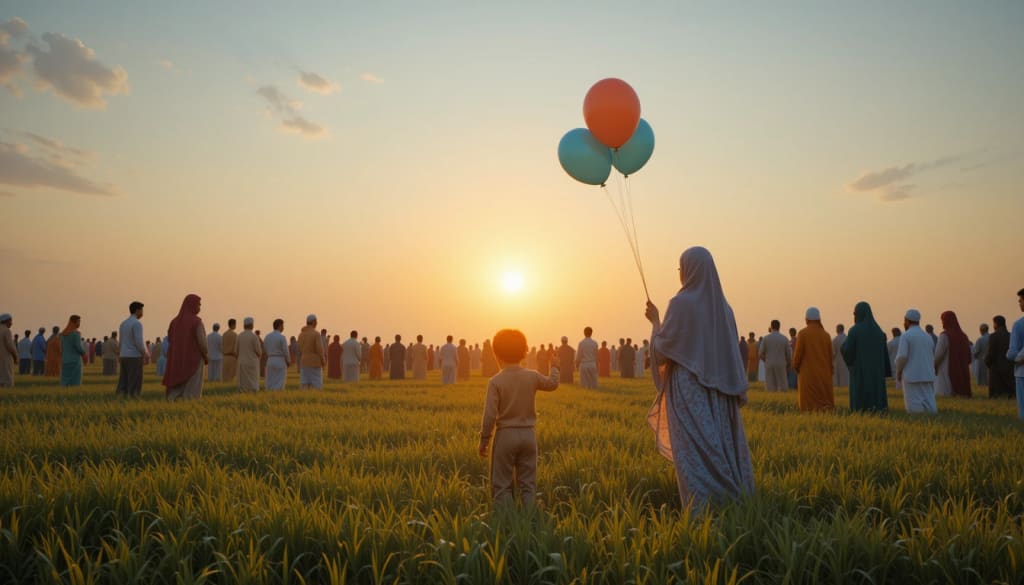
The Two Eids of Muslims: A Journey Through Joy and Spiritual Triumph
Across the Muslim world, two remarkable celebrations illuminate the hearts and homes of believers: Eid al-Fitr and Eid al-Adha. These aren’t just festivals—they are sacred milestones marking spiritual victory, community strength, and divine connection. Each Eid carries its own story, woven deeply into Islamic history, layered with tradition, and filled with emotion.
Let’s walk through their origins, their meanings, and how they echo across centuries to touch the soul of every Muslim today.
Eid al-Fitr: The Festival of Breaking the Fast
Eid al-Fitr comes at the end of the holy month of Ramadan, a month devoted to fasting, prayer, reflection, and charity. For 29 or 30 days, Muslims abstain from food and drink from dawn to sunset, striving not just to tame the body but to awaken the soul. The fast is not only about hunger—it's about empathy, self-control, and returning to a state of purity and closeness to Allah.
When the new moon is sighted, signaling the end of Ramadan, the joy is profound. Families rise early, bathe, wear their best clothes—often new or freshly washed—and set out for the special Eid prayer, performed in large congregations. Before the prayer, every Muslim who can afford it must give Zakat al-Fitr, a special charity to help the poor also enjoy the day.
The morning echoes with the words:
"Allahu Akbar, Allahu Akbar, La ilaha illallah, Allahu Akbar, Allahu Akbar, wa lillahil-hamd."
(God is the Greatest, God is the Greatest, there is no god but Allah, God is the Greatest, God is the Greatest, and to Allah belongs all praise.)
Eid al-Fitr is a day of forgiveness, family visits, joyful meals, and shared blessings. Sweet dishes like sheer khurma and baklava fill the tables. Children receive Eidi—small gifts or money—and neighborhoods are alive with laughter and greetings of "Eid Mubarak!"
This Eid is the celebration of spiritual accomplishment—a month of devotion honored with a day of divine reward.
Eid al-Adha: The Festival of Sacrifice
About two months later comes Eid al-Adha, the greater Eid, which aligns with the final day of Hajj, the pilgrimage to Makkah. Its roots lie in the ancient story of Prophet Ibrahim (Abraham), who was commanded by Allah in a dream to sacrifice his beloved son, Ismail (Ishmael). In an extraordinary act of submission, both father and son accepted this divine test.
But just as Ibrahim was about to carry out the command, Allah intervened and replaced Ismail with a ram. The message was clear: it was not the sacrifice itself, but the willingness to submit to God's will that mattered most.
To honor this act of faith, Muslims around the world sacrifice an animal—usually a goat, sheep, cow, or camel—and distribute the meat among family, friends, and especially the poor.
The days of Eid al-Adha begin similarly to Eid al-Fitr: with purification, new clothes, congregational prayer, and the echo of takbeer. But the spirit is deeply reflective. It is about remembering the cost of faith and the meaning of obedience.
It’s also a time of global unity. While millions of pilgrims complete Hajj—standing on the plains of Arafat, circling the Kaaba, and walking the paths of Hajar’s desperate search for water—Muslims everywhere are reminded of the oneness of the Ummah, the worldwide Muslim community.
Eid al-Adha stretches over three days, filled with feasting, visits, and acts of kindness. It is a celebration not just of a historical event, but of personal sacrifice and universal compassion.
A Tale of Two Eids: One Faith, Two Reflections
Though their timings and rituals differ, the two Eids are bound by the same thread: devotion to Allah and care for others.
Eid al-Fitr marks personal renewal after the inner journey of Ramadan.
Eid al-Adha marks collective strength, sacrifice, and gratitude.
Both teach that true celebration is not about material joy alone, but about sharing that joy with others—especially the less fortunate. They both encourage generosity, connection, and humility before the Creator.
Living the Eids in Today’s World
In modern times, Eids are celebrated in diverse cultures and continents—from the streets of Cairo to the mosques of London, from the villages of Indonesia to the suburbs of Toronto. Each community brings its own flavor to the Eid experience: colorful clothes, traditional dishes, local customs.
Yet, no matter where you are, the essence remains the same: faith, family, and festivity.
Even in challenging times—during war, migration, or global pandemics—Muslims have found ways to uphold these days. Sometimes it’s through online gatherings, smaller family meals, or virtual Eid prayers. The form may change, but the spirit remains unbreakable.
A Final Thought
The two Eids are more than just dates on the calendar. They are deeply spiritual chapters in a Muslim’s life—one reminding us of our inner journey, the other of our trust in divine wisdom. They are not only about how we worship, but about how we live: with purpose, patience, and peace.
So when a Muslim says “Eid Mubarak”, it’s more than a greeting. It’s a prayer:
- May your sacrifice be accepted.
- May your fast be rewarded.
- May your life be blessed.
About the Creator
Shohel Rana
As a professional article writer for Vocal Media, I craft engaging, high-quality content tailored to diverse audiences. My expertise ensures well-researched, compelling articles that inform, inspire, and captivate readers effectively.
Keep reading
More stories from Shohel Rana and writers in Fiction and other communities.
How to Succeed at the Benson Directory®
Congratulations and welcome to the Benson Directory® employee #22391! As our newest call handler, you will have the privilege of speaking with dozens of unique and interesting people on a daily basis as well as the opportunity to earn bonuses for high performance. Contained within this handbook you will find a set of ease to follow instructions designed to help you settle in to your new role and begin paving the way to success.
By S. A. Crawford2 days ago in Fiction
My New Book is Finally Here
My poetry collection Beautiful and Brutal Things is done. It's actually done and finally published over 270 pages. Over a year of my life went into this book. More than a year, really. Long days at my computer, sometimes seven days a week because I couldn't stop even when I probably should have. Then two months of editing that felt harder than the writing itself. But it's finished, and I'm still standing, and the book is real.
By Tim Carmichael2 days ago in BookClub




Comments
There are no comments for this story
Be the first to respond and start the conversation.