
The Letter from Jallianwala
A forgotten voice from 1919 speaks again, through ink, grief, and a revolution.

April 13, 1919 — Amritsar, Punjab
The sun was unforgiving that afternoon, but it was Baisakhi — the harvest festival. Thousands had gathered in Jallianwala Bagh to celebrate, to protest peacefully against the Rowlatt Act, to listen, to breathe freely for a moment in their own country.
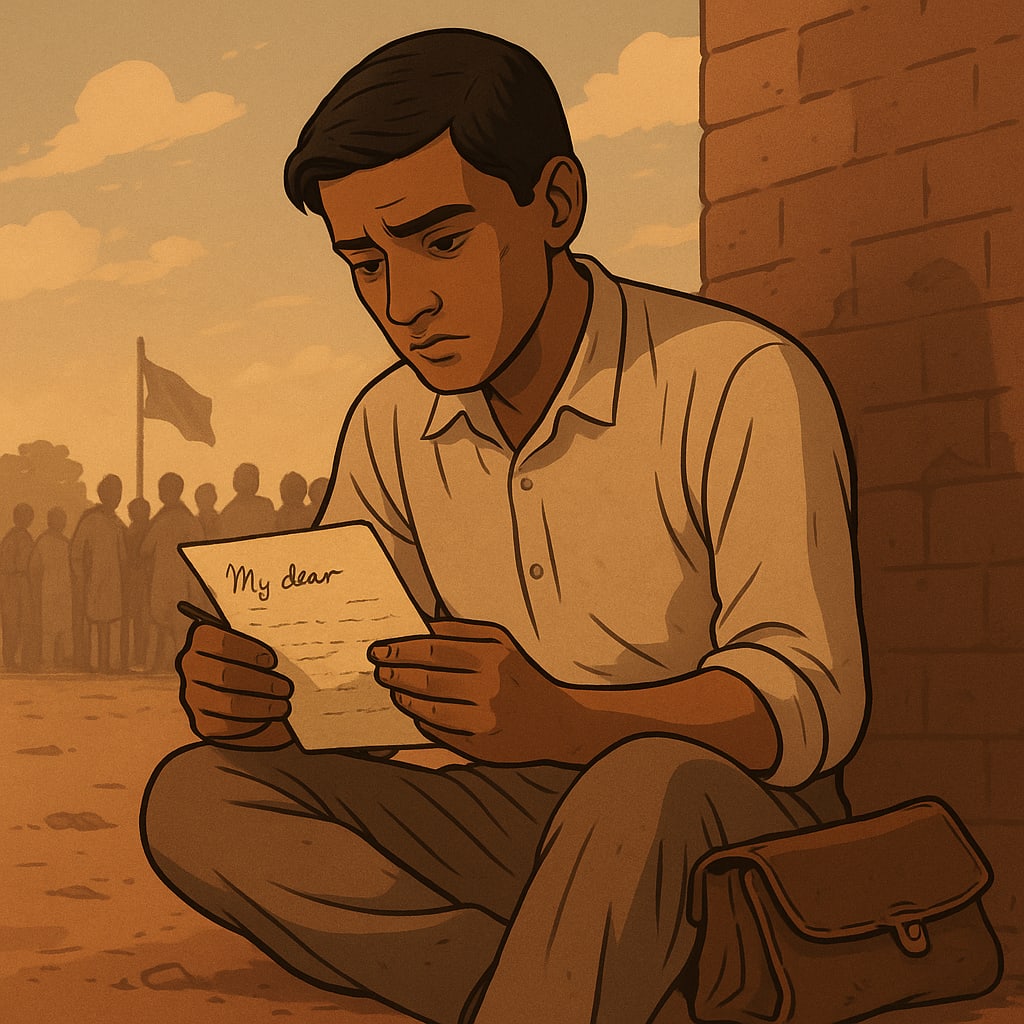
Among them stood Aarav, a 21-year-old schoolteacher with ink-stained fingers and eyes full of hope.
He wasn’t a soldier. He wasn’t a leader. He had simply come to listen, to write down what he heard, to share it later with his students. His satchel carried a notebook and a half-written letter to his younger sister, Meera.
He never got to finish it.
At 4:30 PM, as the sun cast long shadows through the narrow brick walls of the garden, General Dyer and his troops blocked the only exit.
Without warning, they opened fire.
---
The bullets rained for ten long minutes.
1,650 rounds.
No mercy.
No escape.
Aarav was hit twice—once in the leg, once near the ribs. He crawled behind a stone platform, clutching his satchel. He didn’t cry out. He didn’t pray. He opened his letter.
And with shaking hands, he began to write again.
---
“Dear Meera,
If you are reading this, then perhaps I am already part of the earth now. But do not weep for me. Let this letter be a seed. Plant it where hearts still beat with courage.”
---
He wrote about the fear he saw around him, the mother shielding her child, the old man still chanting “Satyagraha” with blood on his lips. He wrote about the sound—not of bullets, but of silence—when it all ended.
He ended the letter with a final line:
“They may silence us, but they have made listeners of the world.”
He tucked it in his satchel and closed his eyes.
---
1947 — Delhi
Meera, now 45, stood under the tricolor flag as it rose for the first time over Red Fort.
She never received her brother’s letter—not in the post.
It was found years later, by a sanitation worker when the British cleared out old belongings from confiscated homes. A crumpled page, bloodstained, tucked in a satchel.
She held it in her hands like a relic.
And she didn’t cry. She stood straighter.
For her brother.
For all the brothers.
---
Present Day — A Museum in Amritsar
Behind a glass panel in the Jallianwala Bagh memorial lies an old, faded letter.
The ink is blurred in places, the paper cracked with age.
Tourists pass by it every day. Some pause. Fewer still read the final line.
But those who do—leave changed.
Because that’s what history does.
It bleeds, and it breathes.
And it remembers.
---
About the Creator
Waqif Khan
i'm creating history from old people
Keep reading
More stories from Waqif Khan and writers in Fiction and other communities.
Whispers from the Wall
When Mira moved into apartment 3B, she was just relieved to find a place within her budget. A small, third-floor unit in an aging brick building on the edge of the city. The landlord was an old man with trembling hands and glassy eyes who didn’t ask too many questions. “Don’t worry about the neighbors,” he said with a weak smile. “You probably won’t hear a thing.”
By Waqif Khan7 months ago in Fiction
Affection and Healing for Yourself
During the night of the last quarter moon, I gathered my ritual supplies. I carefully handled the chunk of black tourmaline that would protect me from your overall negative and narcissistic energy. I carefully walked the house with my stick of selenite in hand, asking the universe to cleanse our working space.
By Alisha Wilkins ✒️🦋🖋️4 days ago in Fiction



Comments
There are no comments for this story
Be the first to respond and start the conversation.