
The Legend of the Carpathians: The Shadow of Negru Vodă
Untold stories

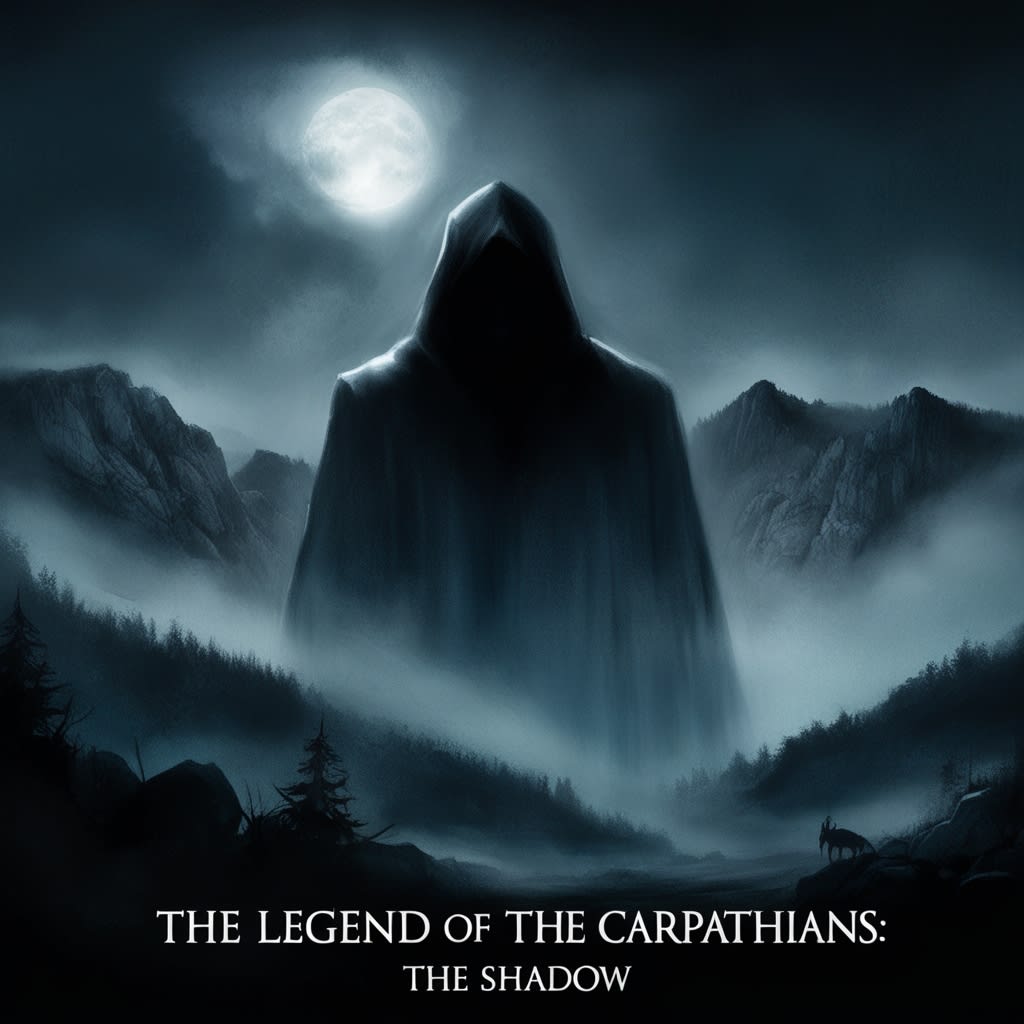
The wind howled through the dense forests of the Eastern Carpathians, carrying with it the scent of damp moss, resin, and ancient stone. It was a moonless night, when only fireflies and shepherds’ fires lit up the clearings. On that night, old Gavril, the last storyteller of the village of Runc, gathered his grandchildren around the hearth.
— Listen well, he said in a low voice, for this tale no man in his right mind remembers anymore. It is about Negru Vodă, the hidden founder, and the curse that lies within the heart of the mountains.
Long before Wallachia rose, when the Tatars still burned villages and the Danube groaned with blood, there lived near Brașov a voivode named Radu of Câmpulung. He was a just man, yet tormented by strange dreams: every night, a woman in white called to him from a cave surrounded by blue flames.
Radu did not believe in visions. But when the Tatar horde descended through the passes and plundered his lands, he left alone, in the dead of night, guided only by the dream.
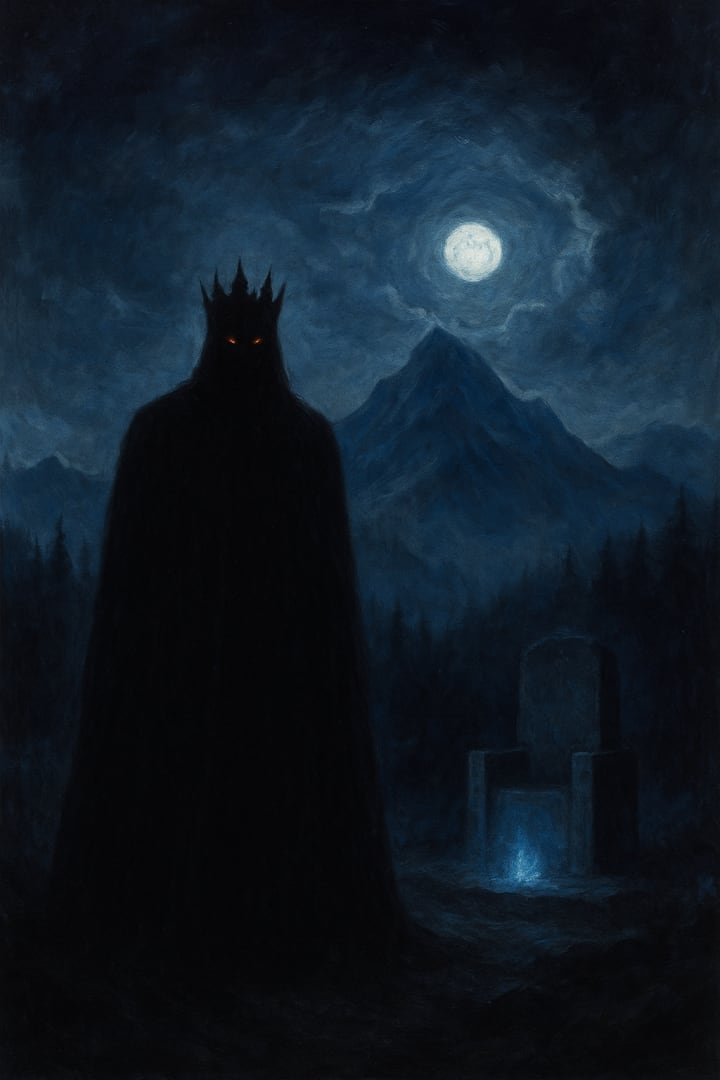
After three days climbing through pine-clad forests, he reached the Cave of the White Spirit. There, a young woman with silver hair awaited him, wearing a crown of grass and oleander flowers.
— I have summoned you, Radu, she said, her voice echoing through the stone. Your land shall rise, but not without sacrifice.
— Who are you, woman?
— I am Ana of the Stone, daughter of the mountain. Here rest the souls of those who have guarded the Carpathians for centuries. If you desire the power to found your realm, you must leave here what you love most.
Radu looked around: the cave walls shimmered, alive, trembling with the light of enormous crystals, like beating hearts. In the center stood a stone throne.
— What must I give? he asked.
— Your heart, she replied.
The voivode drew his sword.
— My heart belongs to my land.
— Then your land shall never die, but you shall remain in shadow, unseen.
Ana approached, touched his chest, and Radu felt his life fade without pain. His body turned to stone, and the cave closed around him. From the darkness rose a shadow dressed in black, with eyes of burning coal: Negru Vodă.
Years passed. Negru Vodă descended from the mountains with an army of unknown origin — dead men, wanderers, and hermits. He united the small lordships south of the Carpathians and built fortresses, from Curtea de Argeș to Dâmbovița.
But people whispered that the Voivode never slept, that his eyes never blinked, and that on moonless nights a murmur rose from the mountains, like a distant call.
The boyars feared him, yet followed. For in his wake came prosperity: flocks multiplied, crops thrived, and the Tatars vanished into mist.
Only one man dared confront him: Father Arsenie, the abbot of the monastery in the Ialomița Valley.
— Your Grace, said Arsenie one night when the Voivode came to the monastery, your body is no longer that of a man. The earth cannot hold a soul without a heart.
Negru Vodă was silent, and the torches’ flames flickered low.
— What would you have me do, Father? Die again?
— No, my lord. But you must make peace with your sacrifice. Without peace, your land will be cursed with endless strife.
The Voivode looked toward the mountain peak where his ancient cave lay hidden.
— If I return there, the land will crumble. If I remain, the mountains will know no rest.
— Then leave a sign, so people will know you are not a god, but a sacrifice.
Negru Vodă smiled faintly.
— Build walls of stone and name them the Court of Argeș. And write upon the foundation: “From shadow was born the light.”
Then he vanished into the night.
Centuries passed. The land changed, princes rose and fell, yet in the villages at the foot of the mountains people still say that sometimes, on autumn nights, a black rider crosses the passes, and the horse’s hooves leave no trace.
One such night, a young historian named Andrei Petrescu was researching the ruins of a fortress near Câmpulung. He had found in the archives an old letter, written by a monk’s hand, speaking of “the stone body of the voivode hidden in the heart of the mountain.”
Curiosity drove him to climb alone, with only a lantern and notebook, to the mouth of a cave locals called “The Devil’s Hole.” The air was cold, the walls damp and alive with strange energy.
In the depths, Andrei discovered a vaulted chamber filled with blue crystals. In the center — a stone throne. On it sat a figure of a man, ancient and dust-covered.
“Radu of Câmpulung,” he whispered, feeling a force coursing through his veins.
Then the statue’s eyes opened — two burning coals.
— You have come, said a voice not from a mouth, but from the mountain itself. Does my land still live?
— Yes, Andrei whispered. Romania… still lives.
A faint smile appeared on the stone face.
— Then my sacrifice was not in vain. But the curse is not ended. Beyond time, the mountains sleep uneasily. When they are wounded again, I shall rise.
A white light blinded the young man, and when he regained his senses, the throne was empty. Only a black stone, cold as death, lay in the center of the cave.
He took it and placed it in the museum of Câmpulung, inside a simple glass case. No visitor knew that, sometimes, when darkness falls, the stone pulses softly — like a heart that still beats.
Old Gavril fell silent, and the fire cracked in the hearth.
— So it is, children, that Negru Vodă never died, but only sleeps. And when the mountains are betrayed, he shall rise again, with a sword of light, to defend his land.
— But is it true, Grandpa? asked one of the boys.
Gavril smiled.
— Truth is not always what is seen. Some stones remember. And the mountains… they have a soul.
The wind rose again over the Carpathians, whistling through the firs like an ancient call.
Perhaps it was just the storm.
Or perhaps, somewhere beneath the earth, the shadow of Negru Vodă was opening his eyes once more
About the Creator
Nyku Blondu
📚 I enjoy exploring a wide range of topics – from personal reflections and inspiration to culture, art, and everyday life.
✍️ I believe in the power of words to connect people and awaken emotions.
Keep reading
More stories from Nyku Blondu and writers in Fiction and other communities.
What If Columbus Hadn’t Discovered America?
Human history is filled with turning points — those moments when a single decision, event, or discovery changes the course of the world forever. One of the most important of these moments was, without a doubt, the year 1492, when Christopher Columbus reached the shores of the New World, opening an entirely new chapter in global history.
By Nyku Blondu3 months ago in Fiction
A Deadly Chase in the Forest
The forest was divided into two very different worlds. On one side, tall green trees stood close together, their leaves forming a thick roof that blocked much of the sunlight. Birds moved quietly between branches, and the air smelled fresh and alive. On the other side, the land was dry and cracked, covered with dust and broken branches. The trees there were fewer, and the ground looked tired, as if it had not seen rain for a very long time.
By Bilal Mohammadi7 days ago in Fiction




Comments
There are no comments for this story
Be the first to respond and start the conversation.