
The Last Light The Forgotten Watch of a Lighthouse Keeper
One man's devotion turned into a legend that no one remembered until now amid the quiet of breaking waves
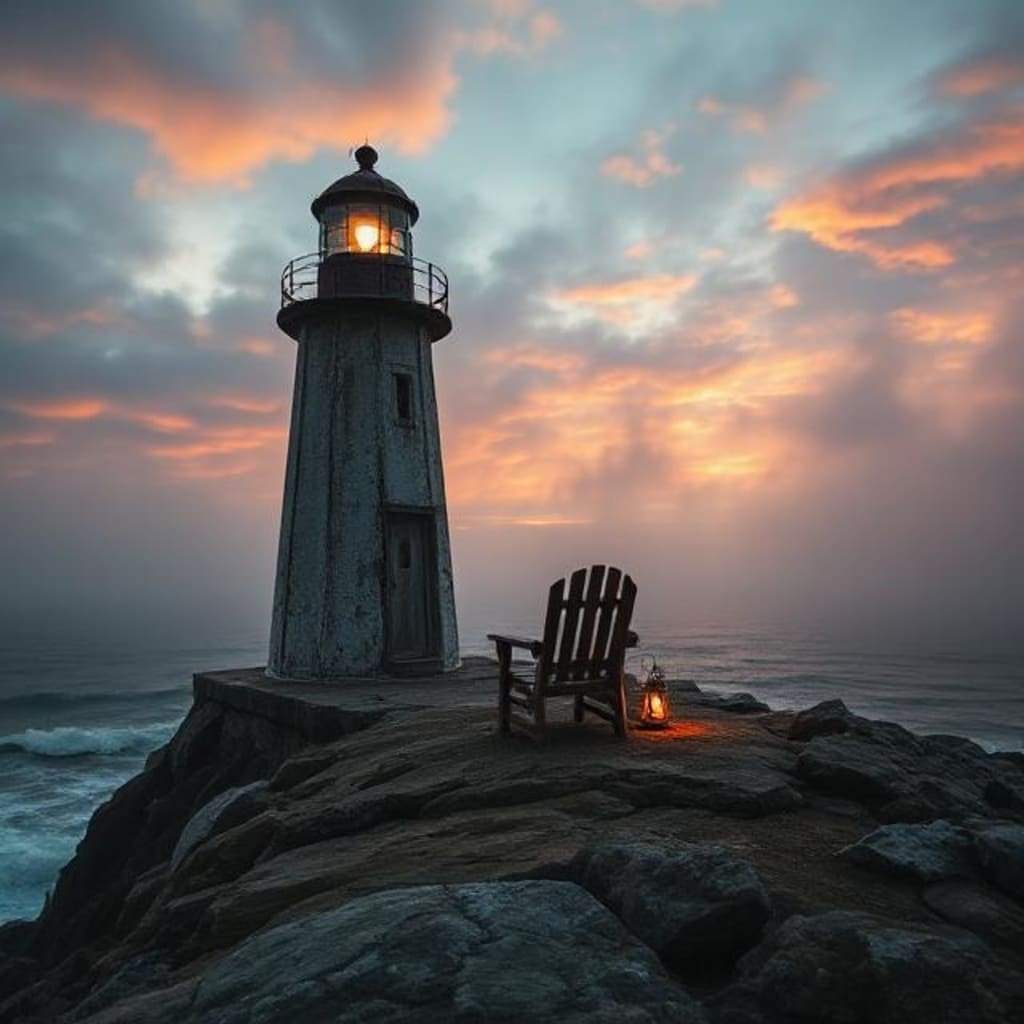
It was the type of location that is no longer seen on contemporary maps. The locals simply referred to it as Point Morrow a wind beaten cliff on the Atlantic coast where the land remained motionless as if it had been waiting for someone to notice it once more for centuries and where the sea and sky clashed endlessly in gray and blue.
There was a lighthouse on the cliff's edge. Not the solar-powered, contemporary type that carelessly blinks every few seconds. No, this was the real thing tall rust streaked, and worn by the sea, with windows that hadn't had their glass cleaned in years and iron stairs that creaked under your weight. It was more than just a structure. It stood guard over waters that no longer required its presence a lone sentinel.
The man who preserved that lighthouse is not well remembered. However I do. Thomas Gray was Point Morrow's final lighthouse keeper. He was the only person I ever met as a child. One of the few people in our small seaside town who still trusted their boat over a desk job was my father, a fisherman. Near the rocky cove just below Point Morrow, our boat's engine sputtered and died one late summer evening. The fog was rolling in quickly, thick, silent, and blinding, and the sun had already set behind the sea. Then we caught sight of it.
Like a warm knife a slow sweeping beam of light sliced through the mist. It was not slick or quick. Simply be steady. Be calm. Comforting. In the dark, like a hand on your shoulder. Dragging the boat through the tide and up the narrow trail that zigzagged up the cliff, we rowed toward the shore. Thomas Gray, tall, bearded, wearing a wool coat, with eyes like storm clouds, was standing there when the lighthouse door creaked open at the top. He didn't inquire as to our identity or the reason for our visit. He simply nodded and moved out of the way.
The lighthouse was warm and dark inside. The air was filled with old wood, salt and kerosene. Teacups were left half full books were piled in corners, and above there was the soft hum of gears turning. He offered us dry clothes, made us tea, and didn't say much. However, I recall his attention to the lamp. Like a pianist adjusting his instrument, he quietly and precisely checked its rotation, cleaned its lens, and adjusted its mirrors. Why do you still do this if no ships need it anymore? I asked him, in the manner of inquisitive kids.
"Machines don't dream he said gazing out the dusty window at the boundless sea. Yes I do. And I see ships returning home in my dreams. I kept that line in the back of my mind. Years passed. I matured. departed from the town. chased noise, jobs, and cities. I stopped seeing the sea outside of screensavers. I mentioned the lighthouse to an old friend one day when I was briefly back in my hometown. Point Morrow? he asked. It has been closed for many years. Up there, the keeper perished. By themselves. Days later, they located him. Still seated next to the lamp.
I can't even begin to describe how that sentence chilled me. I got into my car and drove out there for some reason, whether it was curiosity or guilt. I had forgotten how overgrown the road was. Old stone paths were covered in grass, and the once-clear path leading to the lighthouse was now overgrown with weeds. The tower, however, remained erect against the sky, as if it were still attempting to fulfill its purpose. With each step echoing memories I slowly ascended the corroded stairs. Now that its lens and machinery were gone, the lamp room at the top was quiet. But next to the window was a lantern and a plain wooden chair that faced the sea. the type you manually light.
A leather bound journal was half dusty on a nearby shelf. It was filled by Thomas. Thoughts, not weather reports or charts. feelings. Fears. Joys. He described the passing birds, the storms, the silence, and the loneliness that resulted from forgetting rather than from being alone. He wrote about helping others, guiding boats, and staying up late because the ocean sounded angrier than usual. I was completely taken aback by one entry The sea is noisy tonight. I believe she is attempting to communicate. I'll keep the light burning even though I'm exhausted. It might still be useful to someone. They will know it was there even if they can't see it.
It was like hearing a whisper from another planet in that one line. Thomas Gray was doing more than simply keeping the lights on. He was clinging to an idea long after the rest of the world had deemed it outdated. He continued to dream of ships returning home as he passed away next to that light. I lit the lantern that evening and let it glow in the window. Not that anyone would notice. Not because a ship could be guided by its light. But because there was a time when someone thought that even invisible light matters.
About the Creator
Keep reading
More stories from Muhammad Riaz and writers in Fiction and other communities.
The Road That Doesn’t End
Elias Byrne had never been the kind of man to believe in village folklore. When work took him to the remote mountain town of Harrow Ridge the quietness felt like a relief from the noise of the city. Rows of pine trees lined the narrow roads and the houses had the same weathered look as if they’d been there for centuries.
By Muhammad Riaz6 months ago in Fiction




Comments
There are no comments for this story
Be the first to respond and start the conversation.