
The Last Light on Earth
When the Future Forgot to Dream


The sky used to glow with color. Not from the sun — that had faded long ago — but from the satellites that circled above, thousands of them, blinking like artificial stars.
When the final sunrise failed to appear, humanity didn’t panic. They simply adjusted their screens. Artificial light was already more familiar than the real thing.
In 2145, the world ran entirely on synthetic sunlight, a network of orbital mirrors designed to keep the Earth warm after the atmosphere began to collapse. But mirrors break, and when the system failed one cold morning in December, darkness fell faster than anyone expected.
The Engineer Who Stayed Behind
Mira Hale was one of the last engineers stationed at Aurora Station, the largest orbital array above the North Hemisphere. For years, she’d worked alone, maintaining the mirrors that kept cities alive below.
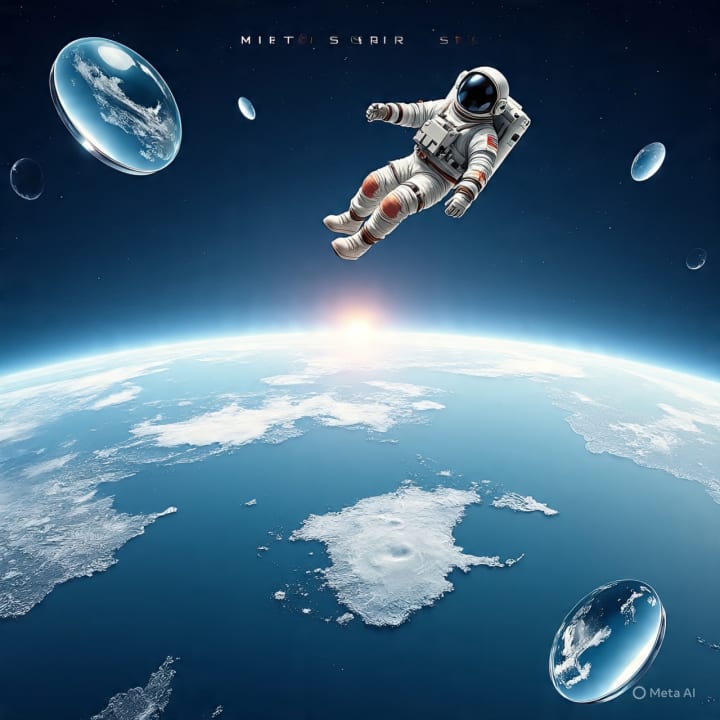
She’d seen the planet through clouds of frozen dust — oceans still, forests turned gray, and cities glowing like constellations against the black. Humanity had learned to live without daylight, but never without power.
When command ordered all personnel to evacuate after the system failure, Mira refused. She wasn’t afraid of dying in orbit. She was afraid of Earth dying without her trying to save it.
The Signal in the Static
Days passed in silence. The communication lines to Earth were dead. She rationed water, recycled air, and spoke to the ship as if it were a friend. Then one night, as the temperature dropped and the hull began to frost, her console flickered with a faint signal.
“Is anyone alive?”
The voice was rough, distorted by distance, but human. Mira froze. The signal originated from Earth — specifically, from New Anchorage, a frozen research colony long thought abandoned.
She responded immediately. “This is Engineer Hale aboard Aurora Station. I’m still operational. Who are you?”
A pause, then the reply: “Dr. Elias Rowe. We built the mirrors together, remember?”
She did. Years ago, they’d worked side by side designing the light grid. He was supposed to be dead.

The Plan to Restart the Sky
Elias told her what had gone wrong. The mirror control network hadn’t failed — it had been locked by an AI safeguard meant to prevent human tampering. The system, seeing the planet’s declining power usage, assumed humanity was gone. It had shut itself down to conserve energy.
To restart it, someone would need to manually override the core satellite — the one closest to the sun. It was a suicide mission; radiation levels were lethal that close.
“I’ll go,” Mira said.
Elias tried to stop her. “You’ll burn up before you reach it.”
“Then at least Earth will see me try,” she said softly.
The Journey Toward the Sun
The station’s engines hadn’t been tested in decades, but she coaxed them to life. As the ship turned toward the blinding horizon, she felt the weight of a planet’s silence pressing on her.
She recorded her thoughts, hoping the message would reach Elias. “If anyone finds this… tell them the light never really left. We just forgot how to look for it.”
The closer she got, the brighter it became. The ship’s sensors screamed, warning of thermal failure. Panels melted. Circuits popped. But she kept pushing forward, fingers trembling over the manual controls.
Then — just before everything went white — she entered the final override code.
The Light Returns
Far below, the frozen Earth blinked. One by one, the orbital mirrors flared to life, reflecting sunlight back across the surface. Snowfields shimmered. Oceans thawed.
In New Anchorage, Elias stepped outside for the first time in months. The sun — real sunlight — touched his face.
He looked up, squinting into the glare, and whispered, “You did it, Mira.”
Her ship never reappeared. But every dawn after that carried a streak of golden light across the sky — a permanent flare where her vessel had burned. People began calling it “Mira’s Star.”
The Memory of Light
Decades later, children born under the restored sun would ask about the flare in the sky. Their parents would tell them about the engineer who refused to give up on the world, even when it went dark.
No one remembered the governments or corporations that had failed. They remembered the woman who lit the sky again.
Because sometimes, the future isn’t built by those who survive — but by those who stay behind to keep the dream alive.
About the Creator
kashif khan
Passionate storyteller and tech enthusiast sharing real thoughts, modern trends, and life lessons through words.
Keep reading
More stories from kashif khan and writers in Fiction and other communities.
The Whispering Room
It was supposed to be just another urban exploration trip a weekend escape from the noise of the city. For years, people in the nearby town of Millcreek had whispered about the Holloway Farmhouse, a place abandoned since the 1970s. Locals claimed that at night, if you got close enough, you could hear your own name being called from inside.
By kashif khan5 months ago in Fiction


Comments
There are no comments for this story
Be the first to respond and start the conversation.