
The Last Flame
The End of the Midnight Society

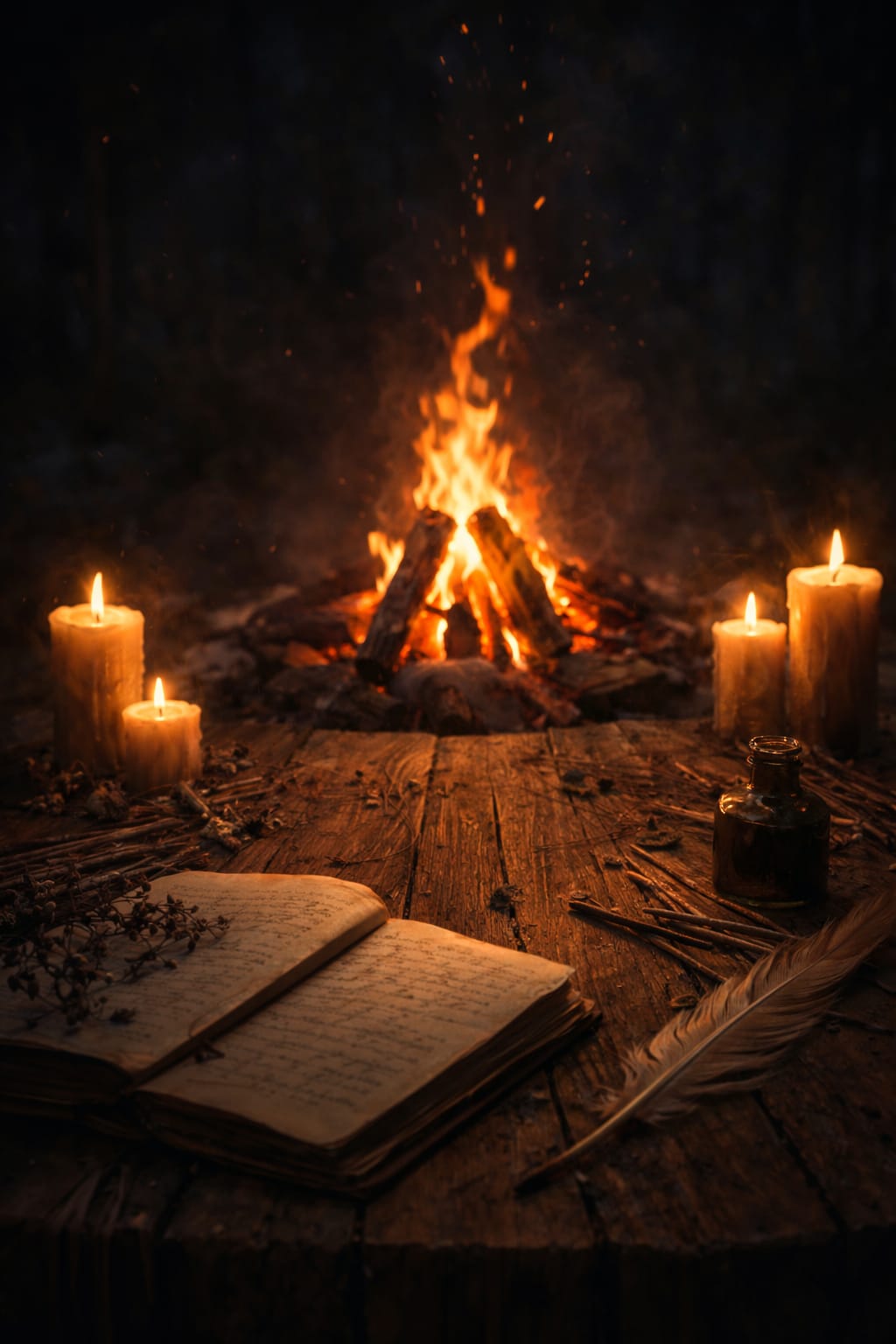
At midnight we kept the old custom…
paper, pen, a borrowed flame.
The mountain held its breath for us, as if it knew our names.
I wrote what I had outlived.
Folded it once.
That was enough.
Fire does not ask for witnesses.
It takes the offering, or it does not.
Mine went clean.
A soft collapsing.
White to ember, to what cannot be retrieved.
He held his longer.
As if the words might protest being freed.
As if release required permission.
We did this every season change,
When something inside went stale.
Always the same hour, but never the same match.
Not because it worked, exactly, but because it gave the night a shape.
At first it was grief-sized things.
A job. A father. A season that ended wrong.
We burned disappointments the way people burn letters from lovers they cannot afford to hate.
We never spoke about what we wrote.
That felt like cheating.
The mountain learned our footsteps.
The wind learned when to be still.
The fire learned our hands.
It mattered where you stood when you fed it.
He always stood closer than he needed to.
I noticed it around the third rotation.
Not because it was dangerous, but because it was intimate in a way that did not include me.
The flame would lean for him.
Not flare. Not leap.
Just tilt. As if listening.
He began bringing thicker paper.
Not more., necessarily. Just heavier.
“Are you writing bigger things?” I asked once.
He smiled like I’d asked him if the ocean was still wet.
“Just being honest,” he said.
That was when I realized we were no longer burning what we had outlived.
We were burning what he refused to.
When his paper burned, his hands did not open.
They followed the smoke, like a prayer that forgot its ending.
That is the danger of flame… it remembers what you keep feeding it.
I left my burdens with the ash.
He carried his back into the dark, warm with intention, still hungry.
We did not argue.
Fire settles things quietly.
The house burned later.
Not from ritual, but from what stayed.
For a long time I thought that would be the end of it.
Fire is easy to blame.
It leaves evidence.
I boxed the matches.
Put them where I kept winter coats and things I no longer trusted myself with.
I told myself the ritual had been the problem.
That wanting shape around grief had invited the wrong kind of attention.
That tending the flame at all was how you taught it your address.
For a while, that story worked.
Then grief began to wander.
It showed up in small places.
In the way the kettle screamed too long.
In the way empty rooms echoed after footsteps were gone.
In the way the dark felt unfinished instead of quiet.
I learned that unburned things do not disappear.
They only change posture.
They become heavier to carry and harder to name.
I missed the moment of offering.
That clean yes.
That brief consent to let something end.
Not him.
Not us.
Just what no longer matched the aesthetic.
So I took the matches back out.
My aim wasn’t to call anything.
My goal was not to invite.
I only sought to finish what I had started learning.
I chose smaller fires.
Mention-sized.
Palm-sized.
Just enough light to tell the truth and not enough to pretend it was holy.
I burned in solace.
I wasn’t afraid of sharing.
I was just finally honest about what I was burning.
Now I strike my matches alone.
I listen for the sound of honest burning.
That brief hush before light understands itself.
Hope has feathers, yes… but fire has judgment.
And I have learned to tell them apart.
About the Creator
Keep reading
More stories from writers in Fiction and other communities.




Comments
There are no comments for this story
Be the first to respond and start the conversation.