
The Incomparable Eleanor Dixon
A Short Story by Zachary Friedman

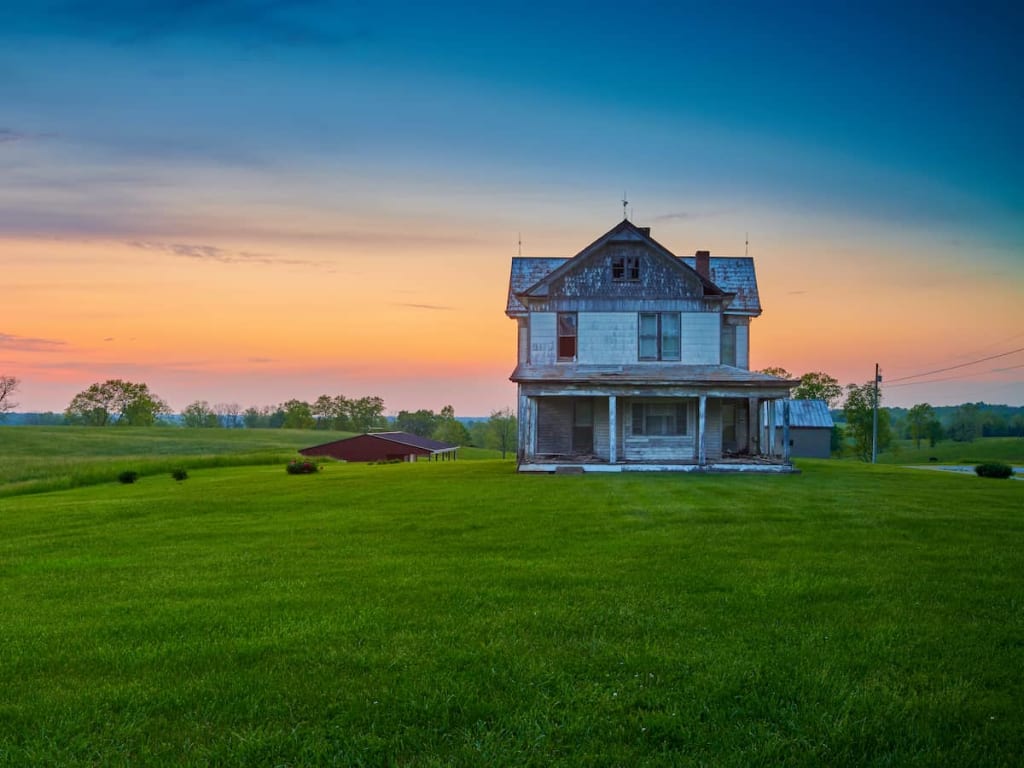
Spring always came late to our farm. But then, spring came late to most of the farms in Clark County. See, Clark County was on the edge of New York, and the winter winds blew with extra bluster off of the Berkshire mountains in Massachusetts to the east. And especially in Clark County. And most especially on the Dixon family farm. Snow still hung on the marigolds by the front porch and the pond behind our barn remained frozen over well into April.
“It’s Martians!” hollered Grampa Hurley from his spot on the porch every spring. Mama said he was never the same after the war. I was still in Mama’s belly when the war ended, but Mama told me the war took a lot of good men in Clark County, including Pa and Mr. Sneed from the farm next door. Since then Mama talked about the curse that followed our family around. First the war took Pa, and broke Grampa Hurley’s brain, and then the flu took Nana right afterwards, and the winters only got longer. “Stuck in this musty old claptrap,” Mama said to herself as she scrubbed the floors, beat the rugs, and washed the clothes. My older brother Matty and I were in charge of milking the cows and feeding the chickens. Not the bull, though, he got struck by lightning last fall.
Grampa Hurley built the farm himself before the turn of the century, but I only knew him as the old man who rocked in his chair on the front porch, rereading his favorite science fiction stories from H. G. Welles and Jules Verne. Doc Slocumb said real life for Grampa was so awful on account of the shell shock, he had to escape into worlds of fancy. After he dozed off, I would carefully slide the books off his stomach and read bits here and there. Once I told Mama I wished I could disappear into stories like Gramapa Hurley.
“Eleanor Dixon, don’t you say such things!” she smacked me on the head with her wooden spoon. “Your poor Grampa Hurley is troubled.”
Being troubled couldn’t be worse than getting hit in the head with a wooden spoon.
The one spring I remember best was when Matty broke his arm. After we finished with our chores, Matty and I used the barn as our playroom. We’d run between the cows like they were big, smelly locomotives that we had to dodge, before robbing a train. Or we’d climb up to the hayloft like we were daredevils making our way up those great, big buildings in New York or Chicago. That spring there was still snow melting on the roof of the barn, and Matty slipped on the water and fell out of the hayloft and landed on the ground. He hollered something fierce and I didn’t know what to do, so I hid under a pile of hay. Turns out that was the wrong thing to do, because when Mama found out she gave me three whacks with the wooden spoon. After Doc Slocumb wrapped Matty’s arm in a splint, he gave me a talking-to.
“Now, Eleanor,” he said, “ignoring a problem won’t fix it. If there’s something that needs to be done, you can either do it, or ignore it.”
“Ignoring is easier,” I said.
“You can’t ignore Martians!” hollered Grampa Hurley from the front porch. “Or giant squids!”
“Look at your grandfather,” said Doc. “If we ignored his problem he would never get better.”
“But we do ignore it,” I replied. Hearing Mama’s footsteps behind me I scrambled under the table.
“You get back here, young lady,” she bellowed.
I knew I was safe beneath the dining table. Maybe this would be my new home.
“Doc, I’m sorry about her,” said Mama.
“She’s just spirited,” chuckled Doc Slocumb. “Nothing wrong with that. A lively girl is a wonderful thing. I’m sure she gets it from her mother.”
“Oh, Doc,” giggled Mama. She was always giggling at things Doc Slocumb said, but I never thought he was all that funny. Except maybe his big bristly mustache.
“Matty should be fine in six weeks, but even then keep the activity to a minimum. No heavy lifting.”
“That means helping more with chores, Eleanor,” Mama stamped her foot on the floor where I was crouched.
“Does this mean I won’t be able to play ball this spring?” asked Matty.
“Afraid not, kiddo. But you’ll still have the summer.”
That night Matty got my piece of chocolate cake for dessert. “That’ll teach you to ignore your brother when he breaks his arm.”
That night, in our bedroom, I couldn’t sleep. “Hey, Matty?”
“What?”
“I can’t sleep.”
“Yeah, well I have a broken arm. Wanna switch places?”
I walked over to his bed and tugged on his blanket. He always let me in.
“Easy, Ellie,” he said, so I wouldn’t lean on his broken arm.
For a while I didn’t say anything. I listened to his breath and the winter wind outside, growing fainter each day, so I could even hear the Sneeds’ hound dog howling across the way.
“Matty?” I whispered.
“Mm,” he murmured.
“What if you could create your own worlds? Like Grampa does? What would you create?”
“Mmm... a world where Pa was alive, and the farm was flush, and Mama was happy. And Grampa was right in the head. And I had two good arms. And a good night’s sleep.”
I curled up on the edge of Matty’s bed so I wouldn’t disturb him and I tried to sleep, but my mind wandered to other worlds and the people in them - Anne of Green Gables, Mary and her secret garden, Laura Ingalls and her life on the prairie, and Dorothy and her adventures in Oz. I dreamed I was friends with all of them, and joined them on their adventures, and we became like a family. See, we didn’t just go to the places they’d already been. We went to the jungle to visit Mowgli and we sailed with Jim Hawkins on the Hispañola to reach an island where we ate fish with Robinson Crusoe and Friday. We even ran for our lives beside Grampa Hurley as the Martians attacked, a green light glowing all around us. We traveled to the depths of the ocean with Captain Nemo and the corners of the world with Pileas Fogg. And there, on a quiet hill beneath a pear tree, was Pa, all clean and handsome like he was in the picture Mama kept by her bed. It was bliss.
I got into two fights at school that week. The first was because Katie Johnson called me a “simpering ninny” for not knowing the square root of 144. So I kicked her in the shin. The second was because Harold Lumley called Governor Roosevelt a crippled coward. So I shoved him against a tree. When he shoved me back I kicked him in the family jewels. Principal Atwater called me into his office.
“Eleanor, this is our second meeting this week.”
I looked down at my knees, because I didn’t want to look him in the eye. “Sorry.”
“Is it me you owe an apology to?”
“To whom you owe an apology,” I corrected him.
He didn’t say anything so I looked up, and he was smiling. So I smiled, even though I was confused. “Eleanor,” he leaned back in his creaky wooden chair, “I know your brother is injured, and so what Harold said about the governor bothered you.”
I didn’t think of that. “The president is a good man,” I said. “And Harold is a neanderthal.”
Principal Atwater chuckled again, and that made me feel good. “Well, that may be, Eleanor. But good people have always had to endure criticisms from...”
“Neanderthals?”
“Lesser minds,” corrected Principal Atwater, with a stern look.
“Yessir,” I nodded.
All through dinner I was expected the telephone to ring and for Principal Atwater to tell Mama what I had done to that stupid Harold Lumley, but no phone call came. Instead a delivery boy showed up with a small package wrapped in paper, addressed to me.
I ignored the questions from Matty and Mama and raced upstairs to my bed. I unwrapped the paper to find a small brown notebook. On the inside cover was an inscription: “Every great mind deserves to be expressed. Listen to yourself, and not the neanderthals.”
That night I started writing. I wrote about my dreams and my adventures and all the amazing places I would visit, once I got off of the Dixon Family farm.
“It’s late,” came a voice behind me.
I turned around to see Mama standing in the doorway. I looked over to Matty’s bed and he was fast asleep.
“Is that for school?” she asked.
I shook my head.
She nodded but said nothing for a moment. Then, “You know, your father wrote me poems. When we were courting.”
“Really?”
“I can show them to you tomorrow. If you like.”
I nodded.
Mama took a deep breath, but she didn’t say anything. She just kept looking at me.
“I’ll go to bed soon,” I said.
She looked like she wanted to say something, but then didn’t. She nodded and closed the door behind her.
Eleanor stared at the closed door, then at Matty. Right on schedule the Sneeds’ hound dog howled at the wind. “Oh my,” thought Eleanor, “ how I wish there was something on the farm to write about.”
About the Creator
Zachary Friedman
Zack is a playwright, performer, and educator based in New York. As life twists and turns, the one constant has always been writing. Also, candy.
Keep reading
More stories from Zachary Friedman and writers in Fiction and other communities.
The House at the End of Hawthorn Lane
Gail Sullivan’s house sat like a sealed envelope at the end of Hawthorn Lane, addressed to no one and opened by none. The curtains never moved. The gate never creaked. After her husband died—suddenly, mysteriously—Gail withdrew behind the tall fence that ringed her property and never crossed it again. The neighborhood filled the silence with its own explanations. They said she had learned of his betrayal and answered it with precision, increasing the dosage of his daily medications until his heart complied. They noted her grief had sharpened into something dark.
By Anthony Chan3 days ago in Fiction



Comments
There are no comments for this story
Be the first to respond and start the conversation.