
The House That Remembered
A grieving woman moves into her late grandmother's cottage, only to discover that the house reacts to her emotions—windows fog with sadness, the kettle boils with anger, and light glows when she laughs. Slowly, she uncovers secrets of her family’s past through these “emotional responses.”

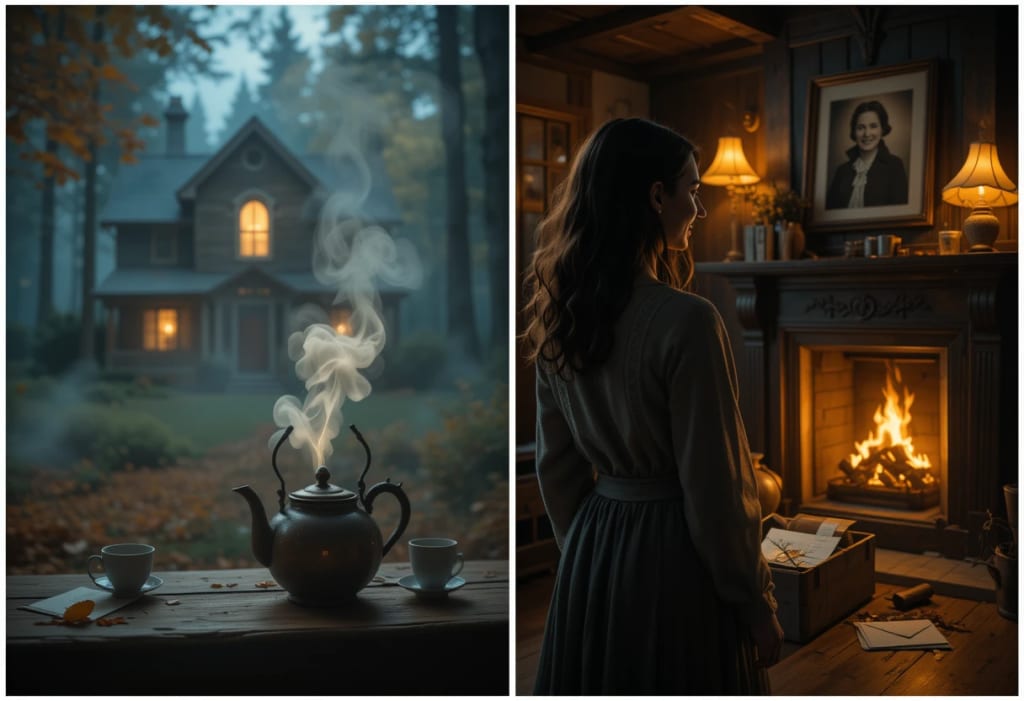
The House That Remembered
Genre: Magical Realism / Emotional Fiction
The house was older than memory, older than grief—older, perhaps, than time itself.
Elaine hadn't been back to the cottage since she was a teenager. Her grandmother's death had pulled her from the noise of the city and into the hush of pine-lined roads and fields yellowed by autumn. She arrived with two bags, a silent heart, and no plans beyond breathing for a while.
The key still worked.
The cottage smelled of lavender and dust, familiar and foreign at once. Her grandmother's knitting needles sat frozen mid-stitch in a basket beside the fireplace. The wallpaper peeled at the edges like forgotten pages. A photo of her as a child—chubby cheeks and red mittens—still stood on the mantel, though the glass was cracked.
Elaine set her bags down and exhaled.
That’s when the hallway light blinked on, flickering once before settling into a steady glow.
She hadn’t touched a switch.
Strange, she thought. But grief made everything strange.
The next morning, the kitchen window was fogged over—not just with the chill, but with something warmer. Condensation rolled like tears. She wiped it with her sleeve, revealing the fog had gathered in distinct patterns. It looked like fingerprints. Small ones.
She stepped back, unsettled. The air held its breath.
The kettle hissed behind her.
She hadn’t turned it on.
She watched the steam spiral upward, slow and calm. Her grandmother had always used this kettle, insisting the old whistle made the tea taste better. Elaine had scoffed then, too eager to grow up and move on.
Now, the sound made her chest tighten.
The cottage felt… alive.
In the days that followed, the house responded more.
When Elaine cried silently into her cup, the mirrors blurred over. When she laughed—surprised by a memory or her own clumsiness—the lights flickered warmly, like candles in a church. When she grew angry, which was often and without warning, the kettle screamed on the stove even if it hadn’t been touched.
She tested it once. Just stood in the kitchen, fists clenched, jaw tight, thinking about her mother—her absence at the funeral, the silence between them.
The kettle wailed.
She dropped her anger, and the whistling stopped.
It terrified her, and yet, she stayed.
One evening, after unpacking a box labeled “Old Letters”, she found a sealed envelope marked "Elaine" in her grandmother’s looping script.
It wasn’t dated.
Inside was a single sheet of thick paper.
“You’ll understand, my girl, when the house starts remembering for you. It holds more than furniture. It holds us. Don’t be afraid of what it shows. Just listen. And stay warm. The kettle always knows.”
Elaine read it twice. Her hands shook.
The windows fogged again.
She began exploring the house more carefully, speaking aloud as if her grandmother were still listening. She walked the creaky floorboards and tapped on the walls, half-expecting them to answer.
In the attic, under an old quilt, she found a wooden chest she didn’t remember. The moment she touched it, the room brightened slightly—just a shimmer—but enough to notice.
Inside the chest were photographs—black-and-white and sepia—some she recognized, some she didn’t. Her grandmother as a young woman, smiling beside a man with eyes like Elaine’s. A boy playing with a toy plane. A letter tucked behind the frame of a photo marked “1948”.
"He left in winter. Said he’d be back by spring. I waited three years. Then I stopped writing letters and started planting tulips."
Elaine’s breath caught.
She had never known about a lost love. The story had never been told.
The window to the attic fogged in long swirls, as if someone traced sorrow into the glass.
That night, she sat by the fireplace, wrapped in a blanket that smelled faintly of cedar and time. She didn’t light a fire, but still, the warmth grew. As if the house responded to her curiosity with comfort.
She stayed three weeks. Long enough to stop flinching when the lights blinked or the kettle cried. She started talking to the house the way her grandmother once had: “Good morning,” she’d say to the hall. “What do you think of this weather?” she’d ask the window.
One morning, she laughed—truly laughed—when the floorboard near the sink gave way and soaked her sock for the third time. The ceiling lights glowed golden, brighter than they’d ever been.
“Okay,” she whispered. “I get it. You like laughter.”
She touched the wall near the old calendar, and for a moment, just a moment, the wall warmed beneath her fingers.
On her final day, she boiled the kettle not out of grief or anger, but routine. She poured two cups—one for herself, one for the photo on the mantel.
“Thank you,” she said softly.
The steam curled in elegant shapes, almost dancing.
Elaine placed her hand on the doorway, and the porch light flickered gently in farewell.
Years later, when she returned with her daughter, the house remembered again. The child laughed in the hallway, and every bulb lit at once. The girl clapped and said, “It’s magic!”
Elaine only smiled.
“No,” she said, “It’s memory.”
And the house, as always, listened.
About the Creator
Keep reading
More stories from waseem khan and writers in Fiction and other communities.
The Boy Who Drew Doors
The Boy Who Drew Doors Jamie Ellis didn’t talk much at school. Words, he’d learned, didn’t help when you were smaller than everyone else and always looked like you were about to cry. The other kids teased him about his oversized coat, about the bruises he didn’t explain, and especially about his habit of drawing on the pavement with chalk during recess.
By waseem khan6 months ago in Fiction




Comments
There are no comments for this story
Be the first to respond and start the conversation.