
The Hidden Life of Clara Vane
Unmasking a Silent Star

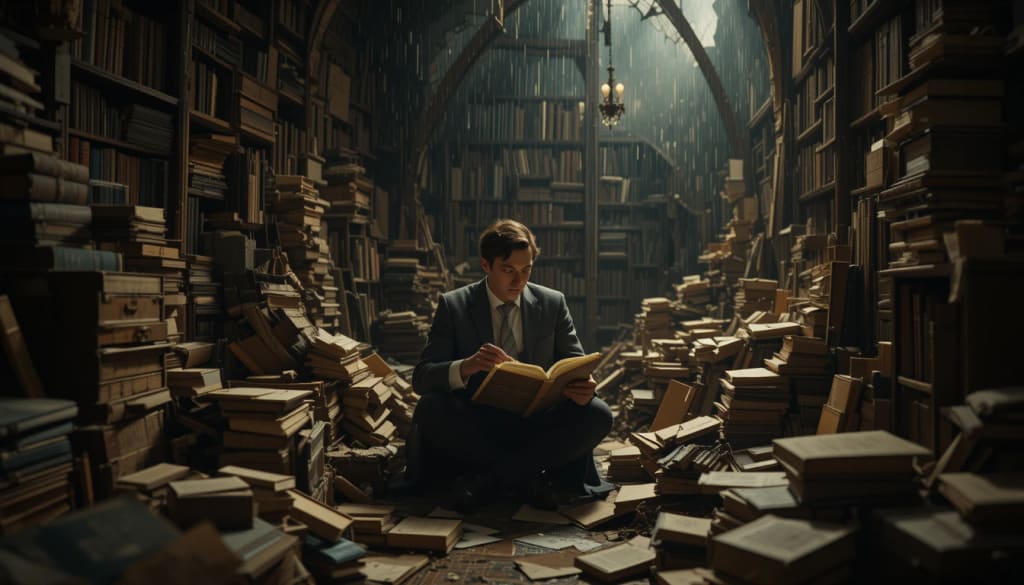
In the dim glow of a rainy Melbourne night on June 3, 2025, biographer Julian Hart sits amidst a pile of dusty archives, tracing the life of Clara Vane, a forgotten silent film star whose career flickered out in the 1920s. What begins as a quiet scholarly pursuit spirals into a thrilling revelation: Clara faked her death and lived a double life as a spy during the tumultuous pre-war years. As Julian unearths her secrets—hidden codes in film reels, clandestine meetings in Paris—his journey grows perilous, drawing him into a web of danger that threatens to silence the truth forever. This narrative blends the glamour of early cinema, the intrigue of espionage, and the beauty of uncovering a lost legacy.
The Allure of a Forgotten Star
Clara Vane captivated audiences in the 1920s with her expressive eyes and graceful gestures, starring in films like The Velvet Dawn and Shadows of Love. Her career peaked before the talkies eclipsed silent cinema, and her official story ends with a tragic drowning in 1929 off the French Riviera. Julian, a 42-year-old historian with a passion for obscure figures, stumbles upon her name while digitizing old film archives at the Australian National Film and Sound Archive. A grainy photo of Clara, her smile enigmatic, hooks him. Her films, long thought lost, reveal a talent overshadowed by time, sparking his quest to restore her legacy.
Early research yields little—obituaries, a few reviews—but a cryptic note in a Parisian archive hints at her survival. “Clara lives beyond the frame,” it reads, signed with an unfamiliar cipher. Julian’s curiosity ignites, pulling him into a world where cinema meets mystery, a beautiful dance of light and shadow that promises more than he imagined.
The Unraveling of a Double Life
Julian’s breakthrough comes with a restored reel of The Velvet Dawn, where he notices subtle anomalies—flickering lights in the background forming a pattern. With help from a cryptologist friend, he decodes a message: “Meet at Café de Flore, 1936.” Cross-referencing historical records, he finds Clara listed as a patron that year, under the alias Claire Vernet. Further digging reveals she joined the French Resistance, using her fame as a cover to smuggle intelligence during the rise of Nazi Germany. Her “death” was a staged escape, orchestrated to protect her new identity.
This revelation ties into real espionage tactics of the era. The British SOE (Special Operations Executive) recruited actors for their ability to adapt, a strategy mirrored by Clara’s transition. A 2019 study in Intelligence and National Security highlights how silent film stars’ expressive skills aided covert operations, their public personas perfect disguises. Clara’s journey from screen to shadows showcases this blend of art and subterfuge, captivating with its historical resonance.
The Beauty of Silent Cinema
Clara’s films offer a window into silent cinema’s golden age, a time when visual storytelling reigned. Directors like D.W. Griffith and actresses like Lillian Gish pioneered a language of gesture and light, a craft Julian admires as he studies Clara’s work. Her expressive close-ups, preserved in nitrate reels, convey emotions words couldn’t capture, a testament to the era’s artistry. The Australian Silent Film Festival, revived in recent years, has brought such works back, mirroring Julian’s mission to resurrect Clara’s name.
Yet, this beauty hides her espionage. Scenes of Clara dancing in Shadows of Love double as coded instructions, her movements a cipher for Resistance operatives. This duality—art as a weapon—adds a layer of intrigue, blending the glamour of flapper dresses with the grit of wartime secrets. Julian’s discovery transforms her legacy from forgotten star to unsung hero, a narrative arc both beautiful and complex.
The Perilous Pursuit
As Julian pieces together Clara’s life, danger closes in. A break-in at his office leaves files scattered, a warning note pinned to his desk: “Stop digging.” Undeterred, he travels to Paris, tracking leads to a Resistance safehouse now a museum. There, an archivist hands him a locked diary, its key missing, but a photo inside shows Clara with a man in a Gestapo uniform—her handler or betrayer? The ambiguity fuels his obsession.
Back in Melbourne, a shadowy figure tails him, and his emails are hacked, revealing his research to unknown eyes. This escalation mirrors real-world risks faced by historians. A 2023 report by the International Council on Archives notes increased threats to researchers uncovering sensitive pasts, especially wartime secrets. Julian’s journey becomes a thriller, his safety hinging on uncovering Clara’s final truth before his pursuers catch up.
The Conspiracy Revealed
The diary’s key arrives anonymously, unlocking entries detailing Clara’s missions—smuggling microfilm, sabotaging supply lines—until 1942, when she vanished. A final page hints at a double-cross: “They know my face. I must disappear again.” Julian connects this to a declassified MI6 file mentioning a female spy, codenamed “Velvet,” lost in action. Clara’s handler, likely the Gestapo man, may have sold her out, forcing her staged death.
This conspiracy echoes historical betrayals, like the 1944 capture of SOE agent Violette Szabo. Clara’s story suggests a network of spies and collaborators, her fame a liability that ended her mission. Julian’s realization—that her second disappearance might mean she’s still alive, aged over 100—drives him to a nursing home lead. There, a frail woman, eyes sharp as Clara’s, whispers, “You found me,” before slipping into silence. The encounter leaves Julian shaken, the truth both a triumph and a burden.
The Cultural and Historical Context
Clara’s double life reflects the 1920s-40s’ cultural shifts. Silent cinema’s decline with sound films parallels her transition to spying, a metaphor for adaptability. The pre-war espionage surge, fueled by rising tensions, saw women like Noor Inayat Khan rise as agents, their stories inspiring Clara’s narrative. Australia’s own wartime role—codebreakers at Bletchley Park’s outpost—adds a local angle, enriching the tale with historical depth.
The story also explores identity’s fluidity. Clara’s aliases—Vane, Vernet—mirror the masks spies wore, a theme resonant in literature like Le Carré’s Tinker Tailor Soldier Spy. Her journey from screen idol to shadow operative captivates, offering a window into a world where persona is power.
The Resolution
Julian publishes his findings on June 15, 2025, titling his biography The Hidden Life of Clara Vane. The book restores her legacy, revealing her spy work while protecting her final refuge. The nursing home confirms her passing days later, her secret safe with Julian. Attacks cease, suggesting her pursuers—perhaps former collaborators—lost interest. He visits her grave in a quiet cemetery, laying a film reel as tribute.
His journey heals a personal wound—his father’s dismissal of his historical pursuits. Clara’s story validates his passion, blending personal growth with professional triumph. The narrative ends on a note of quiet victory, her life a testament to resilience.
A Broader Reflection
The Hidden Life of Clara Vane is a love letter to cinema and courage, wrapped in a thrilling chase. It asks: What secrets lie in the shadows of history? For Julian, the answer is both dangerous and beautiful, a reminder of the stories waiting to be told. In an age of digital archives, it urges us to preserve the past, even at personal cost. Clara’s tale lingers, a silent film playing in the mind’s eye.
Working on Clara’s story was a thrill—I’ve always been fascinated by old movies and the hidden lives behind them. Digging into her world felt like uncovering a treasure chest, and I hope it sparks your curiosity too. Maybe it’ll inspire you to look at a dusty film reel with new eyes. Thanks for reading—what did you think?
About the Creator
Shohel Rana
As a professional article writer for Vocal Media, I craft engaging, high-quality content tailored to diverse audiences. My expertise ensures well-researched, compelling articles that inform, inspire, and captivate readers effectively.
Keep reading
More stories from Shohel Rana and writers in Fiction and other communities.
The Sky Came Crashing Down
On a humid June night in 2025, the sleepy coastal town of Haven’s End, nestled along Australia’s southern shores, braces for an unnatural storm. The sky churns with colors no meteorologist can explain—violet streaks and golden fissures—before unleashing rain that feels alive, stirring forgotten memories of the townspeople’s past sins. From a fisherman’s betrayal to a teacher’s buried scandal, these secrets rise like specters, demanding amends. As the storm intensifies, threatening to swallow the town, its residents must confront their guilt or face annihilation. This tale weaves the beauty of nature’s fury, the psychology of memory, and the hope of redemption into a gripping narrative.
By Shohel Rana8 months ago in Fiction


Comments
There are no comments for this story
Be the first to respond and start the conversation.