
The Great Migration: A Village's Journey to New Hope
The Heartbreaking Decision to Leave Their Homeland, and What Lies Ahead

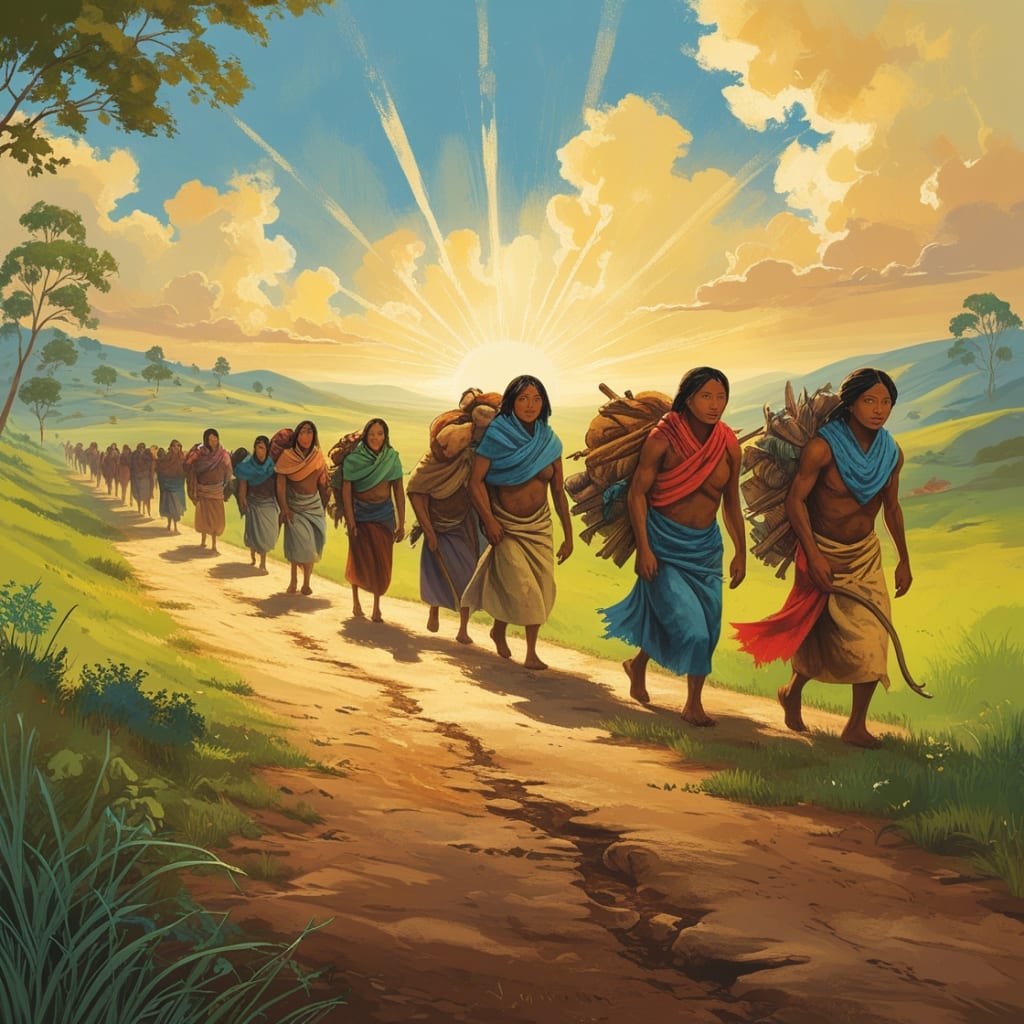
The small village of Everdon sat nestled in the shadow of an icy mountain range. For generations, the villagers had lived harmoniously, surrounded by snow-covered peaks and glistening glaciers. Everdon was a place where time seemed to stand still, where the pace of life was dictated by the seasons and the ebb and flow of nature’s icy grip.
But something was changing.
The ice—once solid and immovable—was melting. Slowly, imperceptibly at first, but now with an alarming speed that could not be ignored. Streams and rivers once fed by glaciers were rising, flooding the farmlands that sustained the village. The wildlife that had called the frozen wilderness home for centuries was now seeking higher ground, and the once-frozen lakes were turning into murky swamps. The village elders, who had spent their lives tracking the patterns of nature, feared the worst. If the ice kept melting, Everdon would be lost.
And so, the decision was made. The village would have to relocate.
It was not an easy decision. The people of Everdon had deep roots, generations of ancestors who had lived and died on this land. Their homes, their traditions, and their very identities were tied to the land. The thought of leaving it behind was a painful one, and many resisted the idea. But with every passing day, the danger grew more real. The ice was melting, and Everdon would be swallowed by the rising waters.
Among the villagers, a young girl named Isolde stood out. With her bright blue eyes and boundless curiosity, she was known for her adventurous spirit and her unshakable optimism. Despite the uncertainty that loomed over them all, Isolde believed that the relocation could be a new beginning, a chance for the villagers to thrive in a place untouched by the melting ice. Her parents, Mara and Lucian, shared a similar belief, although they were quieter about it. They knew that the road ahead would be difficult, but they also understood that in every challenge lay an opportunity.
As the village prepared for the great migration, the ice continued its relentless retreat. The once-imposing glaciers were now mere shadows of their former selves, receding farther and farther into the mountains. The villagers packed what little they could carry—tools, clothing, heirlooms—and prepared for the journey to their new home. The elders spoke of a place far to the north, beyond the mountains, where the land was still fertile, and the climate more stable. It was a land they could make their own, a fresh start.
But the path to this new land would not be easy. The journey would take weeks, if not months, and the road was fraught with danger. Ice storms, wild animals, and treacherous terrain awaited them. But Isolde was undeterred. She saw the journey not as a punishment, but as a grand adventure, a story that one day her children would hear about—the story of how their people overcame the melting ice and found a new home.
The journey began with heavy hearts but a flicker of hope. As the villagers trudged through the frozen landscape, Isolde’s mind raced with possibilities. She wondered what the world beyond Everdon was like. She dreamed of new places to explore, new people to meet, and a world where the ice no longer ruled over their lives.
Days turned into weeks, and the village moved steadily northward. Along the way, they encountered other displaced groups, each with their own stories of how the ice had driven them from their homes. The stories were heart-wrenching, yet there was a common thread of resilience and hope. These people, like Isolde, had not given up. They were fighting to survive, to find new lives in the wake of a world that was changing too fast.
But even as they marched forward, the challenges grew. The weather was harsher than ever, and supplies began to dwindle. The ice storms were more frequent, and the food stores were running low. Some of the villagers began to doubt their decision. They questioned whether the journey was worth it, whether they were chasing a dream that was impossible to attain.
One night, as Isolde lay in her tent, she overheard her parents talking. Mara’s voice was tinged with worry, and Lucian’s words were soft, yet filled with conviction.
“Do you think we’re doing the right thing?” Mara asked.
Lucian’s reply was steady. “We have no choice. The ice is melting. We can either stay and perish, or we can move forward, with the hope that there’s a future beyond this.”
“But what if we fail?” Mara whispered.
“We won’t fail. Because no matter what happens, we’ve already done the hardest thing—believing that there’s a future,” Lucian said.
Isolde listened closely, her heart swelling with pride for her parents. Their words, though spoken in the quiet of the night, carried a message that would guide her for the rest of her life: the strength to face the unknown lies in the belief that the future holds something better. It wasn’t about the destination—it was about the courage to take that first step.
The days stretched on, but the villagers pressed forward, their spirits buoyed by Isolde’s unwavering optimism. They reached the foot of the mountains, their final obstacle before the fertile land beyond. The climb was brutal, but the villagers were stronger than they realized, driven by a collective determination to find a place where they could rebuild.
When they finally reached the summit, the sight before them took their breath away. A lush valley stretched out before them, bathed in golden sunlight, with rivers winding through fields of green. It was a place untouched by the ice, a paradise waiting to be claimed.
Isolde’s eyes filled with tears as she looked out over the land. She had done it. The village had done it. They had faced the melting ice and the unknown, and they had found a new home.
In the years that followed, Everdon’s people thrived. They rebuilt their homes, planted new crops, and lived in harmony with the land. And every year, on the anniversary of their great migration, Isolde would gather the children of the village and tell them the story—the story of how they left their homeland behind, how they overcame the challenges of the journey, and how they found a place where the ice no longer threatened their lives.
And as she spoke, she would look to the horizon, knowing that the journey was far from over. There were still many adventures to be had, many challenges to face. But in that moment, Isolde and her village had learned the greatest lesson of all: the future belongs to those who dare to leave the past behind and walk boldly into the unknown.
The Great Migration: A Village’s Journey to New Hope serves as a reminder that no matter the challenges we face, hope, resilience, and courage are the keys to overcoming adversity. It’s a story that speaks to the heart of what it means to adapt, to grow, and to find new paths when the world around us is changing.
About the Creator
Mary Emmanuel
Dive into the enchanting symphony of my soul! 🌟 As a writer and singer, I weave tales with words and melodies that linger in hearts. 📚🎤 Join me for an artistic escapade beyond imagination! Thanks for stopping here!
Keep reading
More stories from Mary Emmanuel and writers in Fiction and other communities.
The Bloodline Legacy
The Bloodline Legacy In the sprawling city of Eldenhurst, where skyscrapers loomed over ancient cobblestone streets, the Draven dynasty reigned supreme. For over a century, their family had built a multi-billion-dollar empire, with holdings in technology, manufacturing, and philanthropy. But as the current patriarch, Magnus Draven, approached his 80th birthday, the question of succession loomed ominously over the family.
By Mary Emmanuelabout a year ago in Fiction
Affection and Healing for Yourself
During the night of the last quarter moon, I gathered my ritual supplies. I carefully handled the chunk of black tourmaline that would protect me from your overall negative and narcissistic energy. I carefully walked the house with my stick of selenite in hand, asking the universe to cleanse our working space.
By Alisha Wilkins ✒️🦋🖋️3 days ago in Fiction


Comments
There are no comments for this story
Be the first to respond and start the conversation.