
The Forgotten Empire: The Rise and Fall of Mesopotamia
How the world’s first civilization shaped the destiny of humankind

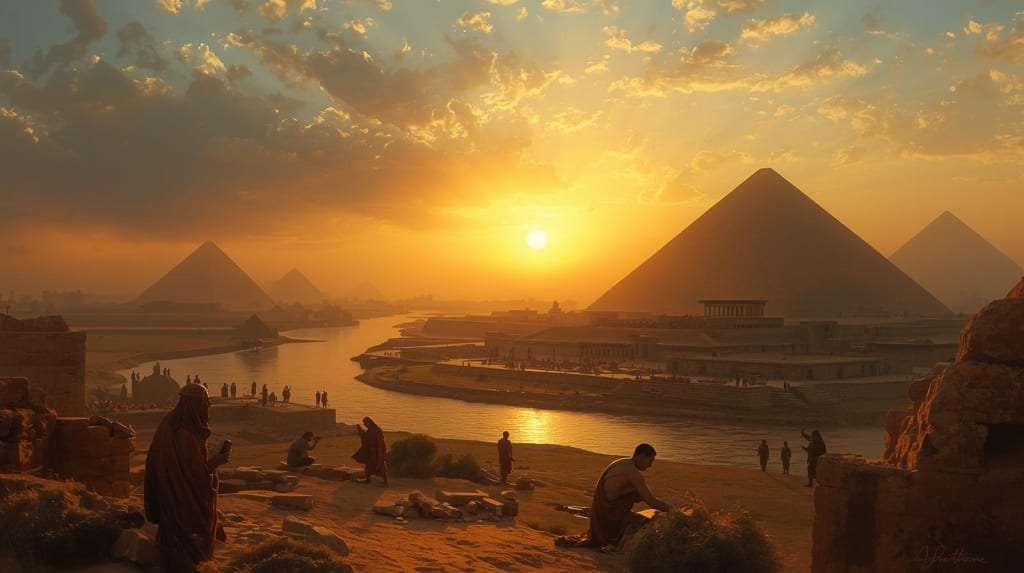
When we think about human history, we often picture grand empires like Rome, Persia, or Egypt. But long before them, a land between two rivers—the Tigris and Euphrates—birthed something far more profound: the first organized civilization known to mankind—Mesopotamia.
This region, now largely within modern Iraq, is where human civilization took its first steps toward progress. It’s here that writing, law, mathematics, and urban life were born. The story of Mesopotamia is not just about kings and wars—it’s about human curiosity, creativity, and resilience.
The Beginning of Civilization
Around 4000 BCE, people began to settle near the fertile lands between the rivers. These farmers discovered that with water and labor, they could produce more crops than they needed. This abundance gave birth to cities such as Uruk, Ur, and Babylon—names that still echo through history.
For the first time, humans were not just surviving; they were building societies, trading goods, and recording information. The Sumerians, one of the earliest peoples of Mesopotamia, developed cuneiform writing—a system of wedge-shaped marks on clay tablets. This was the world’s first writing system, turning oral traditions into recorded history.
The Age of Kings and Law
As the cities grew, so did the need for leadership and order. Mesopotamia saw the rise of kings who claimed divine authority. Among them, one stands out—King Hammurabi of Babylon. His Code of Hammurabi is one of the oldest legal systems ever discovered.
Written nearly 3,800 years ago, it set the foundation for modern justice, with the famous phrase, “An eye for an eye, a tooth for a tooth.” Though harsh by today’s standards, it was revolutionary—it showed that even rulers were bound by law.
Science, Stars, and the Gods
Mesopotamians were deeply spiritual. They built towering ziggurats—massive temples meant to reach the heavens. They studied the stars not just for wonder, but for survival. Their observations of celestial movements led to the creation of the 60-minute hour and 360-degree circle, concepts we still use today.
To them, every star, flood, or drought was the will of the gods. Yet, beneath their faith lay the foundation of science and astronomy. Mesopotamia’s thinkers turned divine observation into structured knowledge—a critical step in humanity’s intellectual evolution.
The Fall and the Legacy
No empire lasts forever. Continuous wars, invasions, and environmental changes gradually weakened Mesopotamia. By 539 BCE, when Cyrus the Great of Persia conquered Babylon, the era of Mesopotamia had ended.
But its legacy lives on. Every time we look at a clock, write on a tablet, or discuss laws, we are walking in the footsteps of Mesopotamia’s visionaries. It’s a reminder that progress is built upon the ideas of those who came before us—those who dared to imagine something greater than survival.
A Lesson for Today’s Learners
For creators and writers on platforms like Vocal Media, history isn’t just a subject—it’s a guide. The story of Mesopotamia teaches us that innovation begins when humans decide to record their thoughts, share their ideas, and build something that lasts.
Just like those first scribes pressing clay tablets, every writer today carves a mark on the future. Your words, your art, your voice—they are the continuation of that ancient human story.
About the Creator
Shohel Rana
As a professional article writer for Vocal Media, I craft engaging, high-quality content tailored to diverse audiences. My expertise ensures well-researched, compelling articles that inform, inspire, and captivate readers effectively.
Keep reading
More stories from Shohel Rana and writers in Fiction and other communities.
The Vanished Village Beneath the Lake
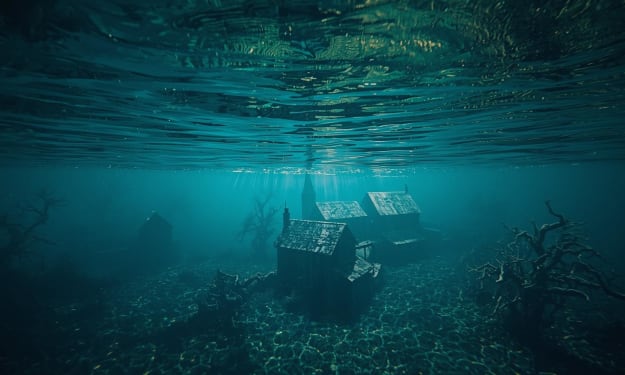
On a crisp autumn morning in 1950, the people of Dana, Massachusetts, gathered in silence as bulldozers rolled into their streets. Children clutched their mothers’ hands, old men leaned on canes, and the echo of church bells rang for the last time. Within weeks, their homes, schools, and memories would be gone—buried beneath a vast man-made lake. The government called it progress. The people called it betrayal.
By Shohel Rana3 months ago in Fiction
The Devil's Cut
“Comrade, finally you’re awake.” The voice was smooth, sensual. A flickering incandescent bar was all that lit the white, sterile room. All Vladimir remembered was everything going black. He tried to move his arms and found them strapped to the gurney.
By Matthew J. Fromm4 days ago in Fiction
How To Save Your Life With A Glass of Water
Step 1. Acknowledge the smallest solvable problem I can tell you are reaching for the big stuff, saying something like—“If I could just quit drinking…” or “If my mother had never died…” or “If I wasn’t single…”—these are not what I am talking about.
By Aubrey Rebeccaa day ago in Fiction


Comments
There are no comments for this story
Be the first to respond and start the conversation.