
The Day We Were All Assigned a Random Stranger’s Dreams
One night, everyone stopped dreaming their own dreams and started living through the subconscious of someone they've never met.

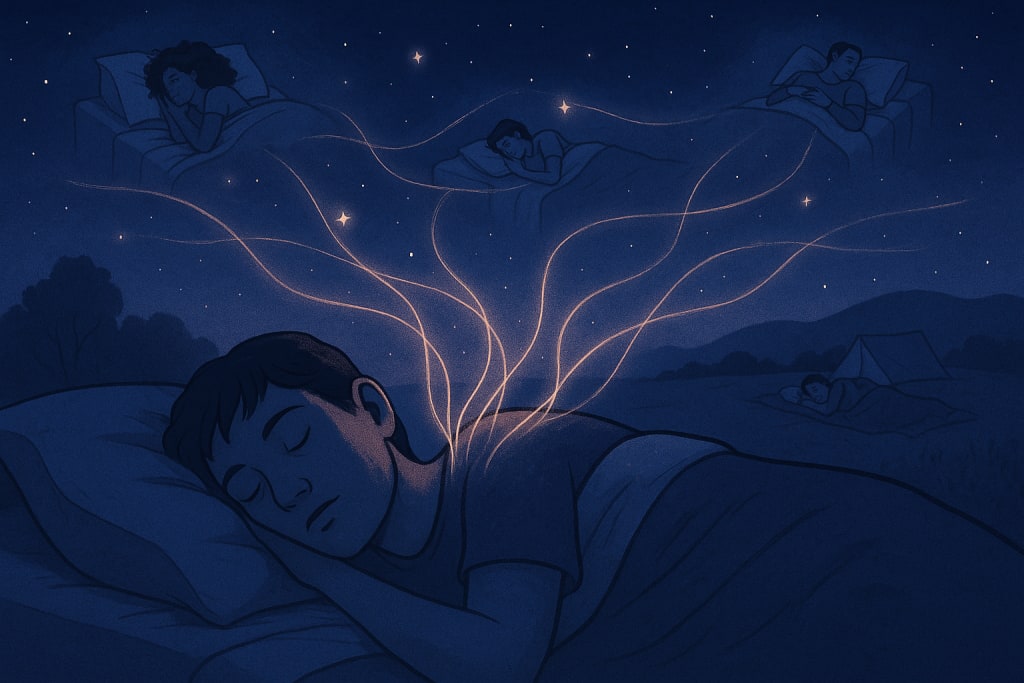
It was subtle at first.
On the morning of March 19th, people woke up unusually quiet. Not from nightmares or insomnia, but from confusion—about dreams that made no sense. A truck driver in Montana dreamed she was giving birth in a Parisian opera house. A five-year-old in Cairo had a vivid nightmare of failing a corporate audit. A retired baker in Seoul dreamt, in perfect Swedish, of winning a fencing tournament.
By mid-morning, the pattern was clear: people weren’t dreaming their own dreams anymore.
They were dreaming someone else’s.
Randomized Dream Redistribution
Scientists called it “Cross-Conscious Dreaming.” Philosophers called it “the end of inner privacy.” But the internet called it what it was: Dream Swap Day.
Forums flooded with posts:
“Dreamt I was lost in a corn maze. I’ve never seen corn in my life.”
“Who the hell is Mark, and why did I cry when he didn’t show up?”
“Anyone here get the dream with the floating vending machines and the screaming goats?”
Hashtags like #NotMyDream and #DreamThief trended globally.
Then came the wild idea: what if everyone’s dreams had been randomly assigned to someone else?
Not dream types.
Actual, one-night-only, straight-from-the-subconscious, unfiltered someone-else’s dream.
The Dream Database
Soon, an open-source platform appeared: "WhoDreamedMine.com."
You could input details from your dream and find matching reports. People were encouraged to describe everything: colors, emotions, people, languages, feelings.
Shockingly accurate matches started appearing.
A teenager in Dublin described a dream where she argued with her dead brother over a lost watch. A man in Morocco replied: “That was my brother. I’ve never told anyone that story. I guess you saw it.”
The realization hit: the dreams weren’t just weird. They were personal. Real. Private. Often painful.
Strangers were seeing things never meant to be shared.
Unintended Consequences
There were beautiful outcomes.
An elderly widow in Toronto dreamed of a little boy playing with a golden retriever. A few days later, she found the boy online—his dream had been of her teaching him how to bake cookies. Neither had grandchildren. They now video chat weekly.
But the dangers were real too.
Secrets got out. Cheating spouses were exposed through unfamiliar dreams. Hidden traumas surfaced. A woman recognized her abuser in someone else’s dream—and learned he had dreamed about her too.
Governments struggled with new ethical questions:
Is a dream still private if it doesn’t belong to you?
The Emotional Hangover
People began to feel echoes of others’ lives. Emotional residue. Grief for parents still alive. Guilt for crimes never committed. Longing for lovers never met.
Some became addicted—refreshing the site daily, obsessed with finding their dream partner.
Others withdrew entirely, terrified that their secrets had been seen.
A movement called Dream Abstinence began: people trying to train themselves not to sleep deeply, or to wear sensory deprivation helmets. But nothing worked. The dreams kept coming.
Every night, a stranger’s life. A stranger’s longing.
And no one could choose what they'd get.
Patterns in the Chaos
After a week, dream pairings stopped being random.
A teenager kept receiving the dreams of a woman in her sixties. A teacher in Brazil consistently saw the life of a depressed farmer in Ukraine. Some began developing attachments, even without direct contact.
People started writing letters:
"If this was your dream, I just want you to know—I saw your pain. You’re not alone."
Some responses came.
Others didn’t.
One girl mailed a physical letter to an address she saw on a building wall in her dream. A month later, she got a reply:
“You dreamed of my brother. He’s been missing for three years. Thank you.”
A Permanent Shift?
No one knows why it started.
No one knows if it’ll stop.
Maybe something in human consciousness was trying to connect us, one subconscious at a time. Maybe this was empathy, forcibly uploaded.
Or maybe it was a glitch in the simulation. An error in the dream-assignment algorithm of reality.
But one thing is certain: we now sleep with the awareness that our innermost thoughts may no longer be ours alone.
So when you dream tonight—ask yourself:
Whose life will you visit?
And who will be quietly watching yours?
About the Creator
Ahmet Kıvanç Demirkıran
As a technology and innovation enthusiast, I aim to bring fresh perspectives to my readers, drawing from my experience.
Keep reading
More stories from Ahmet Kıvanç Demirkıran and writers in Fiction and other communities.
The Day We All Started Hearing Our Future Regrets
It began with a sound that didn’t belong. At 4:13 a.m. in Reykjavik, a woman sat up in bed and heard a voice say, “You should have told her you loved her when you had the chance.” The voice was her own—but older, sadder. She was alone in the apartment.
By Ahmet Kıvanç Demirkıran10 months ago in Fiction
The Devil's Cut
“Comrade, finally you’re awake.” The voice was smooth, sensual. A flickering incandescent bar was all that lit the white, sterile room. All Vladimir remembered was everything going black. He tried to move his arms and found them strapped to the gurney.
By Matthew J. Fromm5 days ago in Fiction


Comments (2)
very well written
Fab ♦️💙♦️