
The Day I Pretended to Be Okay (and It Worked Too Well)
A raw account of masking mental health struggles in daily life.

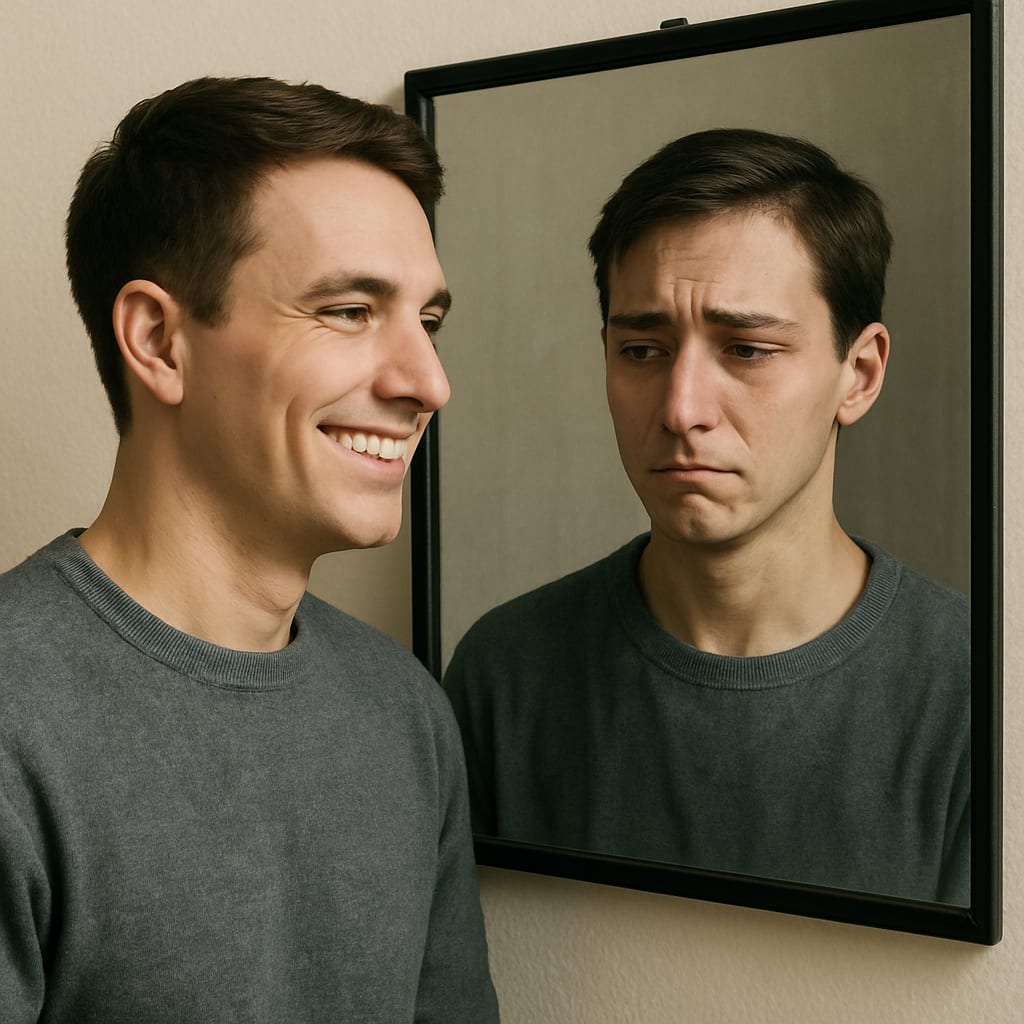
The Day I Pretended to Be Okay (and It Worked Too Well)
by [WAQAR ALI]
The Day I Pretended to Be Okay (and It Worked Too Well)
There are days when you wake up and feel like something is off — but you can't point to what. Then there are days like the one I’m about to tell you about — where everything feels off, and you still pretend like nothing is.
I remember it too clearly.
The weather was beautiful, ironically — the kind of morning where the sun is a bit too bright, like it's mocking your sadness. I was running on four hours of sleep and an aching tightness in my chest that had followed me around for weeks. I had mastered a routine of looking normal: clean shirt, brushed hair, forced smile. Like a play I’d rehearsed every day for years.
People at work called me "reliable" and "easygoing." I became that person who always nodded at the right moments in meetings, asked coworkers how their weekend was, and laughed at jokes I didn’t find funny. I even left little Post-it notes with encouraging messages on other people’s desks. No one knew that I wrote those messages for myself.
I wasn’t okay. I hadn't been for a while.
That day started with a heavy silence in my apartment, one that no podcast or playlist could fill. I stared at the bathroom mirror for longer than usual, not because I liked what I saw, but because I didn’t recognize it. There was a flatness in my eyes that even I couldn’t deny anymore.
But I told myself what I always did: “You’re fine. You don’t have time to fall apart.”
So I didn’t.
I went to work like usual. I smiled at the receptionist. I made small talk with Greg from accounting. I answered emails with exclamation marks and emojis. I ate lunch with coworkers and asked about their kids and their dogs and their weekend plans.
I performed wellness so well that even I started to believe it for a second.
Midway through the day, my manager called me into her office to compliment the way I handled a difficult client. She said, “You always seem so balanced. I admire that.” I thanked her, smiled, and nodded. Inside, I felt like a glass being praised for how beautifully it holds water — while tiny cracks begin forming underneath.
I remember walking to the restroom shortly after and locking the stall door behind me. I didn’t cry. I didn’t panic. I just stood there, staring at the inside of that cheap metal door, and whispered, “I can’t do this much longer.”
But then I walked out, washed my hands, and went right back to my desk.
And no one noticed. That’s what stuck with me the most — how no one noticed.
I don’t blame them. I had spent years building an image that said: “Don’t worry about me. I’ve got it all together.” I was so convincing, I even fooled myself.
It wasn’t until later that night, when I was sitting alone on my couch, still dressed in work clothes, that I realized what I’d done. I had become so good at pretending to be okay that the real version of me — the hurting, anxious, lonely version — had no room left to exist.
I looked at my phone, hovered over a friend’s name, thought about texting, and then didn’t.
Because what would I say?
“Hey, I know I looked fine today, but actually I’ve been slowly unraveling inside my own head.”
It felt too dramatic. Too messy. Too real.
That’s the problem with masks — they protect you, but they also isolate you.
Eventually, I did tell someone. A week later. It was a quiet conversation on a park bench with a friend who asked, “How are you really?” And for some reason, that word — really — opened something in me.
“I’m not okay,” I said. “But I don’t know how to stop pretending I am.”
It wasn’t a magical fix. She didn’t have the answers. But she listened. She let me talk without trying to fix me. And in that moment, I felt seen. Like the real me — the me behind the mask — finally had a voice.
Looking back, that day I pretended to be okay and succeeded… it haunts me. Not because I tricked people. But because I tricked myself into believing I didn’t deserve support until I was falling apart.
Now, I try to check in with others a little more. And I try to answer honestly when someone asks how I am.
Because the truth is — the most dangerous lies aren’t the ones we tell others.
They’re the ones we tell ourselves, with a smile on our face and a storm in our chest.
About the Creator
WAQAR ALI
tech and digital skill


Comments
There are no comments for this story
Be the first to respond and start the conversation.