
The Call That Split Me
Between grief and gratitude, dialysis and transplant, Lily discovers what she owes to tomorrow.

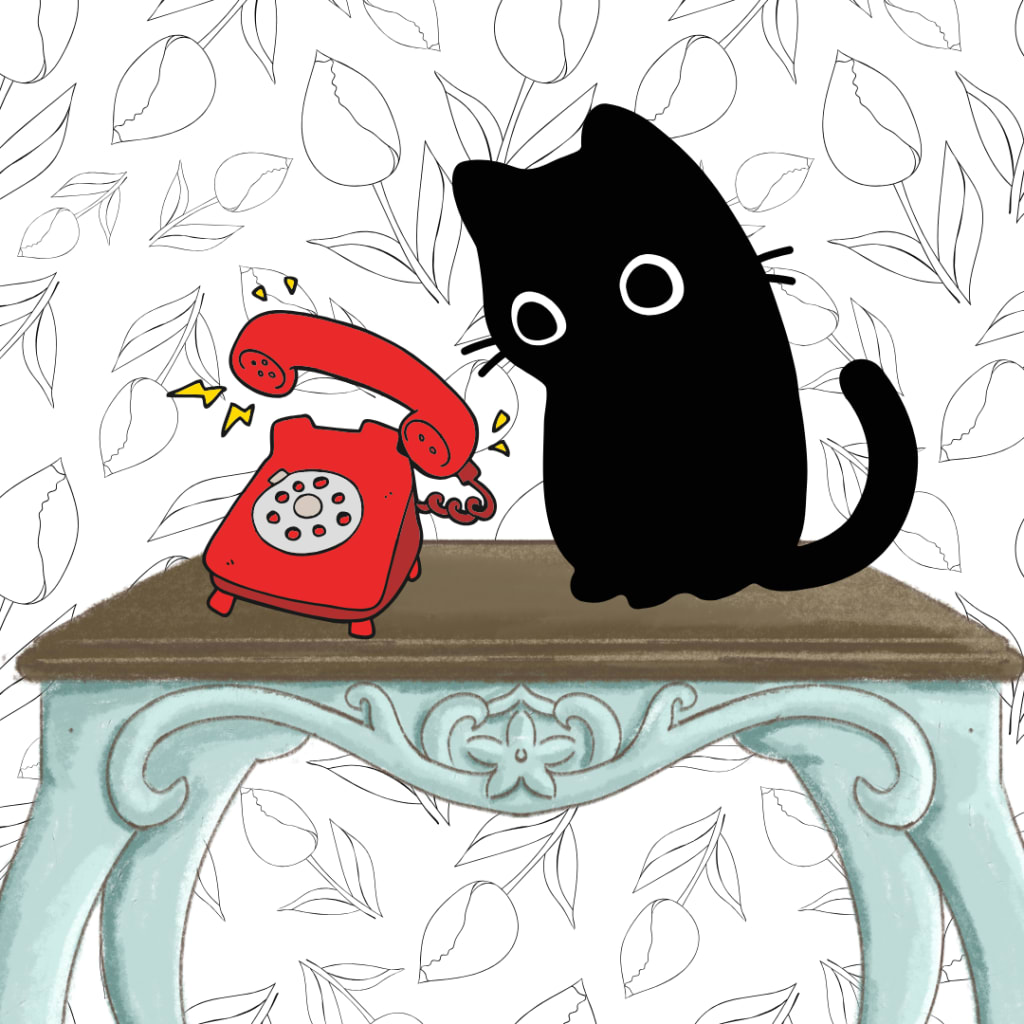
At 2:13 a.m., the phone rings.
In one world, Lily wakes instantly. The apartment is so quiet she can hear the refrigerator switch off. A soft weight lifts from the bend of her knees—Hekate, her black cat, standing, amber eyes lit like two streetlamps in fog. Lily answers on the second ring, voice rehearsed for years of maybe-tonight. A woman says Lily’s full name and the words she’s memorized and avoided like a superstition: We have a kidney for you.
In the other world, the phone rings under a sweater on the dresser. The battery is a sliver of red. The call goes to voicemail. Hekate blinks once, resettles, and curls into the space behind Lily’s knees. In her dream, Lily is in water she can’t quite enter. She wakes to a missed call and a message: an organ was allocated elsewhere, thank you for your time, please keep your phone on. She sits on the edge of the bed and breathes as if she’s fallen down stairs she can’t see.
Two Lilys, split by a single coincidence: a phone face down under wool; a cat too polite to meow.
They get up to the same morning and not at all.
Lily who-said-yes.
The transplant floor smells like lemon cleaner and old prayers. A nurse with a comet of glitter on one fingernail slides consent forms toward Lily. The pen stutters like it doesn’t trust the ink. Her mother sits straight-backed, a rosary coiled inside her pocket; her thumb worries the same bead until it warms.
Questions come in waves: allergies, history, last meal, last drink. The answers feel like a test she’s studied for and still might fail. Lily asks the only question that has lived in her since the waiting list email: “Are you sure? Are you sure it’s me?” The nurse smiles like a lighthouse: steady, practiced, meant for eyes that have been in storms.
There’s relief, and it is enormous and embarrassing, a relief that tastes like salt. Relief feels like betrayal. Somewhere, grief is teaching a family a new language, one with fewer names in it. Lily has a video on her phone from months ago, joking in the dialysis chair, grading chips by crunch, calling herself a snack sommelier. She wants to send it to the unknown family and say: I will not waste this. I will not waste her.
When she wakes, the world has been edited. There’s pain, there’s a machine singing in a language of beeps, there’s a nurse telling her to sip and swallow because this is how futures begin. The new organ is working, they say. Drink water like it’s a promise, they say. She looks at the place on her body where someone else’s time has been stitched into hers and counts to ten without knowing why.
Back home, Hekate becomes a sentry. She patrols the couch arm, the foot of the bed, the space beside the bathroom door. She avoids the fresh incision with a solemnity that makes Lily cry. When Lily naps upright, Hekate stands on her hind legs and taps Lily’s knee, a feather-light summons back to the surface.
The paper bag of pill bottles becomes a shrine on the kitchen table—labels with long, military names; a sun-and-moon schedule of alarms. She and her mother lay them out in lines like dominoes. “Beautiful,” says her mother softly. “Feels like math,” Lily says, and thinks of all the equations she failed in high school; yet here she is, solving by ritual.
On the fifth day, a message arrives through a friend-of-a-friend-of-a-cousin:
I’m Rachel. I think… I think you may have received my brother’s kidney.
Lily reads it a dozen times before answering, then answers and deletes and answers again. Finally she writes:
I don’t know how to say thank you that equals what this is.
I am drinking water like it’s prayer.
If you ever want to sit in the same room and be quiet, I can do that.
Rachel replies with a photo of a wrist looped with a simple rosary, a tiny tarnished crucifix resting like punctuation. She never took it off, Rachel writes. Said it made lines shorter.
They meet in a café with too many plants and not enough chairs. Rachel’s grief is a weather system. Lily makes the wrong joke, then the right one, then the truest thing: “It feels like we’re both haunted, and I don’t know if that’s good or bad.” Rachel laughs exactly once, then cries into a napkin. Lily’s own breath loosens like a knot pulled free.
At night, Hekate curls on Lily’s lap while she scrolls through lists of “things only transplant recipients know,” and she is stunned by how many entries are about laundry, about masks, about the way a sneeze becomes a threat. On her notes app she writes, Learning to say thank you without apologizing. Hekate head-butts the phone, leaving an accidental “zzzz” that Lily doesn’t erase.
Lily who-missed-the-call.
She watches the voicemail twice, then deletes it before she can memorize the number. If she keeps it, she’ll replay it like a movie and recast herself as the kind of person whose phone is always charged. She tells herself—out loud, into Hekate’s fur—that it isn’t destiny, it’s logistics. Tissue match, travel time, OR schedule; the miracle math of donors who said yes long before last night.
At the clinic, the hum is a lullaby sung by a robot that doesn’t know any words. Lily smiles at the tech with sticker-clotted badge reel, the one who can find a vein like a dowser finds water. She films a quick TikTok in the car with the AC blasting: “Missed-the-Call Club meets at nine. Bring your own ugly crying.” A hundred comments arrive in an hour. You’re allowed to break, someone writes. The call will come, writes another. One troll with an avatar of a wolf in sunglasses demands to know why she’s making her illness her personality.
At home, Hekate jumps on the counter as Lily measures rice into a saucepan. “You’re not helping,” Lily says, and Hekate blinks judgmentlessly, tail a metronome. Lily tries to laugh. The sound comes out like a yawn you force into a smile. She texts Jamie—whose Notes from the Dialysis Chair posts she reads like scripture for the godless. Coffee after shift? Bring your worst joke. He replies: Always available, never funny.
Someone crashes at the clinic the next day. Silence, which is not the same as stillness, takes the room. Nurses move like practiced prayers. The tech with the stickers tells Lily, “You okay?” sounding like a question and a command. On the drive home Lily pulls into a grocery store lot and cries under a billboard advertising fresh bread. Hekate meets her at the door like a shadow that has learned devotion, doing figure eights around Lily’s legs until Lily scoops her up, burying her face in that sun-warm fur. The purr is industrial-strength, a machine translated into comfort.
She records another video, not a joke this time, not a brand promise, just the truth: “Some days this hurts in ways I can’t make pretty. If you’re here because you’re waiting too, I see you. If you’re here because you’re curious, I’ll tell the truth: we are more than machines and numbers. We are not failures when the call goes to someone else. I’m going to feed my cat, water my plant, and take a nap like it’s a sacrament.”
She hits post and sets the phone face down beneath Hekate’s disapproving paw. The first comment is from a kid whose sister just started dialysis: Can I send her this? The second is the troll again: Go be inspirational somewhere else. Lily blocks him. Hekate flicks her tail like punctuation.
That night, she bakes CKD-friendly blueberry scones—rice milk, unsalted butter, lemons from the neighbor’s tree—and cries at the first bite because it tastes like the good part of Northern California winters ten years ago: the fog, the warm kitchen, the life she left. Hekate stares until a crumb falls and becomes hers by natural law.
Convergences.
Both Lilys go to the ocean the same week without telling anyone—not even their mothers, who would insist on shawls and advising the tides to take a day off.
Lily-who-said-yes wears a mask and a hat and stays at the edge, where cold salt tongues her ankles. Crowds are forbidden for now, so she watches the morning dog riot from a safe distance, a parade of wet joy she never belonged to even when she was healthy. She thinks briefly of getting Hekate a leash—decides against humiliating both of them.
Lily-who-missed-the-call rolls her jeans and stands in the same wet sand two days later. Kids fling themselves forward like they’ve never heard of gravity. She doesn’t enter the water; she lets the water enter her space and retreat, a conversation with a planet. On the walk back to the car she imagines the other Lily in the same place, counting to ten to see if the number feels different now.
Both of them close their eyes and the same thought passes through like a migrating bird: Please, please, please.
Lily-who-said-yes.
At six weeks, a doctor with careful eyes tells her she’s doing beautifully, a word she has never applied to kidneys. She buys a bakery scone on the way home and eats half like liturgy. Hekate watches from the back of the chair, queen of the jurisdiction, green eyes narrow with existential pastry envy.
Rachel texts: Do you want to come to church with me? You don’t have to believe in anything specific. You can just sit.
Lily: I believe in benches and people who let you be quiet.
Rachel: Then you already believe enough.
They sit on a wooden pew that creaks under honest weight. The church smells like lemon cleaner here, too. When the congregation stands, Lily stays seated. She closes her eyes and feels, absurdly, a second self slide into place beside her—same sweater, same cautious breath, same question that has been a drumbeat in her: What do I owe, and to whom?
Later, at home, she writes a letter she will or won’t send: I am living like someone said yes. I am not trying to be worthy—only not to waste.
Hekate knocks a pen off the table, a sovereign insisting on gravity. Lily laughs. It doesn’t sound forced.
Lily who-missed-the-call.
She makes a list of small tasks because small is what fits: feed Hekate; water the plant; stretch; call her mother; sit on the stoop and let sunlight touch her like an unskilled massage. She records a video saying she’ll be offline for a few days, not due to trolls or algorithms, but because she wants to see what her brain does when it isn’t translating life into content.
In the afternoon she writes a letter to a family she will never meet. I am trying to live in a way that would make someone say yes again, she begins. It feels like performance. She deletes it and writes: I am living. That is the whole sentence. She prints it and folds it into a book she might leave at the clinic for the next person who needs a pocket-sized benediction.
On Sunday she sits on a bench outside a church because she likes the bells. A woman passes with a rosary looped around her wrist. Lily reaches for her own wrist like it’s made of thin glass and imagines a bracelet with Hekate’s name, tiny letters etched against forgetting.
Back home, Hekate perches on the windowsill, tail swishing like a metronome for the neighborhood. Lily thinks of the other Lily again—how, in that world, a stranger’s sister might be sitting in a pew. The thought doesn’t hurt the way it used to. It’s a thread, and she chooses not to tug.
She bakes scones again. Hekate supervises.
The reach.
In both worlds, Lily keeps reaching for the same thing: a morning that doesn’t feel like a test.
She reaches across pill alarms and appointment calendars; across tubing, tape, and the slow hard art of accepting help; across comments and silence; across the noise of people who confuse advocacy with vanity and duty with performance. She reaches across food she has to measure and time she can’t buy. She reaches until the reaching becomes a kind of muscle memory.
On a Thursday like any other Thursday, both Lilys open their notes app. Different phones, same soft-blue background, same thumb hovering over the glass. They type the same sentence—accident or fate, ghost or echo:
Today I will let love be unsterile.
For Lily-who-said-yes, it means letting Rachel tell a story that breaks in the middle without hustling to fix it. It means accepting a porch-delivered care package from a neighbor without turning the thank you into a debt ledger. It means letting Hekate curl against her ribs even when she’s afraid of the new fragility in her.
For Lily-who-missed-the-call, it means posting a video without lipstick or filters, then leaving the phone on the counter to listen to the kettle sing while Hekate rubs her face against Lily’s shin like she’s composing a prayer in fur.
Both end the day with the same ritual. They turn on the shower and stand in the tub, pants rolled, letting cold water run over their feet like a private ocean. They count to ten. They say to the invisible room, thank you and come on in the same breath.
Hekate winds between their ankles in both worlds, a bridge-shaped cat, a god with whiskers, a black-silk thread stitching night to night.
Neither Lily becomes whole. That was never the assignment.
Two versions of a girl, both reaching for the same thing: to be alive without apology. To let love in, unsterile and unafraid. To stand at any edge—clinic, pew, kitchen, shoreline—and choose, again and again, to stay.
About the Creator
Jocelyn Paige Kelly
Jocelyn Paige Kelly is a YA author by day and an astrologer by night—a complex woman who juggles many roles with creativity and resilience.
Reader insights
Nice work
Very well written. Keep up the good work!
Top insight
Excellent storytelling
Original narrative & well developed characters
Keep reading
More stories from Jocelyn Paige Kelly and writers in Fiction and other communities.
Notes From the Dialysis Chair, Part 1
Three times a week, four hours at a time—that’s how I measure my life these days. Dialysis isn’t just a treatment, it’s a schedule that swallows you whole. You plan your days around it. You ration your energy because the machine takes what little you have left. And yet, this chair has become a kind of stage, a strange place where time feels both endless and borrowed.
By Jocelyn Paige Kelly4 months ago in Fiction
All Very Straightforward!
Thanks for watering our garden while we’re away. The last person overwatered and several plants died. Here’s the house key, the front lock is a bit tricky. Be sure to check it has actually locked. There’s not much to know… it’s all pretty straightforward. No need to take notes, we’ll show you around. I’m sure you’ll be fine.
By Angie the Archivist 📚🪶6 days ago in Fiction


Comments
There are no comments for this story
Be the first to respond and start the conversation.