
The Boy Who Changed Life
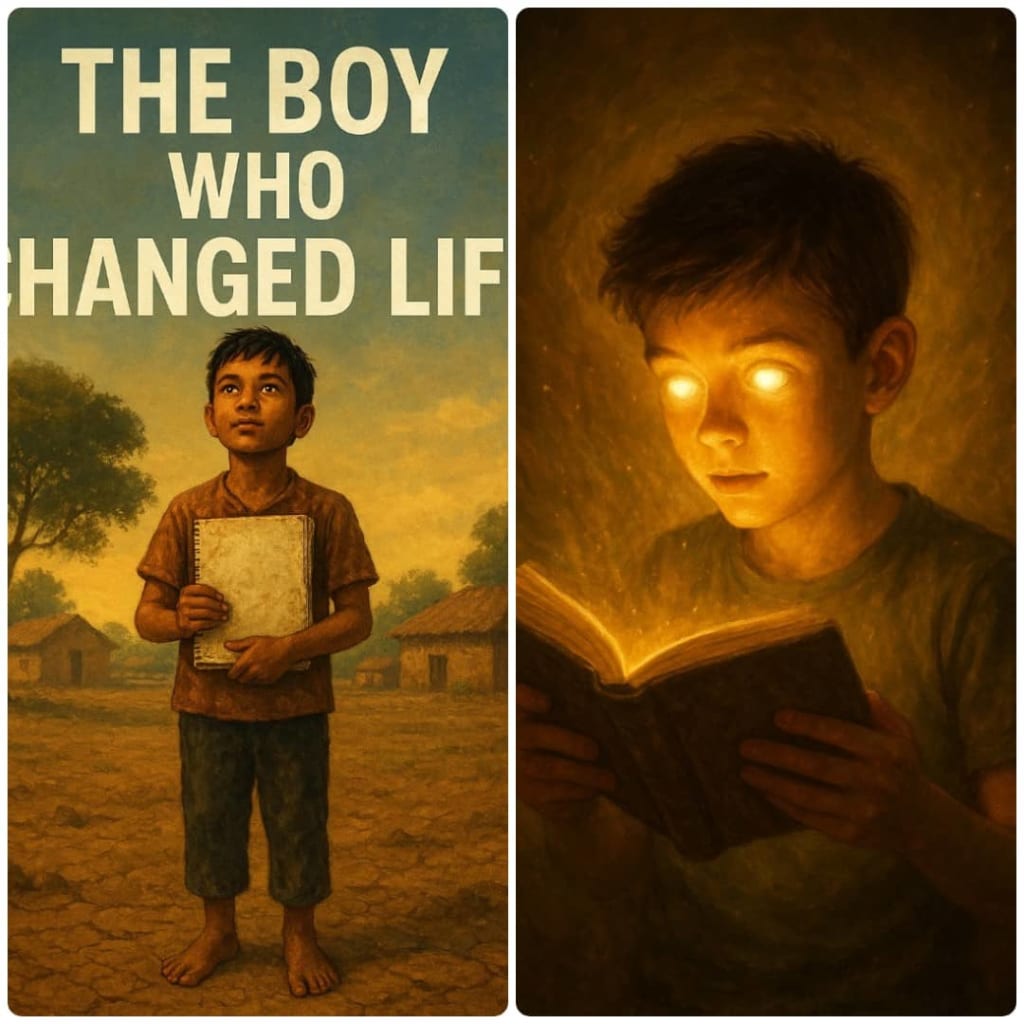
“The first time I saw Amir, he was barefoot, standing on the cracked earth of our village, holding a torn notebook like it was worth more than gold—and in a way, it was.”
The Story
Amir was not born with anything that the world calls fortune. His family lived in a single-room clay house at the edge of a forgotten village, a place where even maps seemed embarrassed to stretch their ink. The roof leaked in the rain, and the floor was nothing but dirt, but Amir had something rarer than wealth: an unshakable belief that life could change.
While other boys ran through the fields chasing kites or goats, Amir clutched his old, frayed notebook. Its cover had long since fallen apart, its pages yellowed and torn, but he carried it everywhere as if it contained a secret spell. In a sense, it did, because inside he had written his dreams—not in perfect sentences, but in crooked letters learned from watching an older cousin write once, years ago.
He wrote things like:
“One day I will build a school here.”
“One day nobody will have to walk hungry to bed.”
“One day my life will mean something.”
The villagers often laughed. “Dreams don’t fill your stomach, boy,” the shopkeeper would say when Amir stood outside the store staring at books he could never afford. But Amir’s eyes never wavered. His hunger was deeper than food—it was hunger for change.
Part I: The Seed of Change
One evening, after a long day of carrying water from the distant well, Amir sat under the lone tree at the center of the village. His little sister, Amina, curled beside him, asking for a story. Their parents were too tired to speak; survival left little energy for imagination.
So Amir opened his notebook, even though most of the pages were blank. He pretended the scribbles were chapters, and he told Amina stories of places where children went to bright schools, where mothers didn’t have to choose between bread and medicine, where dreams weren’t laughed at but celebrated.
Amina would smile and whisper, “Will we ever go there, Amir?”
And Amir would answer with a certainty that startled even himself: “No, Amina. One day we won’t have to go there—because I will bring it here.”
That night, as the moon spilled silver over their roof, Amir’s words echoed in his own heart. Could a barefoot boy really change anything? The doubt pressed hard, but a fire inside refused to die.
Part II: First Steps
The first turning point came when a teacher from the nearby town, Mr. Rahman, visited the village. He had heard of a boy who carried a broken notebook everywhere, and curiosity pulled him to see for himself.
When Mr. Rahman asked Amir what he wanted most, the boy didn’t hesitate: “A book. Any book. Even if it has no pictures.”
The teacher, surprised, gave Amir an old mathematics textbook, half-torn and missing pages. Most children would have tossed it aside, but Amir devoured it like bread after famine. He taught himself numbers by candlelight, whispering equations while his sister slept beside him.
Weeks later, Mr. Rahman returned. To his shock, Amir had solved problems far ahead of his age. His eyes glowed with pride, but his words were humble: “If I can learn, anyone here can learn. We just need a chance.”
That single encounter changed everything. Mr. Rahman began visiting regularly, bringing scraps of books, teaching Amir and whoever else was willing to listen. Some boys came out of curiosity, some out of boredom, but Amir came out of fire. His hunger drew others; soon, the shade of the lone tree became the village’s unofficial classroom.
Part III: Struggles
Change is never welcomed by all. Some elders warned Amir’s parents.
“Why fill his head with nonsense? Knowledge doesn’t plow fields or fill pots.”
Others mocked him. “Do you think a boy like you can build schools? Better to learn farming like your father.”
Even his father, weary from years of struggle, sometimes begged him to stop dreaming. “Dreams are heavy, Amir. They break a man when they do not come true.”
But Amir could not stop. His dreams were not a burden—they were breath itself.
Still, hardship pressed on. Books were scarce. Food was scarcer. More than once, Amir traded his share of bread for a torn page of a textbook. His body thinned, but his spirit only grew.
Then came the day tragedy struck. Amina fell ill. With no clinic nearby, no money for medicine, the family watched helplessly as her little body weakened. Amir sat by her bed, holding her hand, whispering the same stories he always told: stories of a future with doctors, schools, and hope.
Her last words to him, faint as a sigh, were: “Promise me, Amir—you will make it true.”
Amina’s death shattered him. For days, Amir did not eat, did not write, did not move. But when he finally opened his notebook again, he wrote in trembling letters:
“For Amina. For all the children who should never die because of poverty. I will not stop.”
From that day, Amir’s dream was no longer just his—it became her legacy.
Part IV: The Boy Who Wouldn’t Give Up
Amir was fourteen when he began teaching children beneath the tree full-time. At first there were only three, then ten, then twenty. He had no blackboard, so he drew in the dirt with a stick. He had no books, so he tore pages apart so that each child could have at least one to hold.
The children adored him. Parents, too poor to pay, began sending their kids anyway, realizing that knowledge was worth more than a day’s work in the field. Some elders still shook their heads, but Amir’s fire was spreading.
One day, Mr. Rahman said to him: “You have the heart of a teacher, Amir, but you need more tools. Would you like to study in the city?”
The city felt like another planet to Amir. The idea of leaving his family scared him, but he remembered Amina’s eyes, and he said yes.
Part V: Into the Unknown
The journey to the city was overwhelming. Towers of glass, buses roaring, crowds rushing—everything was noise, everything was new. Amir clutched his notebook tightly, whispering to himself: “For Amina. For the children.”
Life in the city was brutal. He studied during the day, worked at night cleaning tea shops to pay for food. More than once he considered quitting. But each time he thought of his village, of the children waiting under the tree, of his sister’s last words, and he pushed forward.
Years passed. Amir graduated, against all odds, not only finishing school but excelling. He earned scholarships, studied education, and one day, returned to his village—not as the barefoot boy with a torn notebook, but as a young man with knowledge and determination.
Part VI: The First School
The village erupted with disbelief when Amir announced his plan to build the first real school. Many laughed. Others doubted. “Where will the money come from?” they asked.
But Amir had learned persistence. He wrote letters to charities, visited offices, begged wealthy strangers. Rejection after rejection came, but he never stopped. At last, a small organization agreed to help if the villagers contributed labor.
Brick by brick, stone by stone, the school rose. Men worked after farming hours, women carried water and sand, children sang while handing tools. It was not just Amir’s dream anymore—it was the village’s.
When the school finally opened, with a roof that didn’t leak and walls filled with laughter, Amir stood before the crowd, tears streaming. “This is not my dream,” he said, voice breaking. “This is ours. And it is only the beginning.”
Part VII: Ripples of Change
The school transformed the village. Children who once chased goats now chased knowledge. Mothers who once wept for lost children now smiled with hope. Amir didn’t just teach subjects; he taught resilience, courage, and the belief that life could change.
Word spread to other villages. People came to see the barefoot boy who had returned as a teacher. Some asked for help building their own schools. Amir traveled, taught, shared his story. Everywhere he went, he carried the same notebook—now full, every page written.
In one speech, he held it up and said:
“This notebook began empty. Like our lives, it looked small and fragile. But when you fill it with belief, it can change the world.”
Part VIII: The Man Who Changed Life
Years later, when Amir had built not one but dozens of schools, when clinics rose where children once died, when water pumps sang in villages that once thirsted—people began calling him “The Boy Who Changed Life.”
But Amir never saw himself as a hero. In every speech, he reminded them:
“I was just a boy with a broken notebook. The change was not in me—it was in all of us, when we chose to believe.”
At the heart of his office, framed on the wall, hung the page he had written after Amina’s death:
“For Amina. For all the children who should never die because of poverty. I will not stop.”
And he never did.
Closing Reflection
Life does not always give us fortune, but it gives us choice. Amir chose not to surrender to despair, but to plant a seed of change in the soil of hardship. That seed grew into schools, clinics, hope, and a legacy that outlived him.
Whenever someone asked what kept him going, Amir smiled and answered with the same words he once told his little sister under the moonlit sky:
“One day we won’t have to go looking for a better world—because we can build it right here.”
About the Creator
Fallout Season 2 Episode 1 Explained (Review & Breakdown)
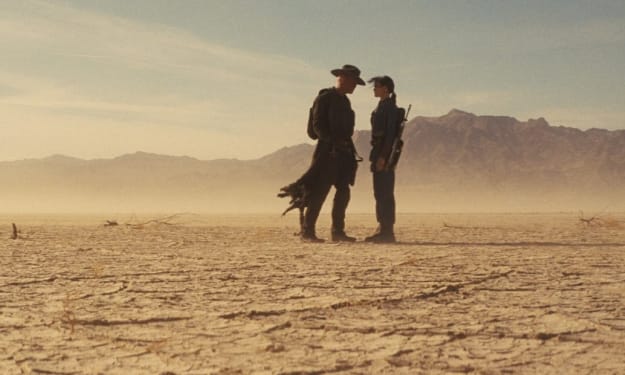
Let me dive straight into Fallout Season 2 Episode 1, and yes—this premiere is packed with so many easter eggs, lore drops, timeline twists, and pure what did I just watch? moments that we absolutely have to walk through it beat by beat.
By Bella Anderson6 days ago in Fiction


Comments
There are no comments for this story
Be the first to respond and start the conversation.