
The Bells of Black Street
The plague people died in hundreds

The Bells of Black Street
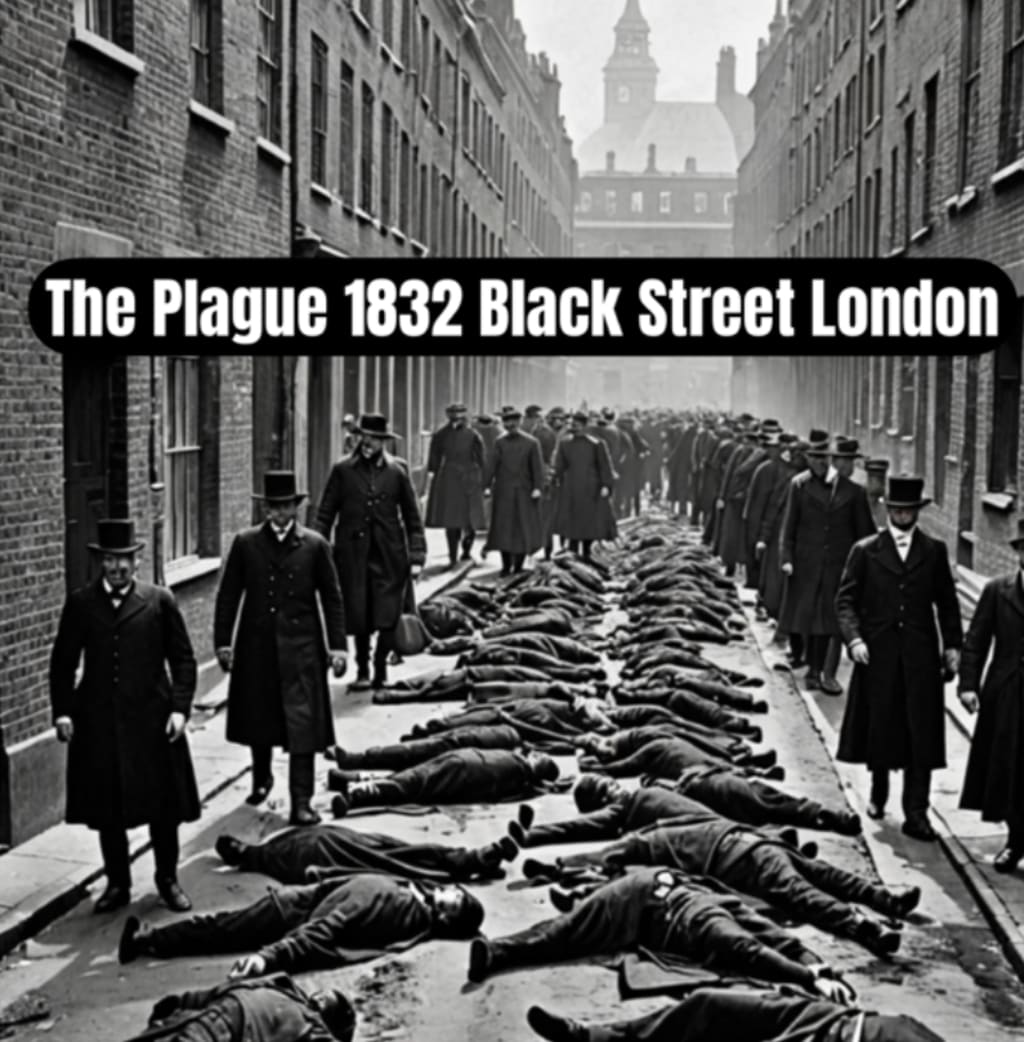
The year was 1832, and the city stank of death. A damp fog rolled in before dawn, thick as wool, curling around chimneys and spilling through the alleys. Beneath it, the cobbled streets glistened with grime, the gutters overflowed, and the air hung heavy with fear. Mothers pressed cloth to their children’s faces, fathers went to work with trembling hands, and everyone whispered the same word that made even the strong turn pale — plague.
Down on Black Street, the poorest lane in the parish, mercy never came. The houses leaned against one another like drunks, their roofs sagging under soot and rain. Rats ruled the alleys, bold and fat, scurrying through open doors as if they paid rent. The tavern on the corner had its windows boarded, its sign swinging on one rusted chain. Once it had been loud with laughter, but now the only sound was the slow toll of the church bell, calling out the count of the dead each morning.
In a narrow house beside the square, a woman named Mary sat close to the hearth. Her son, Thomas, lay weak on a thin mattress, his breath short and shallow. She wiped his brow with a damp cloth, whispering words she no longer believed. The neighbours had stopped calling days ago, too frightened to step through her door. Mary did not blame them. Fear had changed them all into strangers.
Outside, the watchmen walked the streets in pairs. Their long coats brushed the cobbles, and the masks they wore gave them the look of ghosts. They carried poles to move the sick from their path, and when a door was marked with a red X, no one ever opened it again. The city had become a prison of prayers, each family locked inside with their dread.
At the top of the hill, Father Whitlock rang the church bell until his arms ached. He prayed over empty pews, his voice echoing off cold stone. In a single month, he had buried more than he had married in ten years. Even his faith began to tremble. He wondered if God had left them, or if He had never lived here at all.
Back on Black Street, Mary sang to her son. The tune was one her mother had sung to her when life had still been kind. Thomas stirred and whispered, asking if he would get better. She smiled, though her tears betrayed her. “Of course you will, my love. You just rest now.” But she knew the truth. The sickness did not let go.
That night, rain came down and washed the streets clean of nothing. The lanterns flickered behind closed shutters. Somewhere, a woman screamed, then fell silent. By dawn, the carts came again, wheels grinding through puddles, men with faces as pale as chalk lifting the bodies one by one.
Mary stayed at her son’s side through the night. When morning crept through the cracks in the wall, the house was quiet. His small hand had grown cold in hers. She sat still for a long time, unable to move or cry. Then she stood, opened the door, and looked out to the sky that gave no light. No one came. No one spoke.
Before the next evening, she too was coughing, her strength fading with each breath. The neighbours heard but did not enter. A boy ran for the watchmen, yet when they came, she was already gone. They laid her beside her son, covered in rough cloth, one soul following another into silence.
Father Whitlock watched as the cart passed by. His lips moved with a prayer he no longer remembered, the same words he had said too many times to count. The bell tolled once more, slow and tired, as if it too mourned what was lost.
Days later, when the fog lifted and the sky cleared, a yellow flower grew beside Mary’s door. No one knew who had placed it there, but people began to nod at it as they passed, as if it carried a meaning only the living could understand. It became a sign, a promise that something pure could still bloom in the dust of death.
Years went by before the truth was known. The sickness had not come from curses or sin, but from the rats that ruled the streets and the fleas that clung to them. The water that ran through the city carried their poison from home to home, from hand to hand. It lived in the wells, in the barrels, in the bread and cloth. The city itself had fed the plague, its filth a feast, its warmth a cradle.
The survivors swore they would never forget. They cleaned the streets, burned the waste, built new sewers, and drove the rats away. For a time, they kept their promise. But memory fades, and greed returns quicker than ghosts. Markets reopened, ships sailed again, and the people filled the streets as though death had never walked there.
Only the flower by Mary’s door remained untouched, bright and defiant against the wall. It stood as a quiet reminder that the plague had once taken everything, and that sometimes the greatest danger comes not from the heavens, but from the ground beneath our feet. Amen I feel I needed to say that.

About the Creator
Marie381Uk
I've been writing poetry since the age of fourteen. With pen in hand, I wander through realms unseen. The pen holds power; ink reveals hidden thoughts. A poet may speak truth or weave a tale. You decide. Let pen and ink capture your mind❤️
Keep reading
More stories from Marie381Uk and writers in Fiction and other communities.
The Prophets of 2026
The Prophets of 2026 The world has always needed voices that look beyond the horizon. In different centuries and in different lands, Baba Vanga and Nostradamus became those voices. Both saw through the veil of time, each in their own language, each believing that the future was not fixed but waiting to be shaped by human choice. Their names are separated by five hundred years, yet their warnings for 2026 seem to echo one another as if history itself were repeating its lesson.
By Marie381Uk 3 months ago in Fiction




Comments (2)
This is a very sad and true story, but the Plague is still around believe it or not. As the saying goes somewhat like if one does not learn from history one is doomed to repeat it. Good work.
Very sad, but realistic. It is hard to imagine what it must have been like during the Black Plague. We got a tiny taste when COVID hit. Your story really captures the futility and the sadness, and most of all, the despair of how they had to get rid of their loved ones. Nicely done.