
The Battle of Kurukshetra: An Analysis of the Mahabharata
The Psychological Impact of War: A Study of the Kauravas and Pandavas in the Battle of Kurukshetra
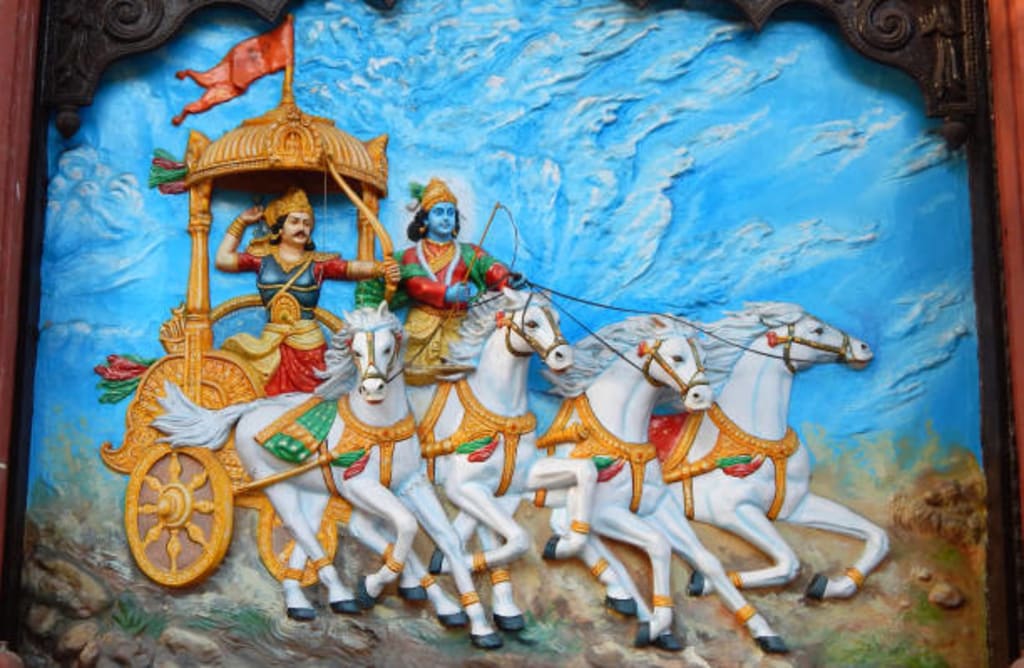
The Battle of Kurukshetra is one of the most famous and pivotal battles in Indian history and mythology, as depicted in the epic poem the Mahabharata. The battle, fought between the Kauravas and the Pandavas, lasted for 18 days and resulted in the deaths of many prominent warriors on both sides.
The Mahabharata tells the story of the Kuru dynasty, who ruled over the kingdom of Hastinapura. The Kauravas, the 100 sons of the blind king Dhritarashtra, and the Pandavas, the five sons of Pandu, were cousins and the main contenders for the throne. The Kauravas, led by their eldest brother Duryodhana, sought to maintain their rule over the kingdom, while the Pandavas, led by their eldest brother Yudhishthira, sought to reclaim their rightful place as rulers. The battle was sparked by Duryodhana's refusal to return the Pandavas' rightful share of the kingdom, which had been taken from them through deception and trickery.
The battle was fought on the plain of Kurukshetra, located in present-day Haryana, India. Both sides assembled an enormous army, with the Kauravas fielding an army of 100,000 soldiers, while the Pandavas had an army of only 7,000 soldiers. Despite being vastly outnumbered, the Pandavas were able to secure victory thanks to the powerful warrior Bhima, the archery skills of Arjuna, and the guidance of their charioteer and mentor, Lord Krishna.
The Mahabharata presents the war as a moral struggle, both sides believed that they were fighting for a just cause, and were willing to sacrifice their lives for the sake of their duty. The war also raises ethical dilemmas, as both sides had to make difficult decisions about how to conduct themselves in battle. For example, Bhishma, the grand uncle of both the Pandavas and the Kauravas, had to choose between his loyalty to his nephew Dhritarashtra and his duty towards the kingdom. Similarly, Arjuna, the great warrior of the Pandavas, had to choose between his duty as a warrior and his love for his relatives who were fighting against him.
The battle also had a profound impact on the characters of the Mahabharata. The Pandavas were forced to confront the reality of the death and destruction caused by the war, and struggled with feelings of guilt and remorse. The Kauravas, meanwhile, were forced to come to terms with the consequences of their actions, and the price they paid for their greed and ambition.
The Battle of Kurukshetra is also considered as a representation of the Indian epic genre and it's significance in Indian mythology. The epic is a reflection of the society and culture of ancient India, and it continues to be studied and analyzed by scholars as it reflects on human nature, the concept of duty and honor, and the consequences of actions. The battle also has a religious significance, as it is said that Lord Krishna, the charioteer of Arjuna, gave the famous Bhagavad Gita discourse to Arjuna, on the battlefield of Kurukshetra. This discourse is considered as one of the most important treatise.
One of the more interesting aspects of the Battle of Kurukshetra is its representation of the different forms of warfare. The battle is not only fought with weapons and physical strength, but also with intelligence, strategy, and diplomacy. The Pandavas, for example, employed several tactics to gain an advantage in the battle, such as forming alliances with other kingdoms and using psychological warfare to weaken their enemies. This shows that success in battle not only depends on physical strength but also on one's ability to outsmart the opponent
In conclusion, the Battle of Kurukshetra is a crucial event in the Mahabharata that highlights the themes of duty, honor, and the cost of war. It serves as a reminder of the importance of making ethical choices and the consequences that come with them. It's a story that continues to resonate with readers and audiences today and will continue to do so for centuries to come.




Comments (1)
Nice