
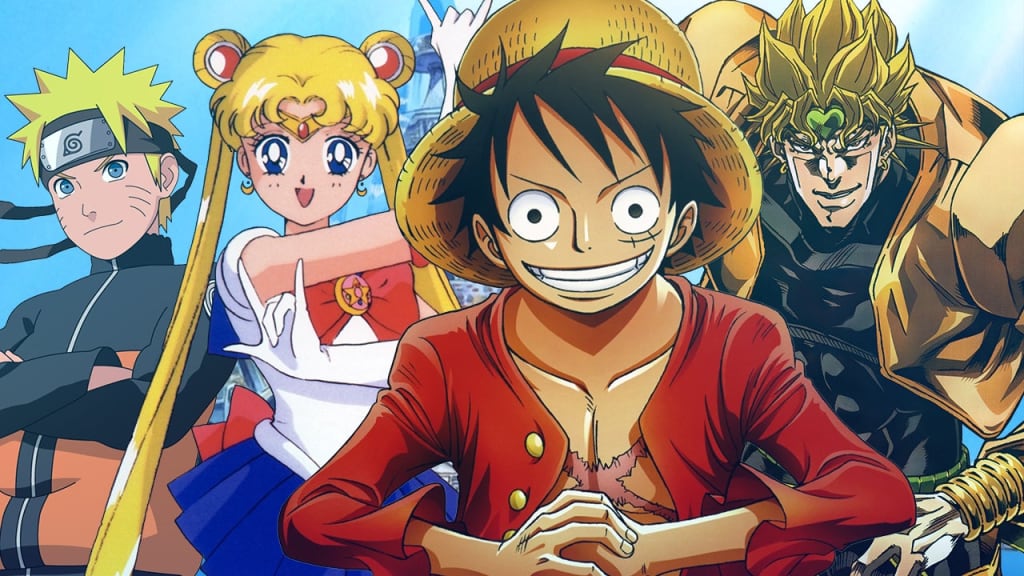
Once upon a time, in the vibrant and creative land of Japan, there existed a remarkable form of entertainment known as anime. This captivating medium has a rich and storied history that spans decades, captivating the hearts and minds of people all over the world.
The roots of anime can be traced back to the early 20th century when Japanese artists and filmmakers began experimenting with animation techniques influenced by Western animation. In 1917, the first ever Japanese animated film, "Katsudō Shashin" (Moving Picture), was released by Oten Shimokawa. This pioneering work laid the foundation for what would become a thriving industry.
As the years went by, anime continued to evolve and grow in popularity. In the 1960s, anime gained significant traction with the rise of television. Shows like "Astro Boy" (Tetsuwan Atomu) and "Gigantor" (Tetsujin 28-go) captivated audiences with their futuristic themes and imaginative storytelling. These series not only entertained but also showcased the unique artistic style that would become synonymous with anime.
The 1970s and 1980s witnessed the emergence of anime as a global phenomenon. Visionary directors like Hayao Miyazaki and Isao Takahata, co-founders of Studio Ghibli, produced masterpieces such as "Nausicaä of the Valley of the Wind" and "Grave of the Fireflies." Their films beautifully combined stunning visuals, compelling narratives, and themes that resonated with audiences of all ages.
ADVERTISEMENT:
The best Analog watch under rupees 2500 click here to view the watch
Meanwhile, other genres of anime flourished. The iconic "Mobile Suit Gundam" series revolutionized the mech genre, introducing complex characters and political intrigue into the world of giant robots. Shōnen anime, aimed at young boys, gained immense popularity with shows like "Dragon Ball" and "One Piece," featuring epic battles and unforgettable characters.
In the 1990s, a new wave of anime emerged, pushing boundaries and exploring darker themes. "Neon Genesis Evangelion" challenged the conventions of the mecha genre, delving into the psychological struggles of its characters. The cyberpunk masterpiece "Ghost in the Shell" delved into philosophical questions about the nature of consciousness and identity.
As the new millennium arrived, anime continued to diversify and attract a wider audience. The advent of internet streaming allowed fans around the world to access anime easily, leading to a surge in its popularity. Anime series like "Attack on Titan," "My Hero Academia," and "Demon Slayer" garnered international acclaim, further cementing anime's place in global pop culture.
Today, anime has become a multi-billion-dollar industry, with countless genres and subgenres catering to a vast and diverse audience. Its influence extends beyond television screens, with anime-inspired video games, merchandise, and even fashion trends.
The history of anime is a testament to the boundless creativity and passion of Japanese artists and storytellers. From its humble beginnings to its current global reach, anime has touched the lives of millions, transporting them to imaginative worlds and weaving stories that provoke thought, evoke emotions, and inspire generations to come. As long as there are dreams and imagination, anime will continue to enchant and captivate audiences, forever etching its place in the annals of history.
©venu
About the Creator
Keep reading
More stories from writers in Fiction and other communities.
The Duelist
The rays of a dying red sun flashed against the onrushing blade. The grey beards say the key to dueling lies in size, speed, reach, righteous fury, whatever the person in front of them pays them to say. Matteo knew better than any it was none of these and had an undefeated record on these sands to prove it.
By Matthew J. Fromm7 days ago in Fiction
Selena Gomez and Benny Blanco Are Ready to Start a Family: Exploring Surrogacy and Adoption
Selena Gomez and Benny Blanco are officially ready to turn the page on their next chapter. Following their wedding in September, insiders report that the newlyweds are eager to start a family immediately. The couple is reportedly moving with a sense of urgency, actively exploring alternative paths to parenthood, specifically surrogacy and adoption.
By Ann D. Burchabout 5 hours ago in Fiction




Comments
There are no comments for this story
Be the first to respond and start the conversation.