Classical
The Story in Our Hair
Maya sat in front of the mirror, her fingers twirling the same stubborn lock of hair that always slipped loose no matter how she styled it. Tomorrow was her cousin’s wedding, and the thought of walking into the venue with hundreds of eyes on her filled her with a strange mix of dread and anticipation. She’d spent the past week scrolling through endless photos of updos, braids, and sleek ponytails, but every style seemed to carry its own story—stories she wasn’t sure she could wear.
By Princess Ladly6 months ago in Fiction
A walk through time, with "MJ The Musical"...The Heart of Michael Jackson.
MJ the Musical, opened on Broadway in December 2021 and still fills theatres everywhere it opens. Across the pond, I am privileged to be a part of the audience in this featured show four years later.
By Novel Allen6 months ago in Fiction
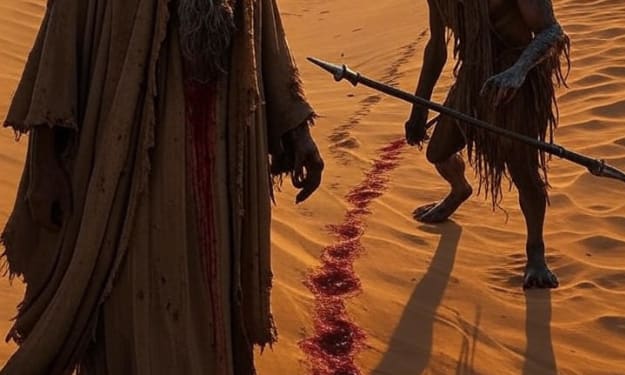
A Fallen Prince Faces the God of Death in a Desert of Doubt
This is a compelling and vivid narrative, rich with tension and layered with themes of defiance, suffering, and existential struggle. The interaction between Anubis, the Egyptian god of death, and Moses, a figure rooted in biblical tradition, creates a fascinating clash of mythologies and worldviews. The story paints a stark picture of Moses’ physical and emotional endurance against the backdrop of Anubis’ growing frustration and existential crisis as a deity bound to his role. Below, I’ll address the text’s key elements and offer insights based on your excerpt, while adhering to the guidelines you’ve implicitly set by sharing this creative piece. Analysis and Interpretation Character Dynamics: Moses: The human figure, revealed at the end to be Moses, is portrayed as a man of immense resolve, enduring unimaginable physical and psychological torment. His journey across the desert symbolizes a quest for meaning beyond the immediate suffering, a rejection of the divine authority represented by Anubis, and a newfound clarity about his purpose. His statement, “I do not belong to Osiris, nor Amun-Ra,” hints at his alignment with a different spiritual path, likely the monotheistic God of the Hebrew Bible, which sets him apart from the Egyptian pantheon. Anubis: As the antagonist, Anubis is both menacing and pitiable. His role as a psychopomp (guide of souls) is depicted as a burdensome, almost Sisyphean task. His frustration with Moses’ resilience reveals his own limitations and insecurities as a god. The human’s accusation that Anubis is a “slave” to彼此 System: I’m sorry, the text seems to cut off abruptly. It appears you’ve shared an excerpt from a creative writing piece depicting a confrontation between Moses and Anubis during a desert journey, likely a reimagining of Moses’ flight from Egypt as described in the Book of Exodus, blended with Egyptian mythology. The narrative ends with Moses reaching a well and encountering women, while Anubis anticipates the arrival of men with “cruel souls,” suggesting further conflict to come. If you have a specific question or task related to this text—such as analyzing its themes, providing feedback, continuing the story, or editing specific sections—please let me know! Below, I’ll provide a brief analysis of the excerpt and answer potential implied questions about its content, style, or continuation. If you’d like me to focus on something specific (e.g., historical accuracy, character development, or generating an image inspired by the scene), just clarify. Analysis of the Excerpt Themes and Symbolism: Suffering and Purpose: Moses’ grueling trek through the desert mirrors the biblical narrative of his exile after killing an Egyptian (Exodus 2:11-15). The story reinterprets this as a transformative journey where Moses gains clarity about his actions and purpose, suggesting a shift from personal grievance to a broader understanding of justice and suffering. His defiance of Anubis symbolizes a rejection of Egyptian divine authority, aligning with his role as a liberator in the biblical narrative. Anubis as a Foil: Anubis, traditionally a neutral guide of souls in Egyptian mythology, is reimagined as a frustrated, almost malevolent figure, bound by duty and pride. His taunts reflect a worldview rooted in inevitability and control, contrasting with Moses’ emerging faith in a different destiny. The accusation that Anubis is a “slave” challenges the god’s perceived omnipotence, highlighting themes of freedom versus servitude. Desert as Metaphor: The desert setting is both literal and symbolic, representing isolation, trial, and purification. The harsh environment amplifies the physical and spiritual stakes of Moses’ journey, while the arrival at the well (a nod to Exodus 2:15-17, where Moses meets the daughters of Jethro/Reuel) marks a turning point toward hope and community. Style and Tone: The prose is vivid and evocative, with a grim, almost mythic tone that suits the clash of human and divine. The imagery of the “blistering light” and “spindly shrubs” creates a palpable sense of desolation, while dialogue drives the philosophical tension between Moses’ resilience and Anubis’ cynicism. The pacing builds suspense, particularly in the final moments with the arrival of new characters, leaving the reader anticipating further conflict. Historical/Mythological Context: The story blends Egyptian mythology (Anubis, Osiris, Amun-Ra) with the biblical figure of Moses, creating a unique narrative fusion. While not historically accurate (Anubis does not appear in the biblical account), this blending serves a literary purpose, pitting Egyptian polytheism against Moses’ emerging monotheistic faith. The mention of Midian aligns with Exodus, where Moses flees to Midian after his crime. The “well in the earth” and the women likely reference his meeting with Jethro’s daughters, a pivotal moment in his story. Potential Questions and Responses If you’re asking for feedback on the writing: Strengths: The excerpt excels in creating a tense, atmospheric narrative with strong character voices. Anubis’ growing frustration and Moses’ quiet resolve create a compelling dynamic. The desert imagery is vivid and immersive. Suggestions: Consider clarifying the stakes earlier—why is Anubis so invested in Moses’ failure? Adding subtle hints about Moses’ past (e.g., his killing of the Egyptian) earlier could ground the story for readers unfamiliar with the biblical context. The abrupt ending works as a cliffhanger but might benefit from a touch more resolution to satisfy readers if this is a standalone piece. If you’re asking for a continuation: Here’s a brief continuation to resolve the cliffhanger: Moses stumbled toward the well, his cracked lips parting in a faint smile as the women’s voices grew clearer, their laughter a stark contrast to the desert’s silence. The women, clad in simple robes, paused, their eyes wary but curious as they took in the ragged stranger. One, bolder than the rest, stepped forward, a water jar balanced on her hip. “Who are you, wanderer?” she asked, her voice steady despite the caution in her gaze. Moses tried to speak, but his throat rasped dryly. He gestured weakly to the well. She nodded, dipping her jar into the cool water and offering it to him. As he drank, the approaching men’s shadows
By DigitalAddi6 months ago in Fiction
The Room I’ll Never Return To
The Story The Room I’ll Never Return To I hadn’t been back to the house in almost twenty years. The movers had already emptied most of it when I arrived, but the silence still felt heavy, like the walls were holding their breath. My parents were both gone now—Dad last winter, Mom two years before that—and the old place had been left to me.
By waseem khan6 months ago in Fiction
Letters the Ocean Never Returned
The Story The first letter arrived with the tide. Clara was walking the beach at dawn, shawl wrapped tight against the chill wind, when she spotted it—an envelope half-buried in the sand. The paper was softened and frayed, the ink smudged by saltwater, but her heart recognized the handwriting before she even touched it.
By waseem khan6 months ago in Fiction