


I sit with shaking hands, gripping the head of my cane as the chair of the “Grand Arctic Committee” finishes his rehearsed speech, thanking Professor Natasha for her work on Arctic weather patterns and how we might use them to combat global warming. Through the distant sound of applause, I hear my cue.
“Ladies and gentlemen, I present to you Professor James Antkin, the leading expert on the Arctic and all it entails.”
I stand, limping through the small door hidden behind the curtains and take my place at the microphone, setting my bag down beside me. I begin:
“Ladies and gentlemen—”
Suddenly, I feel as though I’ve lost all words. I take a moment to compose myself and sip the water provided. It tastes stale, I think. I try again:
“Ladies and gentlemen, I stand before you today to talk about my findings within the unknown areas of Antarctica.”
I begin recounting my story, but it quickly becomes clear they think I’m crazy. A glance to my left shows the chair of the committee looking thoroughly unimpressed. The audience's expressions mirror his—until I ask them to look at the screen.
The projector comes to life, showing photos from our expedition. At first, it looks like any research trip—laughing faces, camaraderie, and wholesome moments frozen in time. But then the last four slides appear.
They show the aftermath of what we found… something we were never meant to see.
The room falls silent. You could hear a pin drop.
This is what happened. This is my story.
---
This trip had been in planning for months. Finally, we were on our way to the Arctic—or more precisely, to a place we call the Black Arctic. It's a so-called “dead spot” in Antarctica, where little vegetation grows, but scans show a large area that appears to be densely packed with trees.
Before leaving shore, we conducted a series of scans. Most came up empty—until we reviewed the thermal imaging.
That’s when we saw them.
Blob-like entities, if you could call them that. Figures that didn’t appear in any standard scan, only on the thermal view.
“What…?” I whispered to myself.
Jessica poked her head around the corner. “What is it?” she asked.
“The scans picked up something we’ve never seen before.”
She walked over, her footsteps echoing against the wooden floor. She stood behind me, resting a hand on my shoulder.
“That’s strange. Any idea what it could be?”
I shook my head slowly.
“Well,” she said softly, “we’ll find out when we get there.”
Our only mode of transport was a ship large enough to house the four of us: Jessica, Adam, Lisa, and me. Adam and Lisa were a married couple. As for me, I had feelings for Jessica—but I didn’t know how to tell her. And Jessica… well, if I knew how she felt, I’d tell you.
The journey took two weeks.
Two weeks of cold mornings and colder nights. Two weeks of tense silences, tired laughter, and the low hum of the ship cutting through the endless blue. Most of the time, we spent reviewing data or preparing equipment, but in the quieter moments—when the wind softened and the sea calmed—I found myself beside Jessica more often than not.
We would sit together on the deck after the others had turned in, bundled in layers, sipping coffee that was always too bitter, talking about anything but the mission.
She had this way of looking out at the horizon, like she wasn’t afraid of the emptiness ahead. Like the unknown didn’t terrify her the way it did me.
One night, about a week in, she spoke into the silence without turning her head.
“Why did you sign up for this?” she asked.
I hesitated. “Because I needed answers.”
“About the scan?”
“About everything.”
She finally looked at me. The ship creaked beneath us.
“You know,” she said quietly, “I think you’re looking for more than that.”
I didn’t answer. I couldn’t. I just looked down at the rim of my mug, hands wrapped around it like a shield.
She didn’t push. Jessica never pushed.
---
By the time we reached the dock in Antarctica, the cold felt like it had settled in our bones. Ice cracked under the ship’s hull as we docked. The wind was sharper here—harsher—and carried with it the weight of isolation. A land of silence and shadows.
We began unloading our gear. Adam and Lisa, as always, moved like a well-oiled machine. Jessica and I worked quietly, our breath misting in front of us. I stole glances at her when I thought she wasn’t looking—watching the way her eyes narrowed as she focused, the small smile she made when the cold bit her fingers and she cursed under her breath.
That night, after camp was set and the others had turned in, I found her again outside the tent, standing alone with her hood pulled back, looking up at the stars. They were sharp, countless, like tiny cuts in the sky.
“Can’t sleep?” I asked, stepping beside her.
She shook her head. “Too quiet.”
For a moment, we just stood there.
Then she said, “You still haven’t told me what you’re really looking for.”
I took a breath. My heart pounded harder than it had during any storm or scan anomaly.
“I was looking for something to make me feel alive again,” I said. “To make all the silence and uncertainty mean something.”
I turned to her. She didn’t look away.
“And somewhere along the way, I realized it wasn’t the mission. It was you.”
She blinked, once. Slowly. Her breath came out in a cloud.
“I didn’t come here for the scan,” I added. “I came because I couldn’t keep pretending I didn’t feel this… for you.”
Her expression didn’t change for a moment—and then she smiled, softly.
“I was wondering when you’d finally say something,” she said, brushing snow off her sleeve. “I didn’t come for the scan either, James.”
My name in her voice felt warmer than the fire inside the tent.
She stepped closer, slipping her gloved hand into mine.
---
That night, for the first time in months—maybe years—I didn’t feel like I was chasing ghosts. For the first time, I believed that maybe the unknown wasn’t something to fear.
Because she was there.
And in the weeks to come, we would need that closeness—because what we found in the Black Arctic would challenge every truth we thought we knew.
But for now, we stood under the stars, together.
During the weeks that followed and the journey to our destination, we saw what you might expect—a polar bear, some penguins, and what was later discovered to be a new species of hawk.
“20 kilometers to go,” I said as we all sat around the roaring fire, desperate to warm our bodies in the harsh, cold environment. Small conversations were taking place. The occasional hoot of an owl echoed in the distance. Every night since we began our walk to the site, the only sounds we heard were the owls, the crackling fire, and the howling wind. But this night, there was a new sound—an unfamiliar one. It was the sound of an animal intentionally trying to conceal its breath and footsteps.
I pointed it out to the group, but they seemed skeptical, claiming they hadn't heard anything until I mentioned it. We all fell silent, listening intently. After what felt like minutes, we heard it again—closer than before. Minutes later, it came again, even nearer, though still far enough that we couldn’t see anything. We continued to hear the noises throughout the evening but never caught a glimpse of whatever was causing them.
I woke up after the others, crawling out of my tent and rubbing the sleep from my eyes.
“Want some coffee?” Jessica asked.
“Please—extra strong,” I groggily replied, taking a seat by the rekindled campfire, trying to shake off the last of my drowsiness. The memories of the previous night returned to me.
“Has anyone checked to see if there are any footprints from last night?” I asked.
“No,” they replied.
As I sipped the coffee, its warmth stung my tongue and the bitterness hit my taste buds, but I wasn’t focused on that. I was determined to find footprints. After breakfast, we agreed to take a 30-minute break before packing up and beginning the final 20-kilometer trek.
During the break, I stood up and wandered into the nearby trees to investigate. My search felt hopeless at first—no tracks, no clues. But as I walked back toward the campsite, I saw it: a single footprint, of unknown origin. One I didn’t recognize.
I called over Adam, who has a knack for identifying animal tracks, but even he seemed stumped.
“No idea,” he said, almost disappointed.
We took a picture of the print, then packed up our belongings and tents and began our walk.
That night, we arrived—we had reached the Black Arctic.
It was breathtaking. The area was filled with vegetation that had never appeared on our scans. Flowers bloomed in colors not found anywhere else in nature. Birds soared above us—species that none of us, not even Adam, could identify. We took photos of everything.
That night, we celebrated by opening the only bottle of wine we had brought. We’d intended to save it for the journey home, but this moment felt too perfect not to celebrate.
When Adam and Lisa went to bed, only Jessica and I remained by the fire, still sipping wine. We made small talk but mostly sat in silence, listening to the sounds of unfamiliar wildlife and the distant calls of polar bears.The firelight flickered on her face, and I watched her for a long moment, the words catching in my throat. Then, quietly, I said, “Jess... I know this probably isn’t the perfect time or place, but I’ve been holding this in for too long. I think I’ve fallen in love with you.”
She didn’t speak at first. The wind moved gently through the trees. The fire cracked again. And in that moment—sitting under an unknown sky, at the edge of the world—I felt like I had just stepped into something even more uncharted than the Black Arctic itself.
Jessica finally looked at me, her expression unreadable—caught somewhere between surprise, sorrow, and something else I couldn’t place. She took a slow sip of her wine, eyes not leaving mine.
“I was wondering when you’d say that,” she said softly, her voice almost drowned by the wind.
I waited for more—an answer, a reaction—but she turned her gaze toward the darkness beyond the firelight.
“There are things about me, James,” she said after a pause, “things I haven’t told anyone. Not yet.” She gave a small, almost wistful smile. “But I’m glad you said it.”
Then she stood, leaving her cup beside the fire. “Get some rest. Tomorrow will be... different,” she said with a slight smile on her face, glancing back from her tent as she zipped it closed.
She disappeared into her tent, the flap closing behind her with the soft rustle of canvas.
I sat alone, the fire crackling, questions burning louder than the flames.
The next morning proceeded as usual—the sound of breakfast conversation, forks scraping against plates, coffee being sipped. Same as always. I woke up after the rest of the group. Same routine. Same people. Just a different place. Even the scenery was beautiful.
“Today we go explore the cave,” I heard Adam say. That shook me awake.
“What cave?” I asked.
Adam explained that he had woken before everyone else and couldn’t fall back asleep. He had gone exploring and discovered, among other things, a cave—wide enough to fit three people side by side.
“James,” he said, “if we found all these amazing things above ground, imagine what we can find below it.”
I couldn’t argue with that. We were here to explore as much of the Black Arctic as possible. So, reluctantly, I agreed.
By early afternoon, we were walking toward the cave with our gear: flashlights, cameras, scanners. When we reached the entrance, Adam went down first, then me, followed by Jessica, and finally Lisa. It was a small drop, just enough to grunt on landing. As we shone our flashlights around, we found ourselves standing in a massive cavern. Hallways stretched in every direction.
“An old mine,” Adam said, his light catching rusted pickaxes, broken headlamps, and crates of dynamite.
We spent about two hours exploring and photographing. Then we decided to head back up. While climbing out, I paused—I heard something.
A sound from one of the dark tunnels we hadn’t yet explored.
I turned, and there, in the shadows, I saw it. Eyes. Eyes I recognized.
It was the same thing I had seen around the campsite.
“You coming, James?” Lisa called.
“On my way,” I yelled back, my gaze still fixed on the creature.
Thin arms. Greyish skin. Eyes with a yellow tint. And a smile—wide and stretched unnaturally from one side of its face to the other. That smile is all I could think of.
I hadn’t yet found the courage to tell the others. What if they thought I was going mad? What if they reported it and the expedition was cut short? After two months, I couldn’t let that happen.
“I’ll tell them later,” I told myself.
That night would be the last I’d sleep without fear—without the weight of truth pressing down on me. Because when we were in that cave, when we explored those tunnels, I saw more of them. Watching us. Unblinking. Dozens. And they saw me take it—what would become the cause of everything that followed.
In the days that followed, we continued documenting the area, keeping our distance from the cave. But it came up in conversation every night.
Six days later, we sat around the fire in silence—not from lack of things to say, but because of fear. Fear of what we had heard the night before: footsteps. Dozens of them, circling our camp, just out of reach of the firelight. For hours, we kept the fire roaring, throwing on wood the moment the flames began to dim.
At last, the first light of dawn crept over the horizon, and the footsteps retreated into the woods.
Relief was short-lived.
Without saying a word, all of us jumped from our chairs, practically cartoonish in our urgency, and began packing up gear. I don’t know what came over me, but I suddenly felt compelled to speak.
“Guys,” I said, “I might know why those things came to the campsite.”
They all looked at me.
“Well?” Adam said, his voice sharp and commanding—like it belonged on a military parade ground.
Sheepishly, I reached into my pocket and pulled it out: a small jar containing a translucent egg—almost identical to what I saw on that first day.
“I took it,” I admitted, “so we could research what they are.”
They just stared at me. Adam stepped forward. I saw his hand curl into a fist.
Why didn’t I move?
I can’t tell you.
The blow landed hard, right on my jaw. My world went black.
What felt like a second later, I woke up in my tent to the usual morning sounds—the clinking of cups, soft chatter, the smell of breakfast. For a moment, I wondered: Was it a dream?
I don’t know.
I unzipped the tent and rubbed the sleep from my eyes as I joined the others at the table. Half-asleep, I caught a familiar phrase.
“So, the cave,” someone said.
“You want to come with, James?” Adam asked—cheerful. Too cheerful for this early in the morning.
I shook my head. “No thanks,” I muttered.
I sat down and took a sip of bitter coffee, trying to ignore the cold shiver running down my spine as I watched them walk toward the cave. I knew something was bound to go wrong, but I kept it to myself.
That evening, when they returned—covered in mud and laughing—they headed to their tents to clean up. I had already prepared dinner. Once they were done, they came out and joined me at the campfire. I was already eating. They plopped into their chairs and began telling me about the cave—the details, every one of them—exactly matched what I had dreamt. When they finished, I asked if we could go back tomorrow, claiming I “wanted” to join them. In truth, I had a plan: I intended to explore the two paths they hadn’t yet gone down.
They told me we could go in two days since they wanted to rest, especially with extraction scheduled in four days. I agreed, but that night, while they slept, I quietly slipped out of my tent and made my way back to the cave.
The first unexplored path led to a dead end. But the second… the moment I stepped beyond the first turn, I saw it: a room full of those creatures, lying there asleep, eggs surrounding them. I froze. As the realization kicked in, my legs were already moving—sprinting toward the exit. I could hear at least one or two behind me.
As I neared the campsite and saw the fire through the trees, I felt a sharp pain in my right leg. I practically dove into the firelight’s reach, hearing the creatures stop just outside it. I screamed to wake the others. Jessica was the first at my side, asking no questions and immediately tending to my wound. In that moment, with her so close, the scent of her perfume lingering in the cold night air, her hands warm and careful as she worked—it wasn't just gratitude I felt. It was something quieter, deeper. An ache that had lived in the background finally came into focus. Our eyes met briefly, and something passed between us—unspoken, but undeniable. Somehow, the pain in my leg felt smaller with her beside me, and my heart a little less guarded.
Once she finished, Adam helped me into a chair, and they asked what happened. They didn’t believe me, despite the deep slashes in my leg. Still, Adam decided he would go check it out in the morning, and Lisa agreed to go with him. Jessica insisted on staying with me. And yet, my first thought wasn’t that I’d be alone with her—it was the quiet realization that I was grateful to have someone who cared.
The next morning—three days from extraction—Adam and Lisa left just as I hobbled out of my tent. Halfway to the chair, Jessica gently grabbed me by the waist and helped me the rest of the way, placing my food and coffee on the table. I thanked her. For a moment, I thought I saw her blush. She quickly turned away and busied herself with other things.
By nightfall, neither Adam nor Lisa had returned. I saw the worry on Jessica’s face. I tried to reassure her by saying maybe they were just doing something away from camp, but it only made her more anxious.
“What if they got lost?” she asked.
“Adam is like a map,” I said. That seemed to calm her, at least for the moment.
The next afternoon—just one day before extraction—still no sign of them. We waited, anxious. And then, just as the sun set, we saw it: fire and debris in the air, followed by a loud bang. Moments later, Adam came sprinting toward camp, yelling for an immediate extraction—no questions asked. We radioed it in. The operator said the helicopter would arrive in five hours.
As Adam reached the firelight, we saw he was covered in scrapes and blood. One hand held a broken camera; the other was shaking. He rambled—about something, about Lisa—and then collapsed. After giving him some coffee, he said he would explain everything, but first, he needed to sleep. He went to his tent and passed out.
Four hours later, he woke up in a frenzy, crying and repeating: “It smiled at me. It smiled at me in my dream.” We eventually calmed him down. In silence, we started packing up camp.
Then, out of the blue, he said what we feared most: “She’s dead.” His voice was monotone, his tears cold like ice.
We just stared at him in silence. Then we heard it—the spinning of helicopter blades. The craft landed, and we were waved over. Adam sprinted ahead and got in. Jessica helped me walk and carry what we needed. As we boarded, the pilot asked where Lisa was. Adam whispered something in his ear, and the pilot’s face went pale.
We were on our way back to the city—back to where Adam would return alone to his home.
Jessica offered to take me to the hospital to get proper treatment for my injuries and said I could stay on her couch for a few nights afterward. I accepted. That night, my leg throbbed with pain, and the pills didn’t help. But Jessica’s voice did. She sat with me, helping me apply the cream the hospital had prescribed. We spent the night sipping wine, one glass leading to another, laughter spilling into gentle silences. Somewhere between glass three and four, the air between us shifted—warmer, more electric. I finally told her how I felt. I expected rejection, or maybe an awkward change of subject. Instead, she smiled—a real smile, one that said she'd been waiting for me to say it. She reached out, fingers brushing mine, and we leaned closer, sharing a kiss that spoke more than words ever could. What followed was quiet, tender—a deepening of something long unspoken. It wasn’t about passion. It was about connection, trust, and the comfort of finally being seen.
We stared into each other’s eyes. Before I knew it, it was morning. We woke wrapped in one another, the dawn casting a golden hue over her bare shoulder. Her head rested gently against me, our bodies still close from the night before. I didn’t move. I didn’t want to. There was a warmth in that stillness, a sense of belonging I had never quite felt before. It wasn’t just comfort—it was closeness, a wordless promise that neither of us wanted to end the moment too soon.
When her eyes met mine, I knew. It wasn’t the wine, or the moment, or even the night we had shared. It was real—genuine, quiet love. The kind that settles into your bones, unspoken but undeniable.
We ate breakfast together and started unpacking the bags. That’s when I found it. Not the camera. The egg.
It looked exactly like the one in my dream. Jessica saw it too. No screams, just a quiet, serious whisper: we had to take it to the lab—and get Adam.
But before we left, we looked at the camera’s memory card. Most of the photos were normal. But the last three… they haunt me.
The third-to-last showed the creatures sleeping. The second-to-last—those same creatures, now staring at the camera. And the last… the last one I wish I had never seen. Lisa, helpless, staring at Adam, as the creatures surrounded her, tearing off her clothes. Using her. One by one.
We looked at each other and suddenly realized: we hadn’t heard from Adam. We called. Straight to voicemail.
We rushed to his house. The door stood ajar. Inside, in the living room, Adam was hanging. Pale. Cold.
We called the police. After everything was processed, we took the egg to the lab. They didn’t know what to do with it either but thanked us for our contribution.
And that’s how I ended up here—on this stage, speaking to you, using a cane because of my injury.
And the item I showed that left everyone speechless? That made them believe my story?
The head of one of the creatures.
How did I get it?
Months later, I joined a team sent back to the cave. The lab had determined that the creatures were too dangerous to be left alive. They exterminated them all—or at least the ones they could find. I kept a head. A trophy. A reminder. A symbol that we had beaten them.
Or so they said.
But as we flew away, I saw them. Four of them. Staring up at us. And tied to them with rope... was Lisa.
She was alive. And we left her.
I decided not to tell anyone.
The stage lights grew warmer. I stood holding the head until someone finally spoke—not a question, just a simple: “I’m sorry.”
Looking over the audience, I saw the sympathy in their eyes—horror, too.
This… this is why the government and other countries send "researchers" to the Arctic.
Not for science.
To make sure those things never reach the mainland.
As for me?
I married Jessica. She still reaches for my hand when the nightmares come. Still smiles like she did that first night by the fire. And when she rests her head on my shoulder, I remember that night—the laughter, the wine, the way her eyes never looked away. Our flame never faded. If anything, it grew—steadier, stronger. Like the warmth that brought me back from the cold.
About the Creator
Keep reading
More stories from writers in Fiction and other communities.
Rage
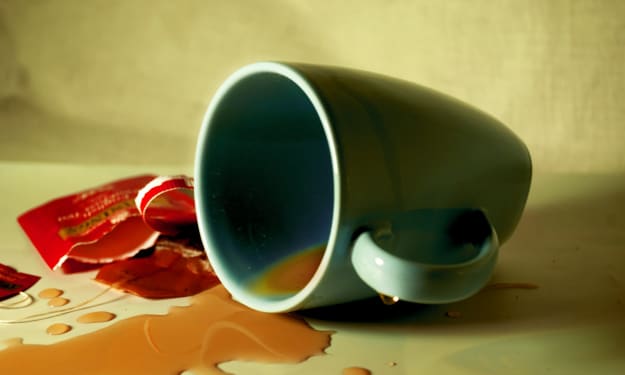
Content Warning: Domestic Violence, Assault Rage D. A. Ratliff “Who did this?” My voice echoed through the house. All I wanted was a cup of tea, but one of the twins, running through the house like maniacs, knocked it over. My nerves tingled, and every muscle in my body felt coiled like a spring. Survival seemed out of reach.
By D. A. Ratliff6 days ago in Fiction
The Order of Care
Angel works the day shift at his local neighborhood animal shelter and begins his day the same way every day. Consistency is not a preference but a method. He clocks in at 7:00 a.m., places his lunch on the left shelf, second position, in the refrigerator, and ties his apron with a double knot that can be untied quickly. The animal shelter requires procedures; Angel requires them to function efficiently.
By Anthony Chan3 days ago in Fiction
Five—One Grounding
Five—Locked in a perpetual battle against my failing senses and reason, I fight to survive, to get through; I am afraid of... nothingandeverythingallatonce—...—my mouth is dry, and my muscles seize up... what can I see? I can see the birdcage and birds; I can see the watercolour my beautiful wife painted many years ago and unlocked her journey into art; I can see the empty mug of tea as it sits perilously on the arm of the sofa; how many is that now? Three down, two to go; I can also see a jackdaw on the roof of our neighbour's house across the road and a bookcase of potential—Five things you can see.
By Paul Stewart7 days ago in Poets


Comments
There are no comments for this story
Be the first to respond and start the conversation.