
The Order of Care
Procedures for Gentle Endings

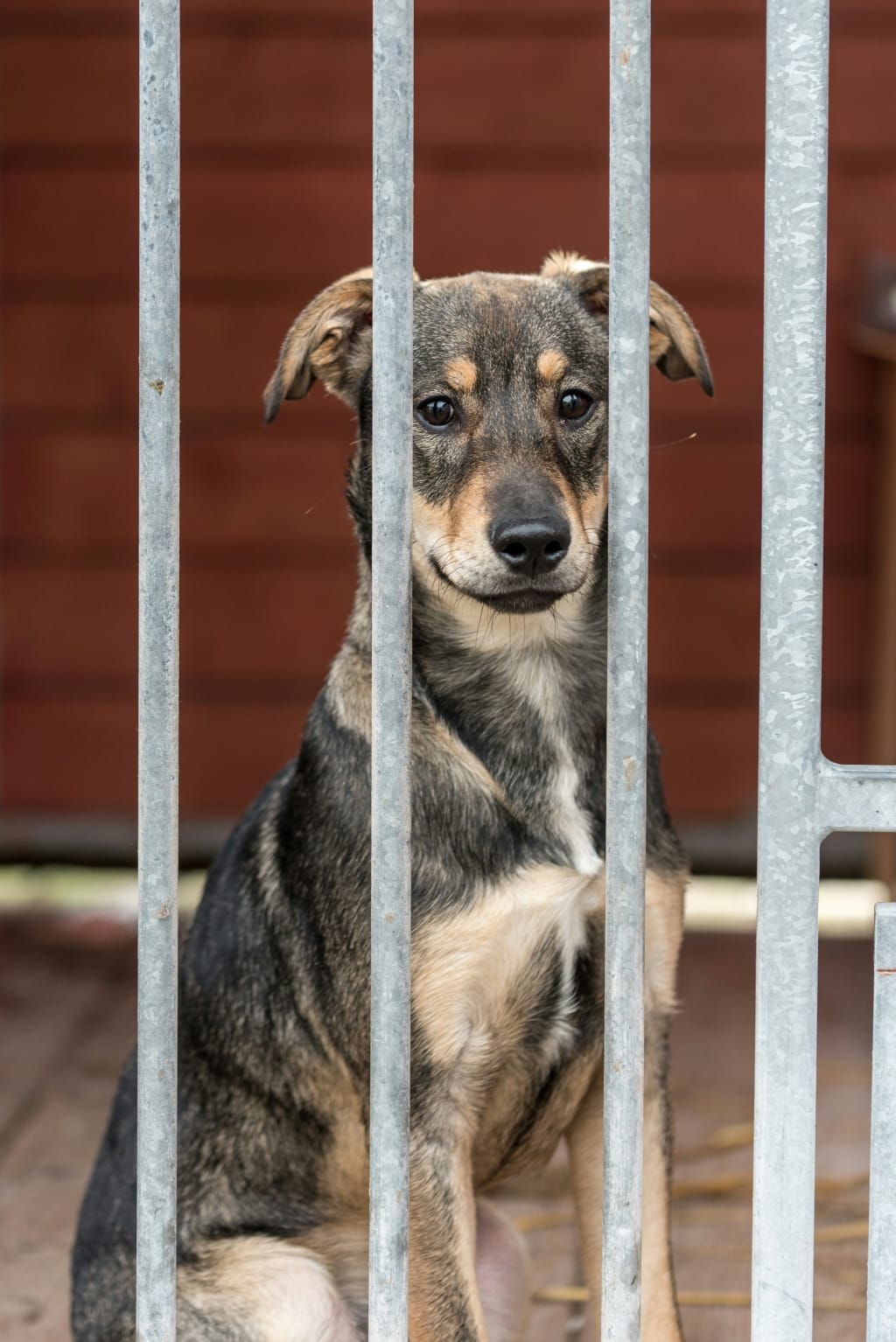
Angel works the day shift at his local neighborhood animal shelter and begins his day the same way every day. Consistency is not a preference but a method. He clocks in at 7:00 a.m., places his lunch on the left shelf, second position, in the refrigerator, and ties his apron with a double knot that can be untied quickly. The animal shelter requires procedures; Angel requires them to function efficiently.
Procedures
Step one is intake review. He stands at the metal desk and reads the clipboard from top to bottom without skipping. Names, estimated ages, temperaments, bite histories, and color codes. He does not look at the kennels yet. This ordering matters. Words before bodies. Categories before face. The structure prevents improvisation, which is another word for attachment.
Only after intake review does he proceed down the first aisle. He walks at a measured pace, three seconds per kennel, no more. He checks water bowls, latches, and bedding. He speaks to each dog using the same sentence: “Good morning. You’re safe for now.” The phrase is accurate and therefore permitted. He does not use names aloud—names risk attachment.
Grooming begins at 9:00. Grooming is Angel’s primary responsibility and the task around which the day is built. It is also the most dangerous part of the job, not physically but structurally. Grooming requires touch, and touch can threaten the animals.
To manage this, Angel follows a fixed sequence. Brush first, always clockwise, beginning at the shoulders. Clippers second, with the same attachment regardless of breed. Bath third, water temperature checked twice, soap measured precisely. Dry fourth, towel before blower. The dogs respond to predictability. Angel does too.
He learned this long before starting this job. When his father died, early and abruptly, there were no instructions. Emotion arrived without sequence and stayed too long. Angel learned then that survival depended on containment. You could feel, but only in measured doses. You could grieve, but only if it did not interfere with school, work, or the future. Over time, feeling became something to schedule and later, something to omit.
At the shelter, omission is encouraged.
The dogs are classified weekly. Green for adoptable, yellow for pending, red for review. Red does not mean death, but it leans in that direction. Angel does not argue with the classifications determined by another colleague. His role is transitional, not judicial. He prepares bodies for their next state, whatever that may be. This framing allows him to continue.
One morning, as he began his workday, he noticed that one dog disrupted the sequence. The disruption was minor but it shook him up. A mixed-breed beagle with uneven ears fails to turn when Angel rotates him for grooming. Instead, the dog mirrors the movement, attempting to maintain eye contact. This breaks the clockwise rule. Angel pauses, resets his stance, and resumes. He does not look at the eyes. He focuses on the coat.
The dog is red-coded. Angel knows this because he read the clipboard.
At noon, Angel eats lunch alone. He does not sit near the kennels. He does not review adoption applications. He reads technical manuals on grooming equipment or stares at the wall. The break is timed to the minute. When the alarm sounds, he stands immediately.
The afternoon includes walks for the green-coded dogs. Angel walks them in pairs to prevent exclusivity. Leashes are held with equal tension. Praise is given only for compliance, never for affection. This rule was added after his third month on the job, when he found himself lingering.
Euthanasia occurs on Wednesdays. Angel is not required to attend, but he prepares the dogs beforehand. Preparation is neutral. Clean coat. Trimmed nails. No matter. The logic is simple: dignity is procedural, not emotional. The same steps apply whether the outcome is a family or a syringe.
When the red-coded dog returns from an unchanged evaluation, Angel makes no adjustments. He grooms him again, following the same sequence. Brush, clip, bathe, dry. The dog relaxes. This is not noted.
Angel’s father taught him how to tie knots. The lesson was practical and repeated until error-free. Relate the pet’s leash to the same way. He ties his apron the same way. When the veterinarian calls for the red-coded dog, Angel unties the leash cleanly.
He does not watch the procedure. He cleans the grooming station. Hair is swept, tools sanitized, and towels laundered. The system closes the loop. Another dog will occupy the space tomorrow.
At the end of the shift, Angel completes the log. He records times, conditions, and compliance. He does not record reactions. The log is complete.
End of the Day
He removes his apron, places it in the bin, and leaves at 4:00 p.m. Outside, the structure dissolves slightly. He walks home without rushing. He allows himself one unscheduled thought: that the work functions only if the steps are followed precisely. That life, like grooming, requires sequence to be survivable.
This thought sinks into his subconscious mind once he reaches his apartment.
About the Creator
Anthony Chan
Chan Economics LLC, Public Speaker
Chief Global Economist & Public Speaker JPM Chase ('94-'19).
Senior Economist Barclays ('91-'94)
Economist, NY Federal Reserve ('89-'91)
Econ. Prof. (Univ. of Dayton, '86-'89)
Ph.D. Economics
Keep reading
More stories from Anthony Chan and writers in Fiction and other communities.
Fleeting Leaves
Autumn leaves drift down, Beauty fades as time rushes Life, too, feels so brief.
By Anthony ChanExclusive • 4 months ago




Comments
There are no comments for this story
Be the first to respond and start the conversation.