
Ravana: The Legendary King of Lanka
Ravana: The Mighty King, Scholar, and Symbol of Complexity in Hindu Mythology
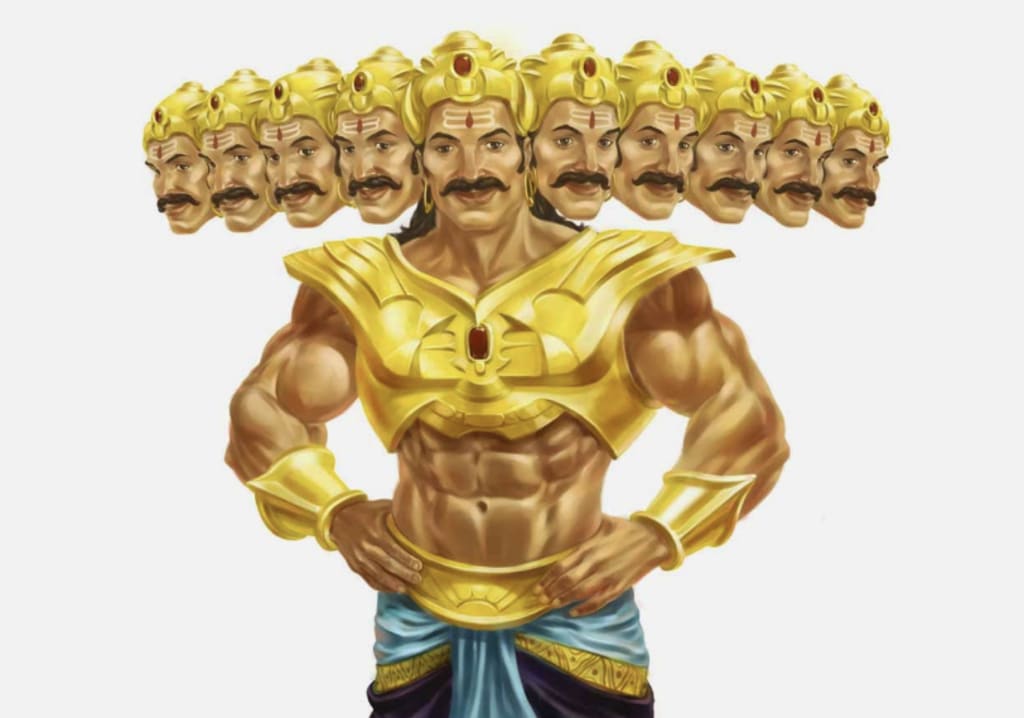
Ravana, a figure steeped in both myth and history, stands as one of the most powerful and complex characters in Hindu mythology. Known primarily as the primary antagonist in the ancient Indian epic, the Ramayana, Ravana is often remembered as a demon king. However, his story is far more nuanced, and he is revered by many as a wise and capable ruler. Ravana's legend is woven into the rich tapestry of South Asian cultural traditions, and his life story continues to captivate imaginations across the world.
1. Birth and Early Life: Ravana was born to the sage Vishrava and the demoness Kaikesi, which gave him a dual heritage of divine and demonic lineage. He is often depicted as the king of Lanka, a kingdom he inherited from his father, and which he ruled with strength, intelligence, and unmatched power. Ravana's early life was marked by rigorous penance and devotion, which led him to gain immense knowledge and supernatural powers through the favor of the gods.
2. Ravana’s Ascendancy to Power: Ravana is often portrayed as an exceptional scholar and a devotee of Lord Shiva, the Hindu god of destruction. Through intense meditation and austerities, he earned the divine blessing of Lord Shiva, who granted him several boons, making Ravana nearly invincible. With this newfound power, Ravana expanded his empire, defeating enemies and securing his rule over Lanka.
Ravana’s leadership was marked by his immense wealth, military might, and technological advancements, including the construction of the majestic city of Lanka. His reign brought prosperity to his kingdom, and he was admired by his subjects for his governance and fairness. However, despite his wisdom, Ravana’s arrogance began to grow, which led to his eventual downfall.
3. The Kidnapping of Sita: The most famous event associated with Ravana is the abduction of Sita, the wife of Lord Rama, which serves as the central conflict in the Ramayana. Ravana, driven by desire and vengeance, kidnapped Sita after she was left alone in the forest. His actions set off a chain of events that would lead to his eventual demise. Ravana’s kidnapping of Sita is often portrayed as a moral conflict between good and evil, with Ravana representing unchecked desire and arrogance, while Lord Rama symbolizes righteousness and virtue.
Despite Ravana’s many virtues, his character flaws—his pride, his unrelenting desire for power, and his inability to listen to advice—led him down a path of destruction. The tale of Sita’s abduction and Ravana’s refusal to return her is symbolic of his rejection of dharma (righteousness) and his inability to respect the divine laws that governed the universe.
4. Ravana's Complex Personality: While Ravana is often viewed as a villain in the Ramayana, he is a much more complex figure. He was not only a powerful warrior but also a deeply knowledgeable scholar, a great composer, and a musician. In fact, Ravana is said to have composed the Shiva Tandava Stotra, a powerful hymn in praise of Lord Shiva, showcasing his deep devotion to the god. His knowledge of the Vedas and other ancient scriptures made him a highly respected figure among scholars.
Moreover, Ravana is sometimes viewed as a symbol of strength and resistance against oppression. In certain regional versions of the Ramayana and folk traditions, Ravana is seen as a hero who stood up to the gods, particularly in his attempts to balance power between the divine and the mortal realms.
5. Ravana in Sri Lankan Folklore: In Sri Lankan culture, Ravana is often portrayed in a more favorable light. The island of Lanka, according to some legends, was once the capital of Ravana's powerful kingdom, which he ruled with fairness and justice. Some Sri Lankan traditions even regard Ravana as a protector and an incarnation of wisdom, with many believing that he was a pioneering figure in astronomy, medicine, and architecture. The Ravana Ella Falls, Ravana's Cave, and the sacred city of Kandy are just a few locations that continue to celebrate his legacy in Sri Lanka.
6. The Battle with Rama: The ultimate confrontation between Ravana and Rama is depicted in the Ramayana during the great war that culminates in Ravana’s death. Rama, with the help of his allies, including the monkey god Hanuman, wages a battle against Ravana’s forces to rescue Sita. The final duel between Rama and Ravana is a symbolic clash between good and evil, order and chaos, with Ravana ultimately falling to Rama's arrows.
Despite his demise, Ravana's legacy endures. His story is a reminder of the dangers of hubris and the consequences of deviating from the path of dharma. However, it also highlights the complexities of human nature, where greatness and flaw exist side by side.
Conclusion: Ravana’s story is one of power, pride, devotion, and downfall. He remains a fascinating and multifaceted character in Hindu mythology, embodying both the divine and the demonic. While often remembered as a villain, his wisdom, strength, and devotion to Lord Shiva give him a place in the hearts of many. His legacy continues to inspire literature, art, and folklore, and Ravana's tale is a timeless reminder of the complexity of human nature and the consequences of our actions.
About the Creator
Keep reading
More stories from vidun Arambage and writers in Fiction and other communities.
The Arts of Sigiriya: A Marvel of Sri Lankan Heritage
Sigiriya, an ancient rock fortress located in the central part of Sri Lanka, is one of the country’s most iconic landmarks and a UNESCO World Heritage site. Known as the "Lion's Rock," Sigiriya not only stands as a historical and architectural wonder but also as a showcase of ancient Sri Lankan art and culture. The arts of Sigiriya—ranging from murals to intricate stonework—offer a glimpse into the creativity, craftsmanship, and spiritual significance of the era in which it was built.
By vidun Arambage12 months ago in Art
Miss Persephone's Manual to a Seemingly Ordinary Life
Miss Persephone was found at the dining table, her blue eyes swollen, her tears arriving and retreating like the tides of the ocean. Earlier that day, her family had visited her in the retirement home where she had lived for eight years. It was her eightieth birthday.
By Imola Tótha day ago in Fiction


Comments
There are no comments for this story
Be the first to respond and start the conversation.