
Nest of Vultures
vultures nest in trees for safety and Threts their

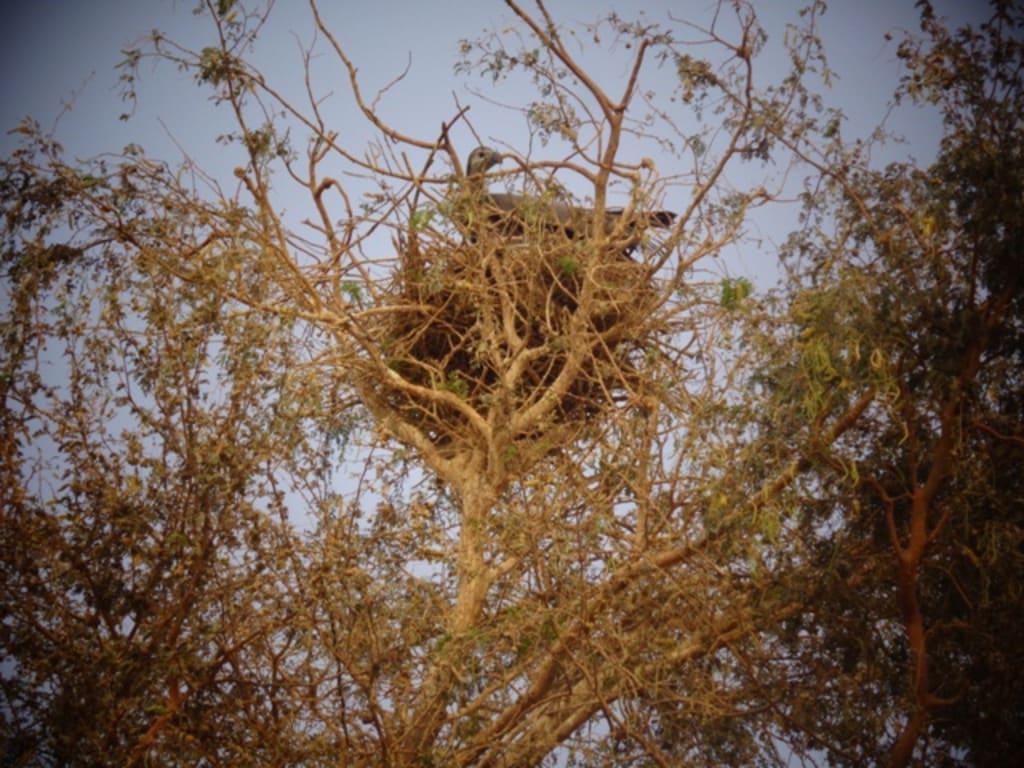
How vultures nest in trees for safety:
• Location - Vultures will choose tall trees that are isolated, away from human activity and disturbance. This provides safety from potential predators on the ground.
• Nest Placement - Nests are built high up in the tree canopy, usually in the upper branches or forks of large trees. This placement is out of reach of most predators.
• Nest Structure - Nests are simple structures made of sticks that the vultures find on the ground. They are loosely piled to form a platform. This allows easy access for the vultures but not enough structure for predators to stand on.
• Reuse of Nests - Vultures will often reuse and add to existing nests over multiple years. This makes the nest structures even more substantial over time.
• Camouflage - The nests are camouflaged among the tree branches and foliage, helping them blend in from below. The brown/gray colors of sticks and vulture plumage provide additional camouflage.
• Colonies - Vultures will often nest in groups or colonies high in the same trees or area. This provides safety in numbers and allows the birds to cooperatively defend the area from threats.
• So vultures choose tall, isolated trees and build simple, camouflaged nests high in the canopy to safely raise their young away from ground-based predators. Location and placement are key aspects of vulture nest safety.
Vultures are causing increased mortality
• Drought conditions: Tharparkar has been experiencing severe drought conditions over the past few years, leading to a lack of water and fodder for livestock. This has weakened and stressed many animals.
• Malnutrition in livestock: With drought - reducing grazing areas, many livestock like cattle and goats have become malnourished. Their immune systems are compromised.
• More carcasses available: With stressed and starving livestock dying due to drought and malnutrition, there are more carcasses available for vultures to feed on.
• Vultures feeding on live animals: The increased number of weak, starving livestock has led to vultures actively attacking and feeding on live animals that are too weak to defend themselves. This includes young calves and goat kids.
• Open wounds from vultures: As vultures feed on live prey, their sharp beaks tear open wounds and flesh. This can lead to blood loss, infections and death in animals that are already compromised.
• Disease transmission: Feeding on multiple carcasses increases the risk of vultures transmitting diseases like anthrax between animal corpses. This further exacerbates livestock deaths.
• Loss of habitat: Declining forest cover and water sources in Tharparkar have concentrated wildlife and livestock, making it easier for vultures to prey upon the vulnerable animals.
• So in summary, prolonged drought has increased vulture attacks on livestock in Tharparkar due to more available carcasses and weakened animals that cannot defend themselves from predation. This has contributed to rising livestock mortality.
• Provide emergency fodder and water for livestock. Reducing stress and malnutrition will make animals stronger to defend against vultures.
• Quickly remove and dispose of animal carcasses that vultures are feeding on. This eliminates a food source attracting them.
• Treat any injured or weak livestock that may be targeted. Administer antibiotics to prevent infection from vulture attacks.
• Use scarecrows, flags or other objects around herds to deter vultures from landing and attacking. Novel objects startle the birds.
• Play recorded distress calls of other animals on loudspeakers to temporarily drive vultures away from an area.
• Cover young calves and goat kids at night or in vulnerable periods using tarps or makeshift shelters.
• Monitor herds more closely and use guard animals like dogs that can protect the livestock from vultures.
• As a last resort, controlled and licensed culling of the most aggressive vultures may be needed until drought conditions improve.
o Long -term solutions involve habitat restoration, reforestation, sustainable water sources and grazing land management to support wildlife and livestock.
The key is reducing livestock stress and vulnerabilities while deterring or removing the vultures' food sources and access through protection and carcass disposal. Emergency relief efforts are also critical.
• Location - Vultures will choose tall trees that are isolated, away from human activity and disturbance. This provides safety from potential predators on the ground.
• Nest Placement - Nests are built high up in the tree canopy, usually in the upper branches or forks of large trees. This placement is out of reach of most predators.
• Nest Structure - Nests are simple structures made of sticks that the vultures find on the ground. They are loosely piled to form a platform. This allows easy access for the vultures but not enough structure for predators to stand on.
• Reuse of Nests - Vultures will often reuse and add to existing nests over multiple years. This makes the nest structures even more substantial over time.
• Camouflage - The nests are camouflaged among the tree branches and foliage, helping them blend in from below. The brown/gray colors of sticks and vulture plumage provide additional camouflage.
• Colonies - Vultures will often nest in groups or colonies high in the same trees or area. This provides safety in numbers and allows the birds to cooperatively defend the area from threats.
• So vultures choose tall, isolated trees and build simple, camouflaged nests high in the canopy to safely raise their young away from ground-based predators. Location and placement are key aspects of vulture nest safety.
Vultures are causing increased mortality
• Drought conditions: Tharparkar has been experiencing severe drought conditions over the past few years, leading to a lack of water and fodder for livestock. This has weakened and stressed many animals.
• Malnutrition in livestock: With drought reducing grazing areas, many livestock like cattle and goats have become malnourished. Their immune systems are compromised.
• More carcasses available: With stressed and starving livestock dying due to drought and malnutrition, there are more carcasses available for vultures to feed on.
• Vultures feeding on live animals: The increased number of weak, starving livestock has led to vultures actively attacking and feeding on live animals that are too weak to defend themselves. This includes young calves and goat kids.
• Open wounds from vultures: As vultures feed on live prey, their sharp beaks tear open wounds and flesh. This can lead to blood loss, infections and death in animals that are already compromised.
• Disease transmission: Feeding on multiple carcasses increases the risk of vultures transmitting diseases like anthrax between animal corpses. This further exacerbates livestock deaths.
• Loss of habitat: Declining forest cover and water sources in Tharparkar have concentrated wildlife and livestock, making it easier for vultures to prey upon vulnerable animals.
• So in summary, prolonged drought has increased vulture attacks on livestock in Tharparkar due to more available carcasses and weakened animals that cannot defend themselves from predation. This has contributed to rising livestock mortality.
• Provide emergency fodder and water for livestock. Reducing stress and malnutrition will make animals stronger to defend against vultures.
• Quickly remove and dispose of animal carcasses that vultures are feeding on. This eliminates a food source attracting them.
• Treat any injured or weak livestock that may be targeted. Administer antibiotics to prevent infection from vulture attacks.
• Use scarecrows, flags or other objects around herds to deter vultures from landing and attacking. Novel objects startle the birds.
• Play recorded distress calls of other animals on loud speakers to temporarily drive vultures away from an area.
• Cover young calves and goat kids at night or in vulnerable periods using tarps or makeshift shelters.
• Monitor herds more closely and use guard animals like dogs that can protect the livestock from vultures.
• As a last resort, controlled and licensed culling of the most aggressive vultures may be needed until drought conditions improve.
Long term solutions involve habitat restoration, reforestation, sustainable water sources and grazing land management to support wildlife and livestock.
The key is reducing livestock stress and vulnerabilities while deterring or removing the vultures' food sources and access through protection and carcass disposal. Emergency relief efforts are also critical.

About the Creator
Keep reading
More stories from Ramoon Mal and writers in Fiction and other communities.
Swallow bird
The first rays of sunlight peeked over the horizon as a swallow awoke in its nest. Rubbing its tiny eyes with its wings, it let out a soft chirp, ready to start the new day. All around it, the other swallows in the nest were beginning to stir as well. It was time for their morning flight.
By Ramoon Mal2 years ago in Fiction
THE LAST ALGORITHM
The Archive sang its final song at 3:47 AM on a Tuesday that would never be recorded. Dr. Yuki Tanaka stood before the quantum core, watching fractals of light spiral through the crystalline matrix like stars being born and dying in microseconds. She had spent seventeen years teaching machines to think. Now, in the abandoned server farm beneath Old Detroit, she was about to teach one to forget.
By Alpha Cortex5 days ago in Fiction
Staying sane in the insane world.
”It is no measure of health to be well adjusted to a profoundly sick society.” Jiddu Krishnamurti This quote has been one of my favourites since the moment I first laid my eyes on it. To me, it cuts right through the fog of the illusion of normality that permeates our lives. And since I am someone who has never felt (well) adjusted to this society, Krishnamurti’s words gifted me with the realisation that there isn’t anything inherently wrong with me.
By Eva Smitte7 days ago in Humans




Comments (1)
Thanks for Read