
More Than Meets the Eye: Deconstructing Transformers: Revenge of the Fallen
Transformers: Revenge of the Fallen

Introduction:
"Transformers: Revenge of the Fallen," the 2009 sequel to Michael Bay’s blockbuster "Transformers," arrived with a thunderous roar, promising bigger explosions, more robots, and a deeper dive into the lore of the Autobots and Decepticons. Riding the wave of the first film's phenomenal success, the sequel aimed to elevate the franchise to even greater heights of spectacle. However, it landed with a more complicated legacy, becoming a lightning rod for both adoration and derision. This article delves into the inner workings of "Revenge of the Fallen," examining its plot, cast, production, reception, and its place within the larger "Transformers" universe.
Plot:
Two years after the battle of Mission City, the Autobots, now allied with a clandestine military unit known as NEST, hunt down remaining Decepticons worldwide. Sam Witwicky (Shia LaBeouf) is preparing for college, trying to live a normal life, but the Allspark's energy lingers within him, causing him to see cryptic symbols and sparking a renewed Decepticon interest.
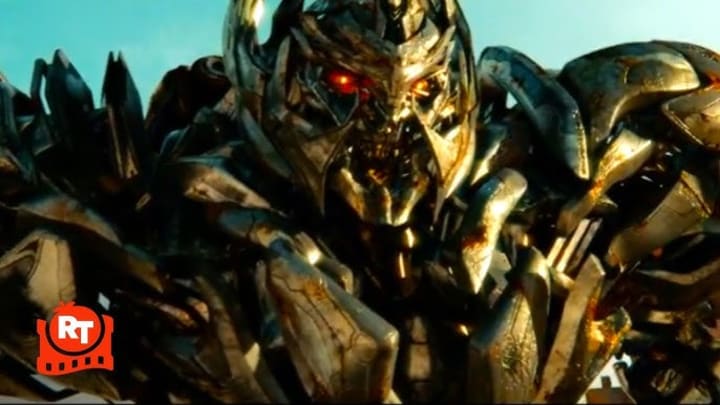
The plot thickens as the Decepticons, led by a resurrected Megatron (voiced by Hugo Weaving), seek to revive The Fallen, the first Decepticon and a prime who can destroy stars. The Fallen plans to activate a machine hidden on Earth that will destroy our sun and provide Energon for the Decepticons.
Sam, armed with the knowledge implanted in his brain, becomes the key to stopping The Fallen. He and his girlfriend Mikaela Banes (Megan Fox), along with Bumblebee and his college roommate Leo Spitz (Ramon Rodriguez), embark on a globe-trotting adventure to decipher the symbols and find a way to defeat the Decepticons' nefarious plan.
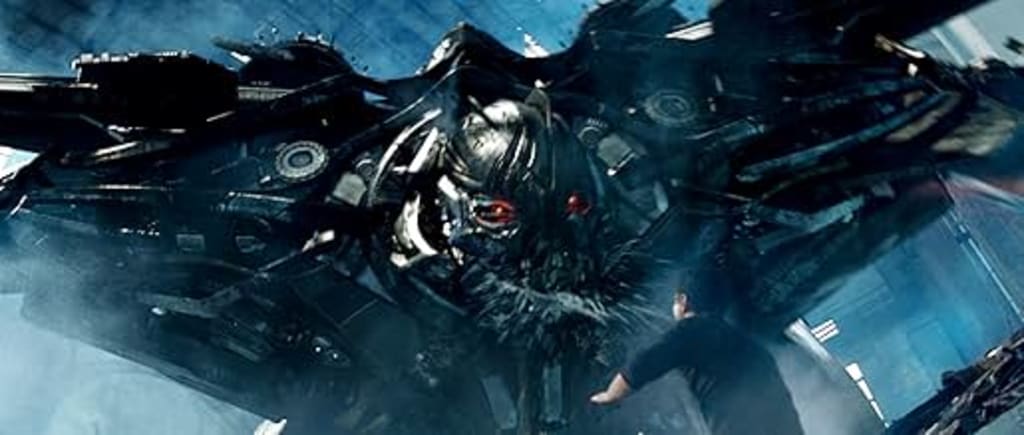
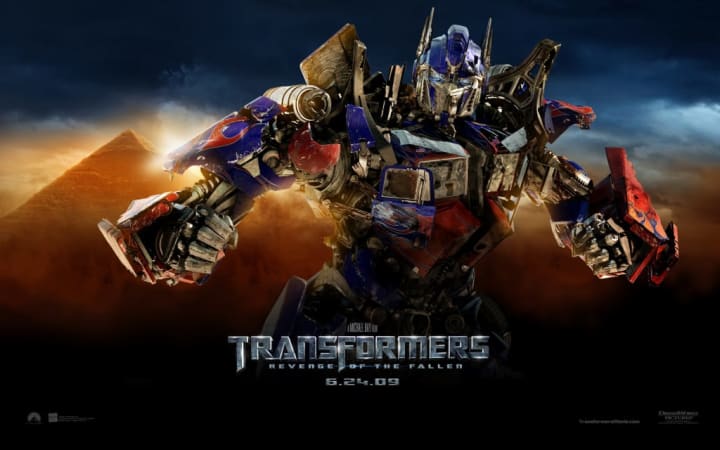
The narrative unfolds with breakneck speed, jumping between locations from Princeton to Egypt, featuring battles in forests and deserts. Characters such as Jetfire (voiced by Mark Ryan), an ancient Decepticon seeker who defects to the Autobots, are introduced to add more layers to the story. The climax takes place in Egypt, a massive battle ensues between the Autobots, Decepticons, and NEST forces, culminating in Optimus Prime (voiced by Peter Cullen) merging with Jetfire to gain the power needed to defeat The Fallen.
The film's narrative style is characterized by its reliance on visual spectacle, fast-paced action sequences, and a heavy dose of humor, often leaning towards the juvenile. While ambitious in scope, the plot has been criticized for its convoluted nature and numerous subplots, some of which feel underdeveloped.
Cast:
The core cast from the first film returned, with Shia LaBeouf reprising his role as Sam Witwicky, the reluctant hero thrust into the middle of the Autobot-Decepticon war. LaBeouf delivers a frantic and energetic performance, capturing Sam's initial reluctance and eventual acceptance of his role. Megan Fox returns as Mikaela Banes, Sam's resourceful and independent girlfriend, contributing both action chops and a touch of vulnerability.
Josh Duhamel and Tyrese Gibson reprised their roles as military personnel, lending gravitas and tactical expertise to the NEST unit. Peter Cullen once again voiced Optimus Prime, providing the iconic Autobot leader with his signature heroism and moral compass. Hugo Weaving returned as the menacing voice of Megatron, conveying the Decepticon leader's unwavering desire for power.
New additions to the cast included Ramon Rodriguez as Leo Spitz, Sam's quirky and often cowardly roommate, providing comic relief. John Turturro reprised his role as Agent Simmons, the eccentric former Sector 7 agent, now operating independently. Mark Ryan's voice work as Jetfire brought a wise and world-weary quality to the ancient seeker.
While the cast delivered generally competent performances, the film's sprawling narrative sometimes left characters feeling underdeveloped, particularly the human characters, who often seemed secondary to the robot action.
Reviews:
"Revenge of the Fallen" received mixed to negative reviews from critics. Common criticisms included the film's convoluted plot, excessive length, juvenile humor, and perceived over-reliance on special effects at the expense of character development. Some critics also pointed to the film's stereotypical portrayals of certain characters.
However, the film also had its defenders. Some viewers appreciated the sheer spectacle and the ambition of the action sequences. Fans of the "Transformers" franchise also praised the film for expanding the lore and introducing new robots. Audience reviews were generally more forgiving than those of critics, but still reflected a divided opinion.
Production:
The production of "Revenge of the Fallen" was a massive undertaking. Michael Bay returned as director, bringing his signature style of explosive action and visual flair. The film's development began shortly after the success of the first "Transformers," with a larger budget and a mandate to deliver an even more spectacular experience.
The film's financing was handled primarily by DreamWorks Pictures and Paramount Pictures. The production team scouted locations around the world, including Egypt, Jordan, and the United States. The visual effects were handled by Industrial Light & Magic (ILM), pushing the boundaries of CGI technology to create increasingly complex and realistic robot transformations and battles.
Writing and Casting:
The screenplay for "Revenge of the Fallen" was written by Ehren Kruger, Roberto Orci, and Alex Kurtzman. The writing process was reportedly rushed due to the 2007-2008 Writers Guild of America strike, which may have contributed to the film's perceived plot inconsistencies.
The casting process largely involved the return of familiar faces from the first film. New additions, such as Ramon Rodriguez, were chosen to complement the existing cast and provide fresh comedic dynamics. The voice casting was particularly crucial, with Peter Cullen and Hugo Weaving reprising their roles as Optimus Prime and Megatron, ensuring continuity and authenticity.
Principal Photography:
Principal photography for "Revenge of the Fallen" began in May 2008 and lasted for several months. Filming took place in various locations, including Pennsylvania, California, Egypt, and Jordan. The production faced numerous challenges, including logistical hurdles associated with filming in remote locations and coordinating complex action sequences.
One humorous anecdote from the set involves the filming of the scenes in Egypt. Due to the extreme heat, the cast and crew had to take frequent breaks to avoid dehydration. Michael Bay reportedly kept the energy up by blasting rock music between takes, much to the amusement (and occasional annoyance) of the local extras. Also, Shia LaBeouf suffered a hand injury during filming, which was incorporated into the storyline.
Production Design:
The production design of "Revenge of the Fallen" aimed to create a world that felt both familiar and new. The sets were designed to be larger and more detailed than those of the first film, reflecting the increased scale of the story. The visual aesthetics emphasized realism, with a focus on gritty textures and practical effects whenever possible.
The robot designs were also more intricate and complex, showcasing the advanced CGI capabilities of ILM. The costumes for the human characters were functional and practical, reflecting their roles in the military or as ordinary civilians caught up in extraordinary circumstances.
Sound Design & Music:
The sound design of "Revenge of the Fallen" was crucial in creating an immersive and impactful experience. The sound effects were meticulously crafted to capture the weight and power of the Transformers, from their booming footsteps to their metallic transformations.
The musical score, composed by Steve Jablonsky, built upon the themes established in the first film, incorporating elements of orchestral music, electronic music, and rock music. The soundtrack also featured songs by popular artists, adding to the film's high-energy atmosphere.
Visual Effects:
The visual effects in "Revenge of the Fallen" were a major highlight, pushing the boundaries of what was possible with CGI technology. ILM created incredibly detailed and realistic robot models, allowing for complex transformations and intense battle sequences. The film featured numerous visual effects shots, requiring a significant investment of time and resources.
While the visual effects were generally praised for their technical achievements, some critics argued that they sometimes overwhelmed the story and detracted from the emotional impact of the film.
Influences:
"Revenge of the Fallen" draws inspiration from various sources, including the original "Transformers" cartoon series and comic books. The film also incorporates elements of science fiction and action genres. The storyline involving The Fallen and the ancient Primes draws heavily on "Transformers" lore.
Scientific Knowledge :
The film uses some concepts loosely based on scientific ideas. The Allspark and Energon are presented as sources of energy, although their properties are largely fictionalized. The device that The Fallen seeks to activate is based on the concept of using concentrated energy to destroy a star, a theoretical possibility in some scientific circles, although highly speculative.
Marketing, Release & Box Office:
The marketing campaign for "Revenge of the Fallen" was massive, leveraging the popularity of the first film and the "Transformers" franchise. Trailers, TV spots, and online advertising were used extensively to build hype. Merchandise, including toys, video games, and clothing, was also heavily promoted.
The film was released in theaters worldwide in June 2009. Despite the mixed reviews, "Revenge of the Fallen" was a box office success, grossing over $836 million worldwide. The film's strong box office performance demonstrated the enduring popularity of the "Transformers" franchise and the power of spectacle in attracting audiences.
Critical Responses:
In summary, "Transformers: Revenge of the Fallen" is a film of contradictions. It boasts impressive visual effects, ambitious action sequences, and a devoted fanbase. However, it also suffers from a convoluted plot, juvenile humor, and underdeveloped characters. While the film was a box office success, its critical reception was mixed, with many critics criticizing its excesses. Ultimately, "Revenge of the Fallen" serves as a reminder that spectacle alone is not enough to create a truly satisfying cinematic experience. It’s a loud, visually arresting, and often nonsensical entry in the "Transformers" saga, a testament to Michael Bay's particular brand of blockbuster filmmaking.
About the Creator
Xavier
Global news reporter covering science, tech, environment, Entertainment & sports. Delivering balanced insights to inform and inspire readers worldwide. Sometimes a poet.



Comments
There are no comments for this story
Be the first to respond and start the conversation.