
Martyr! by Kaveh Akbar: A Sacred, Surreal Quest for Belonging
Blending grief, beauty, and spiritual yearning, Akbar’s debut novel is a poetic meditation on identity, exile, and what it means to live a life worthy of death.
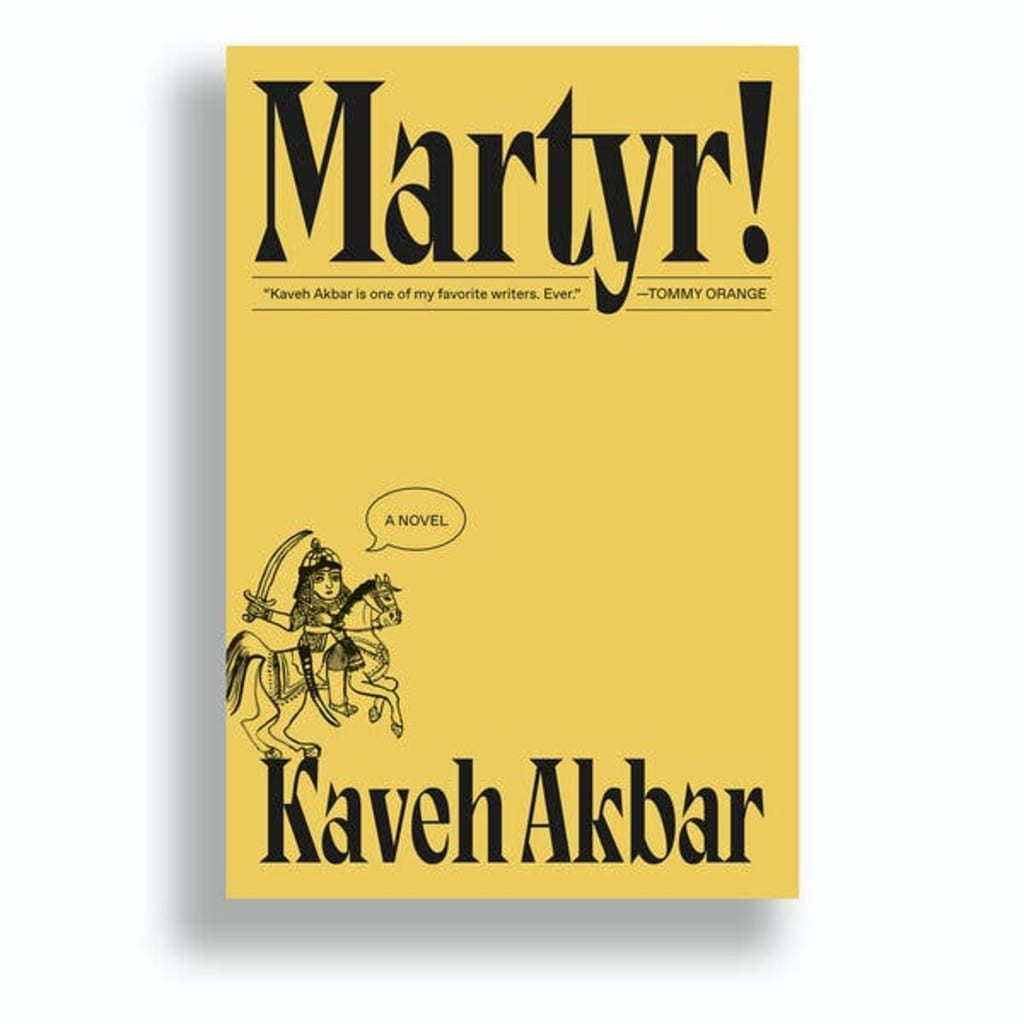
What does it mean to live a life worth dying for?
This haunting question echoes through every page of Kaveh Akbar’s debut novel, Martyr!—a work that defies easy categorization. At once a lyrical meditation on identity and a surreal odyssey through grief, addiction, and faith, Martyr! is a novel that dares to stare into the divine. It’s bold, wildly original, and brimming with emotional intelligence.
Akbar, best known for his celebrated poetry collections (Calling a Wolf a Wolf, Pilgrim Bell), makes the leap into fiction with astonishing grace. And yet, Martyr! doesn’t abandon the poetic. It is soaked in lyricism, full of sentence-level beauty, and structured like a series of luminous confessions.
The novel follows Cyrus Shams, a recovering addict and Iranian American doctoral student, as he drifts through a haze of mourning following his mother’s death in a plane crash. His father, a secularist who left Iran during the revolution, is a ghost in his life. His own cultural identity is fractured, caught between the sacred and the skeptical. And in the background looms a question Cyrus can’t stop circling: Why do people want to die for something—and what does it mean if you don’t?
🧭 A Pilgrimage Through the Self
Cyrus is not your typical hero. In fact, he’s barely holding it together. His relationships unravel. His studies stall. He spends his time wandering Indianapolis museums, fixated on martyrs—Christian, Islamic, historical, contemporary. He’s searching, though for what he doesn’t quite know.
Akbar structures the novel like a spiritual road trip through memory, art, addiction, and loss. We drift through Cyrus’s thoughts, visit his therapist, read his failed academic papers, and encounter the people who haunt him—most notably his mother, a devout Muslim woman who lives on in dreams and hallucinations.
There is also Roya, a queer artist and cancer survivor whom Cyrus meets in a museum and begins to orbit. Roya, too, is on a quest—a quieter, more embodied one. Their connection becomes a strange and sacred thing: part friendship, part reflection, part tether. She grounds Cyrus without trying to save him.
The plot meanders, but never aimlessly. Akbar is not interested in narrative propulsion as much as emotional excavation. Each page brings the reader deeper into Cyrus’s psyche, peeling back layers of shame, grief, and longing.
✍️ Poetry in Every Sentence
Make no mistake: Martyr! is a poet’s novel. Akbar’s command of language is breathtaking. His sentences shimmer with insight, compression, and musicality. But more than just style, his voice conveys vulnerability without self-pity—a kind of raw, wounded wisdom.
Take this moment, when Cyrus reflects on grief:
“Grief doesn’t go anywhere, it just finds quieter rooms in your body to scream from.”
Or this, about spiritual yearning:
“He wanted to be filled with something bigger than himself, but everything bigger than him had teeth.”
Lines like these are scattered everywhere, making the novel as quotable as it is immersive. The prose doesn't dazzle for its own sake—it builds intimacy. Akbar writes like someone who knows that being seen is its own kind of salvation.
🌍 An Immigrant’s Spiritual Crisis
While Cyrus’s addiction and depression drive the emotional undercurrent, it is his Iranian American identity that anchors the novel’s thematic weight. Akbar captures the ache of displacement with rare clarity. Cyrus is a man untethered—too Western to be Iranian, too brown to be white, too cynical to be devout, too lonely to be whole.
Akbar does not offer easy answers about faith or identity. Instead, Martyr! offers a space of inquiry—a sacred ambiguity. Cyrus is drawn to religious imagery even as he resists doctrine. He seeks connection but recoils from institutions. He yearns for martyrdom not because he wants to die, but because he wants his life to mean something.
This tension is familiar to many children of immigrants—raised in the shadow of sacrifice, always wondering if they’re doing enough with the freedom they inherited.
👻 Dreams, Death, and the Divine
Martyr! frequently flirts with magical realism. Cyrus is visited by dreams of martyrs. His dead mother sometimes speaks to him. Time folds and dissolves. But Akbar never leans too far into fantasy. The surreal elements serve an emotional logic—they are grief’s language, not gimmicks.
In one of the novel’s most affecting moments, Cyrus imagines an alternate reality in which his mother survived. In another, he constructs a fantasy version of his father’s escape from Tehran. These imagined lives are not escapism, but a kind of reverent mourning—a desire to stitch together what history tore apart.
Religion, too, appears in fractured form. Islam, Christianity, Buddhism—they all pass through Cyrus’s consciousness. Not as dogma, but as ritual, metaphor, yearning. The novel is full of sacred objects—rosaries, misbahas, relics—handled with the reverence of someone both skeptical and awed.
🏆 Reception and Legacy in the Making
Martyr! was an immediate critical darling upon its January 2024 release. The New York Times hailed it as “a novel that reads like a confession, a prayer, and a psalm all at once.” NPR called it “the most original debut of the year.” And it quickly found its way onto National Book Award longlists and best-of-the-year lists alike.
But beyond the accolades, what makes Martyr! truly special is its emotional resonance. For readers who have grieved without answers, for those who have felt between cultures or beliefs, this novel offers recognition without resolution. It doesn’t fix the ache—but it names it, and that is its own kind of balm.
🔚 Final Verdict
Kaveh Akbar’s Martyr! is not just a successful debut—it’s a necessary one. In an era of polarization and posturing, Akbar writes from a place of radical honesty. His vision is unflinching, his language exquisite, his compassion vast.
This is a novel for anyone who has felt faith flicker, who has wandered through museums and memory, looking for something sacred in the wreckage. Martyr! doesn’t promise salvation. But it does promise beauty, complexity, and a kind of holy attention.
It is a rare thing: a novel that makes you want to live more truthfully. And perhaps that is the most sacred thing of all.
About the Creator
Hamad Haider
I write stories that spark inspiration, stir emotion, and leave a lasting impact. If you're looking for words that uplift and empower, you’re in the right place. Let’s journey through meaningful moments—one story at a time.
Keep reading
More stories from Hamad Haider and writers in Fiction and other communities.
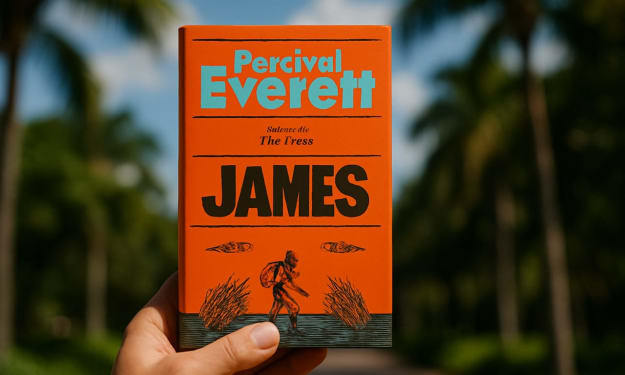
James” by Percival Everett: A Bold Reclamation of the American Canon
In James, Percival Everett does what few living authors dare—he takes a towering classic of American literature and flips it inside out. The result is nothing short of electrifying. A radical reimagining of Mark Twain’s Adventures of Huckleberry Finn, Everett centers the story not on Huck, the mischievous boy narrator, but on Jim, the enslaved man whose humanity Twain only hinted at.
By Hamad Haider7 months ago in Fiction
Miss Persephone's Manual to a Seemingly Ordinary Life
Miss Persephone was found at the dining table, her blue eyes swollen, her tears arriving and retreating like the tides of the ocean. Earlier that day, her family had visited her in the retirement home where she had lived for eight years. It was her eightieth birthday.
By Imola Tóth3 days ago in Fiction


Comments
There are no comments for this story
Be the first to respond and start the conversation.