
I Found Out My Brother Wasn’t My Real Brother
A late-night phone call, a DNA test, and the family secret that shattered everything I thought I knew.
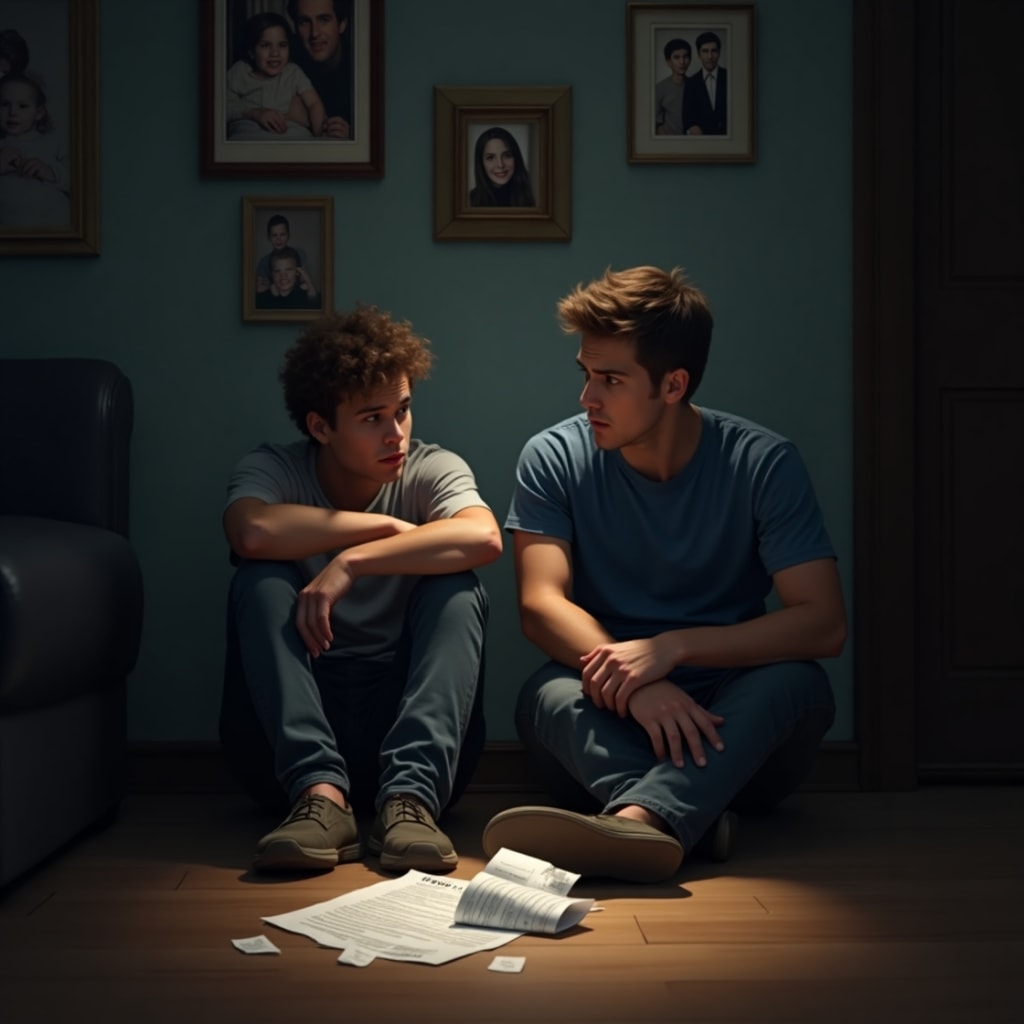
We grew up as brothers.
Same house. Same school. Same bunk bed.
My older brother, Adil, was always the calm one. The responsible one. He looked out for me, helped me with homework, taught me how to fight back against bullies, and gave me advice I didn’t always ask for but secretly needed. If someone had asked me who I trusted most in the world, my answer would have been instant: Adil.
So imagine my shock when I found out—we weren’t really brothers.
It started with a phone call.
I was 22 and Adil was 25. Our parents had recently passed away in a car accident. That tragedy brought us even closer. One night, while cleaning out the garage, I found a small, locked metal box labeled in my father's handwriting: “Important Documents.”
Inside were old papers—birth certificates, hospital bills, a few baby photos I’d never seen. There was also something strange: two different birth registration forms from two different hospitals, dated just 18 months apart.
Mine said I was born at Lahore General Hospital. His said he was born in Islamabad. But I remembered our mother telling me we were both born in the same hospital—she’d even joked about how Adil never let her sleep because he was kicking all night.
Confused, I asked our aunt about it. Her voice on the phone turned cold.
"Leave those papers alone," she said. “Some things are better not known.”
That made me want to know more.
I told Adil about it. He looked at me strangely but shrugged it off, saying maybe it was a mistake. But something in his eyes told me he wasn’t surprised.
That's when I bought a DNA testing kit.
It sat unopened on my desk for a week. Then one night, while Adil was out with friends, I spit into the tube, sealed the envelope, and mailed it.
Two weeks later, I got the results: We weren’t biological brothers. Not even close.
The test showed zero genetic relationship. It was like discovering my whole life had been built on a lie. The person I shared my childhood with, fought over the remote with, and celebrated birthdays with—wasn't who I thought he was.
I didn’t confront Adil immediately. I spent days trying to make sense of it. Had I been adopted? Had he? Did our parents lie to us both?
Eventually, I couldn’t take it anymore.
We were sitting in our room, watching an old cricket match on TV.
“I did a DNA test,” I said.
Adil didn’t flinch. He muted the TV and looked straight at me.
“I know.”
My throat tightened. “You knew?”
He nodded slowly. “I’ve known since I was thirteen.”
He took a deep breath, then told me the truth.
Adil wasn’t my biological brother. He wasn’t even part of our family—at least not by blood. His real parents had died in a house fire when he was a baby. My father, a close friend of theirs, had taken him in quietly. No official adoption. No paperwork. Just a promise to raise him as his own.
Our parents had decided never to tell me. They wanted us to grow up as equals. And we did.
When Adil was a teenager, he overheard them talking late at night. He confronted them. They told him everything. And he chose to stay silent—for me. Because he didn’t want to change anything between us.
I sat in silence, barely able to breathe.
“You were always my brother,” he said, his voice thick. “Whether it’s by blood or not.”
I wanted to be angry. To scream, to accuse. But I couldn’t. Because despite the shock, nothing about Adil had changed. He had still protected me. He had still loved me. He had still been my brother in every way that counted.
And slowly, I realized something: blood doesn’t make a family. Loyalty does. Love does. Time does.
We cried that night. Both of us. We talked for hours. About how our parents kept the secret. About how he lived with it for so long. About how terrified he was that I’d find out and push him away.
But I didn’t.
Instead, I hugged him harder than I ever had.
Because sometimes, the people who choose to stay—who choose to love you without obligation—are the ones who matter the most.
About the Creator
Keep reading
More stories from Umar Faraz Gul and writers in Fiction and other communities.
The Day I Found Out My Grandfather Was a Spy
I always thought my grandfather was just a quiet man with a love for crossword puzzles and gardening. He wasn’t the kind of person who talked too much, but when he did, it was with purpose. I was fifteen when he passed away, and though I grieved like any grandson would, I had no idea that the real story of his life hadn’t even begun for me.
By Umar Faraz Gul7 months ago in Fiction


Comments
There are no comments for this story
Be the first to respond and start the conversation.