
How would an alien invasion look like?
And why “Oblivion” is the most plausible scenario.
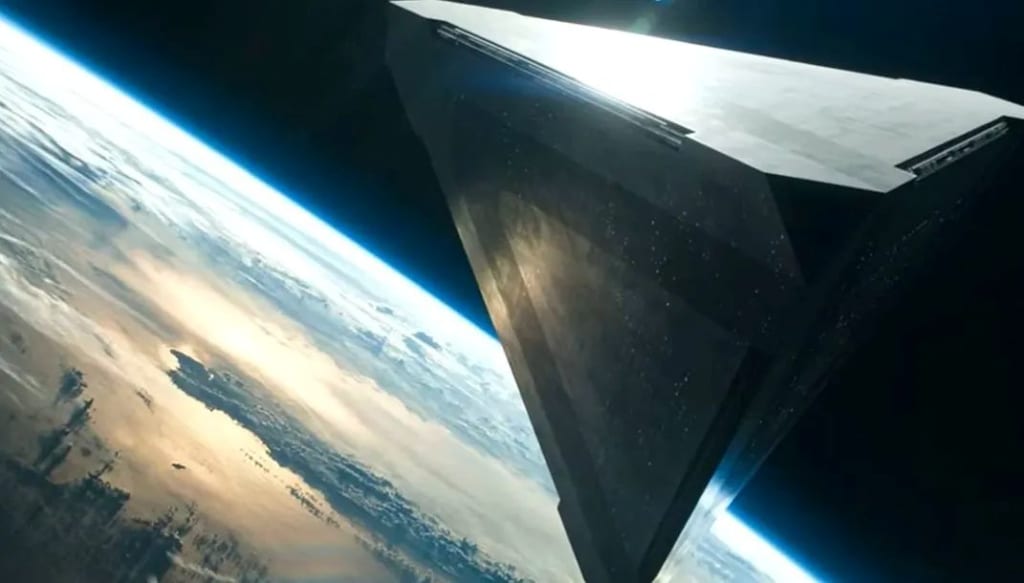
I’ve been reading all important articles about the 3I/ATLAS with mixed feelings. I’d love Avi Loeb to be right about the technological nature of this object — this way I would become an eyewitness of the biggest discovery of all time; but I also hope its origin is natural, because I am sincerely freaking out about aliens.
Whatever alien spacecraft reaches the Solar System, it will come from a civilization far more advanced than humanity — this must be our default understanding. Given the distances between stars, it will need state-of-the-art technologies which we can’t yet imagine, so yes — they will be more powerful.
If they come, there are no motives to believe they would attack Earth. Most likely they will be a peaceful species, and even more credible is that their first representatives will be robotic probes rather than biological organisms. For them, humans would not pose any danger; we’ll be like rats are for us now. So, we can assume that the visitors would not harm us, right?
However, I wouldn’t bet everything on this assumption. Let’s suppose the alien visitors aren’t as kind as we hope and they are driven by pretty similar motives as Homo sapience have demonstrated for millennia — expansion by conquest and exploitation of new resources.
So, what would an aggressive alien civilization do when it discovers humanity? What if ATLAS is a spacecraft packed with aliens on an intelligence-gathering quest?
The text below is an attempt to explore some plausible scenarios in such a case.
First of all, a technologically superior alien civilization waging a resource-driven or colonization campaign against Earth is, by definition, speculative. Still, we can model pathways by extrapolating from strategic logic, physics constraints, and known patterns of asymmetric conflict.
The goal is to describe credible options an advanced species might employ without offering real-world harmful instruction.
Strategic assumptions
A civilization capable of interstellar travel likely possesses the following:
- Energy manipulation far beyond our capability.
- Robotics and autonomous systems superior to anything on Earth.
- Long-range reconnaissance instruments capable of mapping our biosphere, chemistry, and defense posture before arrival.
- A strategic preference for minimizing their own risk and maximizing resource acquisition efficiency.
Given these assumptions, their actions would follow three core imperatives:
- Neutralize Earth’s capacity to resist.
- Preserve the planet’s resource value (resource harvesting to replenish interstellar reserves would be essential).
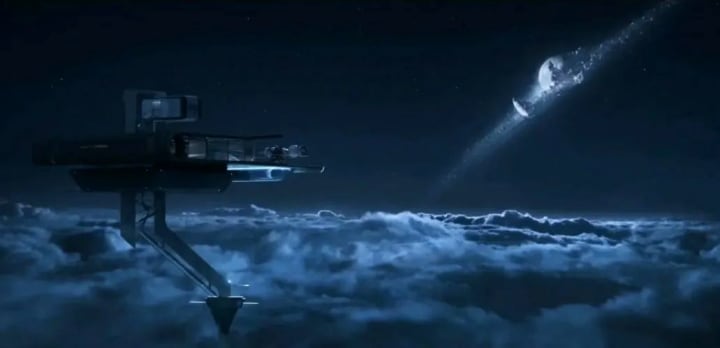
- Avoid extended ground conflict (the alien logic in films such as “Independence Day” or “War of the Worlds” makes little sense; “Oblivion” is far closer to a realistic model (and is an inspiration for this article)).
Based on the above-said assumptions, we can now move to speculate about the actions the unfriendly visitors would take to execute their conquest plan.
Phase 1: Long-range reconnaissance and target characterization
Before any direct action, the aliens would gather exhaustive data about us from afar. Among these I would mention the atmospheric chemistry analysis to understand biosphere composition; the thermal and electromagnetic mapping to track cities, military bases, communications nodes; assessment of terrestrial hazards such as nuclear arsenals, pollution, biological threats; and evaluation of Earth’s mineral, atmospheric, hydrocarbon, and biological resources.
This phase could occur years or decades before humans even detect them. Our current instruments already allow us to examine distant worlds in astonishing detail, so be assured that theirs will screen Earth with resolution surpassing the best medical imaging technologies.
They will know everything about all forms of life on the planet; they will know humans better than humans know themselves.
Phase 2: Remote suppression of global infrastructure
A rational invader would avoid ground combat altogether. Frankly speaking, it’s a waste of time and resources. Instead, they would act to neutralize Earth’s industrial and military capabilities from orbit or beyond.
For this purpose, the invader could employ electromagnetic disruption of global communication and GPS, preceded by the disabling of all satellites to “blind” Earth. Precision strikes against key electrical grid nodes and neutralization of launch systems and nuclear facilities would be the next move in order to prevent retaliation.
These tactics do not require high-energy weapons; even standoff jamming or directed interference could be enough to collapse global coordination and seed chaos. In fact, without electricity, human civilization would regress to a prehistoric period, with survivors gathering around competing military clans.
No effective resistance is possible under these circumstances.
If the goal is resource extraction, they would avoid anything that contaminates land, water, or atmosphere. Therefore, they would not glass continents, seed massive radiation, or pulverize the crust — unless such methods were part of a controlled extraction or annihilation process.
I also doubt that they would attack humans as the primary force of resistance. More plausible is indirect population suppression through disruption of global logistics leading to societal collapse, or targeted disabling of agricultural infrastructure. Orbital shading to reduce sunlight and sharply cut food production could be another option.
These are strategic leverage points, not battlefield engagements.
The most notable constraint is energy cost. Any alien capable of crossing interstellar distances almost certainly prefers minimal-effort solutions. A full military assault on eight billion humans is inefficient. Infrastructure disruption is cheaper and cleaner, and not necessarily by means of weapons — powerful earthquakes or tsunami could do the job.
Phase 3: Autonomous planetary control systems
Once resistance vanishes, robots and drones would likely take over ground operations to perform the mapping and cataloging of resource deposits, and to start construction of extraction or terraforming infrastructure (if they decide to settle on Earth for a while). These machines would also exert control of remaining human groups through surveillance and non-lethal means, pretty much as accurately shown in the 2013 movie “Oblivion”.
Physical occupation by biological aliens is very unlikely; they might never land. Their robotic force would suffice.
Phase 4: Long-term resource extraction
Once humanity is sidelined or repurposed, depending on the invader’s ethical framework, extraction begins. It is hard to guess precisely what the invaders would need from our planet, but broadly their goals would include energy-dense materials, rare elements, biological compounds, or hydrogen and deuterium from oceans.
For safety reasons, they would probably establish energy collectors and hubs in orbit, since surviving humans might attempt to sabotage any alien infrastructure on the surface. Autonomous extractors would operate for decades, shipping refined material to orbital depots.

Phase 5 (unlikely): Colonization of Earth
If the objective is to strip Earth of high-value materials while minimizing cost and avoiding unnecessary alterations to the planet’s geology or atmosphere, there’s no interest in long-term habitation. But if the alien invaders decide to keep Earth for themselves, either as a temporary base or permanent colony, additional steps follow?
Earth as it is may not suit alien physiology. They may breathe other gases (or not breathe at all) and consume non-biological food sources, see other spectra and perceive sound differently. Our planet’s gravity may be too strong and humidity too high for them. So, what would they do in order to set foot on the ground?
First things first: by the time this decision is made, humans would probably be irrelevant. But if remaining humans are considered dangerous, contaminating, or interfering in alien businesses, the invaders may envelop Earth in a containment system (orbital barriers, energetic fencing). Alternatively, they may launch an extermination campaign.
Step 2 of the colonization process is terraforming the planet. Global processes alien invaders would think of for their comfort on Earth could include altering the atmosphere to fit their biology (assuming they are biological in our sense), changing rotational parameters of Earth, or engineering tectonic and volcanic activity to achieve a drier climate.
Ultimately, they could also build a new microbial ecosystem that fits their needs but hostile to Earth’s native life. They could genetically modify the flora and fauna in irreversible ways. Or, perhaps they could engineer themselves to adapt to Earth’s conditions.
However, if their anatomy is fundamentally incompatible with Earth and they choose not to adapt, they may actually not need to build homes here at all. Instead, the aliens would deploy a robotic taskforce to carry out all extraction operations, transforming Earth into a resource base and continuing their journey through the universe.
About the Creator
Keep reading
More stories from Aurel Stratan and writers in Fiction and other communities.
How would an alien invasion look like? Part 2
As told in the first part of the story, an alien invasion would unfold without large battles, with humanity overwhelmed not by brute force but by systemic collapse designed from orbit. Humanity becomes collateral damage, displaced, suppressed, or extinguished by environmental and technological interventions, not direct warfare.
By Aurel Stratanabout 10 hours ago in Fiction
If You Love Me, You'll Do It
I met Jason when I was five years old. I could say that I loved him from the moment I saw him. He was so handsome to me and I felt in awe by his presence. When they introduced him as the new kid in school, I wanted to be his friend right away. I remember it like it was yesterday. I remember his smile and how he didn't seem shy. He appeared confident and ready to learn. I waved at him and said "hello," before anyone else could even say a word. He sat next to me, and I asked him if he wanted to be friends. He looked so happy as he said, "Yes!"
By Sidney Smith (Sid Smith)6 days ago in Fiction


Comments
There are no comments for this story
Be the first to respond and start the conversation.