
Eyelens: The World Beneath Sight
“Beyond light lies memory, beyond sight lies consequence.
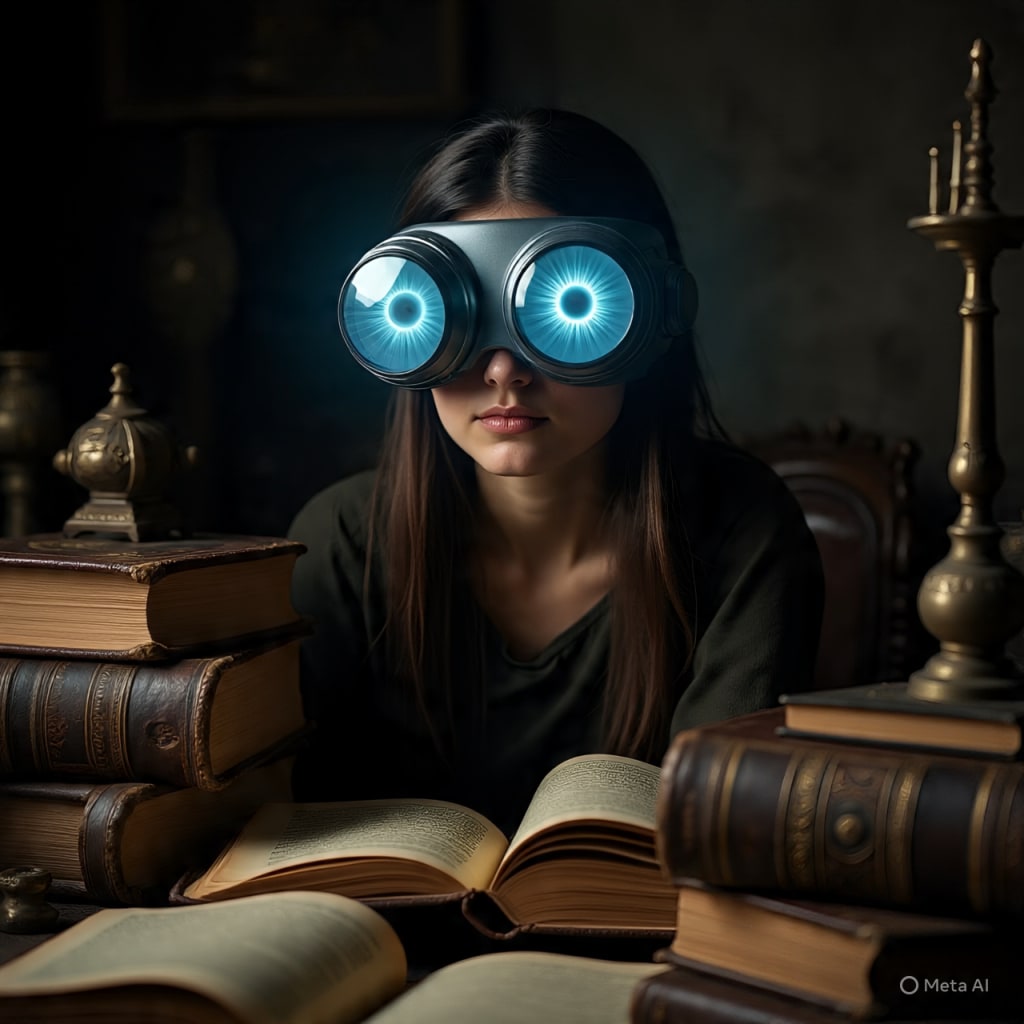
The first time Kieran slipped the Eyelens into his eye, he expected nothing more than sharper vision. He had read the promotional tagline—“See the world as it truly is”—and assumed it was just clever marketing. After all, every breakthrough in optics for the last century had promised the same thing.
But the moment the polymer lens dissolved into the surface of his cornea, reality fractured open.
The world sharpened in ways he could not have imagined. The walls of his small apartment no longer looked dull gray; instead, they pulsed faintly with heat signatures where the pipes behind them carried hot water. Dust motes didn’t just float but shimmered with a spectrum of ultraviolet light he had never known existed. His reflection in the mirror startled him—his own face layered with faint outlines, a shifting ghost of possibilities, as though the Eyelens was reading not just light, but the residue of time.
At first, it was intoxicating. He spent hours wandering the city with wide eyes. At night, the streets glowed like a hidden carnival. Flowers revealed secret ultraviolet patterns designed to lure bees. Neon signs radiated not just color but heat, buzzing like small suns. Even people were transformed—he could see their warmth, the rhythm of their heartbeats in faint pulses under their skin.
But then he began noticing… echoes.
When he walked into the café where he always ordered his morning coffee, he saw faint afterimages of customers who weren’t there anymore: the curve of a woman’s hand still reaching for her cup, a man’s laughter hanging like smoke in the air. The barista’s smile came with a second expression superimposed behind it—tiredness, maybe sorrow—that she hadn’t shown in real life.
The Eyelens wasn’t just showing him light. It was showing him imprints.
Kieran told himself it was just his brain struggling to process the new spectrum of information. But then he saw his late father.
It was on the old pier, where they used to fish when Kieran was a boy. He had gone there one evening to test the Eyelens on the water, hoping to see the shapes of fish beneath the waves. Instead, a familiar silhouette appeared beside him—lean, weathered, hands in pockets. The image was faint, made of ripples of heat and light, but it was unmistakable. His father turned toward him, and though no sound came, Kieran felt the echo of his voice vibrate in his chest.
That night, he didn’t sleep.
Soon, the Eyelens began to feel less like a gift and more like a haunting. Every place carried ghosts. Every conversation was layered with unspoken truths, visible in the flicker of expressions people never let surface. At work, he saw his colleagues’ resentment burning faintly under polite smiles. On the train, he saw the bruises people hid, the trembling of anxiety masked by blank stares.
Knowledge weighed heavier than ignorance.
He considered removing the Eyelens, but once it bonded with the cornea, it was irreversible. “Permanent integration for permanent clarity,” the advertisement had boasted. Now he wondered how many people had understood what that truly meant.
One evening, desperate, he returned to the workshop where he had first received the device. It was tucked in the basement of an old building, owned by a quiet inventor named Dr. Liora. She had been the face of the Eyelens project, celebrated as a genius for creating it.
She greeted him with tired eyes that glimmered with the same multicolored sheen he now saw in his own reflection.
“You’re seeing too much, aren’t you?” she asked softly.
He nodded, unable to find the right words.
Liora gestured for him to sit. “When I made the Eyelens, I thought I was giving humanity a new sense. An expansion of sight. What I didn’t realize,” she paused, “is that sight alone isn’t neutral. To see is to know. To know is to carry.”
Kieran clenched his fists. “Why didn’t you warn us?”
“Would you have listened?” she asked. Her voice carried no malice, only exhaustion. “Everyone wants truth until they see the parts of it that hurt.”
Silence stretched between them. In the corner of the workshop, he noticed faint afterimages lingering—shapes of past visitors. People who had sat in the same chair, pleading as he did now. He realized she had heard this question many times before.
“Can it be undone?” he whispered.
Her eyes flickered. For a moment, he thought he saw her answer layered beneath her silence: regret, heavy and luminous. But her spoken words were simple. “No.”
Kieran left without thanking her.
About the Creator
Keep reading
More stories from Princess Ladly and writers in Fiction and other communities.
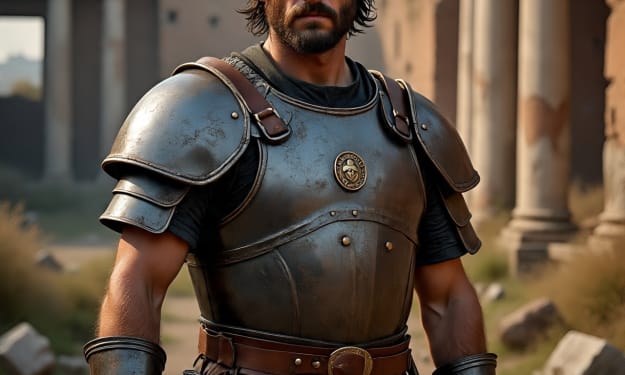
Roman Rance: The Unyielding Storm
Roman Rance was born on the fringes of the Empire, in a small settlement where the stone walls of Rome’s power were more rumor than reality. His father was a soldier who never returned from campaign, and his mother a weaver who taught him the rhythm of patience, but it was in the wild fields and ruins near his home that Roman truly grew. He was a boy who fought the wind, shouted against storms, and swore that he would one day be more than just another forgotten name.
By Princess Ladly5 months ago in Fiction


Comments
There are no comments for this story
Be the first to respond and start the conversation.