
Dust Map
Some secrets are buried. Others are planted
There are houses that keep their secrets in the walls, and then there are houses that whisper them directly into your bones.
My grandmother’s house was the second kind.
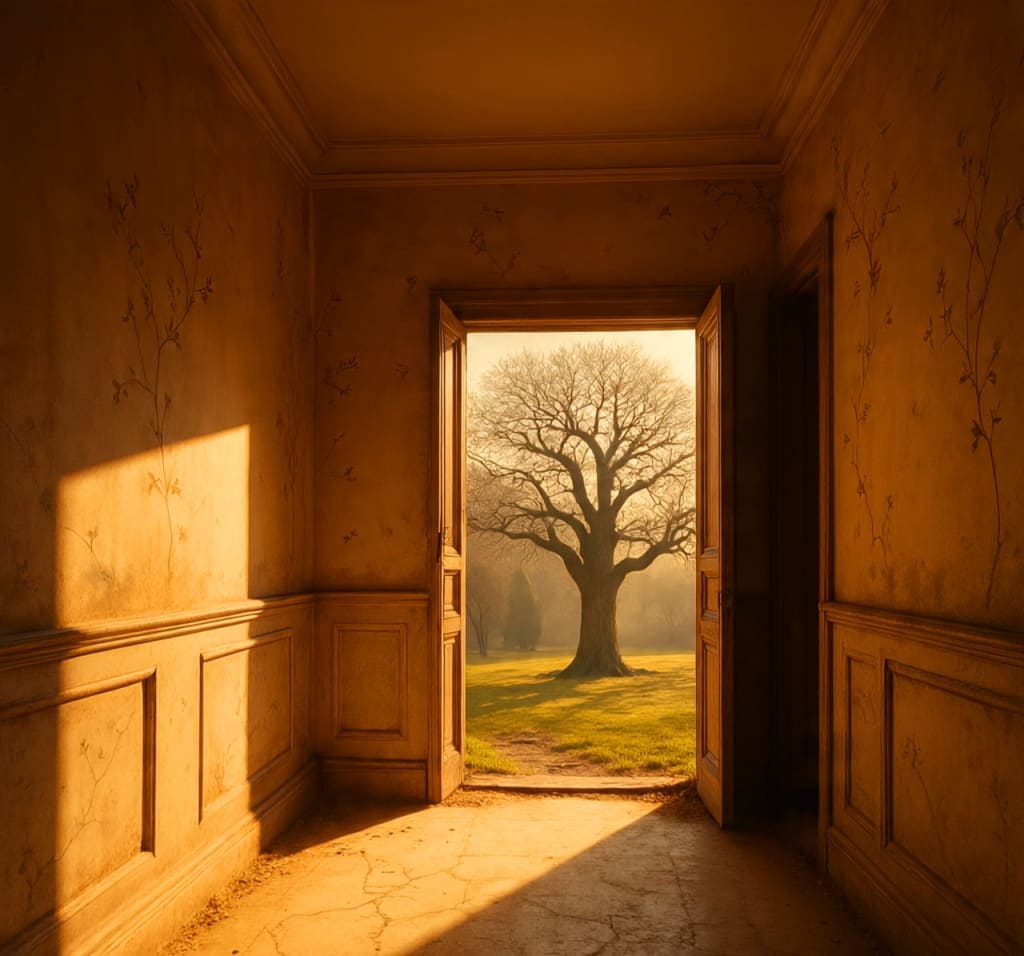
I returned to it on a wind-heavy evening in late autumn, when the air tasted like rain that hadn’t decided whether to fall. The hallway greeted me with its familiar hush. The faded wallpaper—vines, tiny birds—looked softer than I remembered, as if age had gentled it instead of erasing it.
But it was the dust that caught my eye.
It hovered in the beam of my flashlight, not drifting randomly like it should have, but swaying as if listening to something I couldn’t hear. The floor creaked beneath my boots, and the particles shivered, settling in soft waves, then ripples, then lines.
A shape began to form.
I crouched down. The dust gathered with a strange, delicate patience, sketching curves and corners across the floorboards. My heart climbed into my throat. When the pattern completed itself, I realized I was staring at a map—crude, shimmering, impossibly precise.
At the bottom edge, the dust thickened into a symbol I knew by heart: the silhouette of the old oak tree outside. The one my grandmother used to call the sentinel. The one that guarded our summers with its wide arms and shadow-cool afternoons.
But beneath the sketched symbol, the dust dipped into a deeper groove—a small indentation in the floor I’d never noticed. I touched it with the tip of my finger.
Something beneath the house hummed, like a memory waking up.
I stood abruptly and backed away. The dust pattern stayed still, as if waiting.
Grandma used to tell me that houses remember the things we forget. I always thought she meant the way a house creaks differently after someone moves away, or how a closed room keeps a faint trace of perfume long after its owner is gone. But standing there, staring at a map made from light and dust, I wondered if she had meant something more precise. Something more literal.
I slipped on my coat and stepped outside.
The night was crisp. Leaves skittered across the lawn like restless thoughts. The oak tree rose ahead of me, quiet and solemn, its branches swaying as if acknowledging my arrival. A childhood image flashed in my mind—Grandma standing under it, her apron pockets full of stories she never told.
I walked closer.
The ground beneath the tree felt oddly loose, softer than the rest of the yard. I knelt, digging with my hands first, then with the rusty gardening trowel I found half-buried nearby. The earth gave way easily, as if it, too, had been waiting.
Minutes passed. Maybe an hour.
Then the metal thunked.
My breath caught. I swept dirt aside and uncovered a small wooden chest, edges worn, hinges rusted, the wood darkened by decades of silence. It looked like it had been hidden not just by soil but by intention.
My hands trembled as I lifted it out of the ground.
A part of me expected it to hum, or glow, or shift like magic. Instead, it simply existed—quiet, heavy, patient.
I carried it back inside, dust map still glistening faintly on the floor. I sat in the glow of the hallway light, the house breathing softly around me, and opened the chest.
Inside were letters. Dozens of them.
All addressed to my grandmother.
Each sealed with the same symbol etched into the dust: the oak tree, the sentinel.
I opened the first letter.
The handwriting was unmistakable—my grandfather’s. The man who vanished when my mother was a child. The man whose name sat in family history like a half-erased sentence.
His words spilled out in looping ink:
“If anyone ever finds these, it means the house remembered. It means the truth was patient enough to wait.”
He wrote about leaving during a winter storm, following a rumor of buried family land and a promise he didn’t fully understand. He described clues hidden in the house, in the beams, in the rafters. He wrote about being followed, not by a person but by a feeling—like the past itself was on his heels.
And then the final line:
“I couldn’t return. Not safely. But the truth is here, in these letters. And the tree will guard them until the house decides you’re ready.”
I sat there for a long time, reading until the hallway light flickered with a familiar, tender pulse. It felt almost like approval.
The dust map on the floor slowly loosened, drifting back into the air like a sigh of relief. The pattern dissolved, but its memory stayed etched into me.
I understood then: the house wasn’t haunted. It was loyal.
It had spent years trying to speak.
The oak tree outside rustled, its branches swaying to a rhythm older than my family name. And somewhere in that sound was a message—one my grandmother must have heard all her life, one she trusted the house to keep until I grew old enough to listen.
I closed the chest gently and held it to my chest.
Some secrets are buried.
Others are planted.
This one had finally grown.
About the Creator
Jhon smith
Welcome to my little corner of the internet, where words come alive
Keep reading
More stories from Jhon smith and writers in Fiction and other communities.
Logic and reason are not always explanation enough.
Logic and reason are not always explanation enough. Understanding is elusive He sat looking at the half empty glass but not seeing it, he was cold but not feeling it, he was in pain but not hurting from it. His mind was numb, his memory a jumble of conflicting events, as if from a nightmare but were in fact real. The phone rang for a long time before it gained his attention and then he tried to turn it off, an automatic reaction against coming back to reality. His mind preferred the numbness to anything else that was available. In this distracted state he accidentally accepted the call and put it onto speaker, the voice from the speaker jolted him into giving it his full attention. This was a call from the dead. The voice was full of concern, “where are you John, why haven’t you called, what is going on?” Even to his own ears his tone sounded subdued, defeated, “I am in the cabin, in the woods but I am OK will call you later” and he turned the phone off both ending this call and not accepting any other.
By Peter Rose5 days ago in Fiction




Comments
There are no comments for this story
Be the first to respond and start the conversation.