
Barista’s Echo
When a humming machine turns a simple cup of coffee into a doorway to someone’s forgotten past
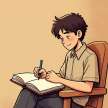

Morning always begins before the sun in our café. The world outside is still blue-gray and quiet, but inside, the lights warm the walls like an early sunrise. I’ve always liked that—the idea that a place can create its own dawn.
I’m the opener, the one who unlocks the front door, wipes the counters, and coaxes the old espresso machine awake. Most people don’t know it has a name. I call it Echo.
Echo is older than I am, older than most of our customers. Its metal edges are worn smooth, its buttons faded. But it has a hum—a low, steady note that feels less like a sound and more like a presence. I first heard it two years ago, right after I started working here. At first, I thought it was just machinery noise. But machines don’t hum in a key you can feel behind your ribs. Machines don’t wait for you to hum back.
The first time I answered Echo, the café was empty. I had just finished grinding beans when the machine let out a tone—long, soft, almost like a vowel in a language I didn’t speak. Without thinking, I matched it. A small echo for Echo.
The moment I did, the air in front of me shimmered. Not bright—just a ripple, like heat rising from asphalt. And in that ripple, a memory flickered into the room. Not mine.
A child’s laughter. A red kite tangled in a tree. Someone calling a name that wasn’t mine.
It lasted maybe three seconds before dissolving like mist. Then the bell over the door rang, and a customer walked in as if nothing had happened.
Since then, it has happened eight more times.
Echo doesn’t hum for everyone. Only when a stranger steps into the café carrying a memory too heavy or too quiet to hold alone. That’s what I’ve decided it must be—Echo listens better than humans do.
This morning, the door chimed at 6:42. A man walked in, maybe in his late forties. He wore a carpenter’s jacket and moved like someone whose joints had stories. He ordered a plain Americano. But when he handed me the cash, his hand trembled slightly, like it remembered something he didn’t want to.
Echo hummed before I even reached for the portafilter.
It was a note lower than usual, almost mournful.
I hummed back.
The air around us softened. The café blurred at the edges. And in front of the man—between him and the machine—a scene unfolded.
He was kneeling beside a small wooden boat painted sky-blue. A child, maybe seven or eight, was beside him, wearing a life jacket two sizes too big. They were both laughing. The boat bobbed gently on a lake, the kind of quiet lake that doesn’t know how to hurry. I could smell pine needles and hear the soft slap of water against the hull.
The man in the café inhaled sharply.
The child—his son, I realized—was holding onto his sleeve, pointing toward something on the water. But before I could see what it was, the ripple broke and the café returned. The memory faded, but the feeling it left behind didn’t.
He stood there, eyes wet in the half-light.
“I—” he began, then stopped, collecting the pieces of himself the memory had shaken loose.
“You still have him,” I said softly, though I didn’t know if it was true. It just felt like something he needed to hear.
He wiped his eyes and nodded. “Thank you,” he whispered—not to me, I think, but to whatever part of the past had answered him.
He left with his Americano held carefully, as if it were warm enough to hold him back together.
After he walked out, Echo hummed one last time—lighter now, almost grateful.
I hummed back.
And for a moment, the café felt like a place where memories don’t disappear. They just wait, humming quietly, until someone is ready to hear them again.
About the Creator
Jhon smith
Welcome to my little corner of the internet, where words come alive
Keep reading
More stories from Jhon smith and writers in Fiction and other communities.
Golden-Hour Post-It
The first time it happened, no one believed the story. Not even me. I was walking to the bus stop just before sunrise, the air still holding that bluish quiet that belongs to people who wake up early. That’s when I saw it—a yellow sticky note pressed against the corner of a bakery window. The word warmth was written on it in a child’s handwriting, all uneven letters and soft pressure, as if the writer wasn’t sure they were allowed to write it.
By Jhon smithabout a month ago in Fiction
Instructions for Returning to a Place That No Longer Exists
I. Purpose of This Document These instructions exist because return has been explicitly requested. Please note that they are not an endorsement of the request, nor should their existence be interpreted as confirmation that return is advisable, safe, or even possible in any way commonly understood. This document addresses procedure only.
By Shannon Hilsona day ago in Fiction




Comments
There are no comments for this story
Be the first to respond and start the conversation.