
Devil in Manhattan
In the shadows of 1920s New York, a haunted detective races to stop a killer bound by blood and black magic

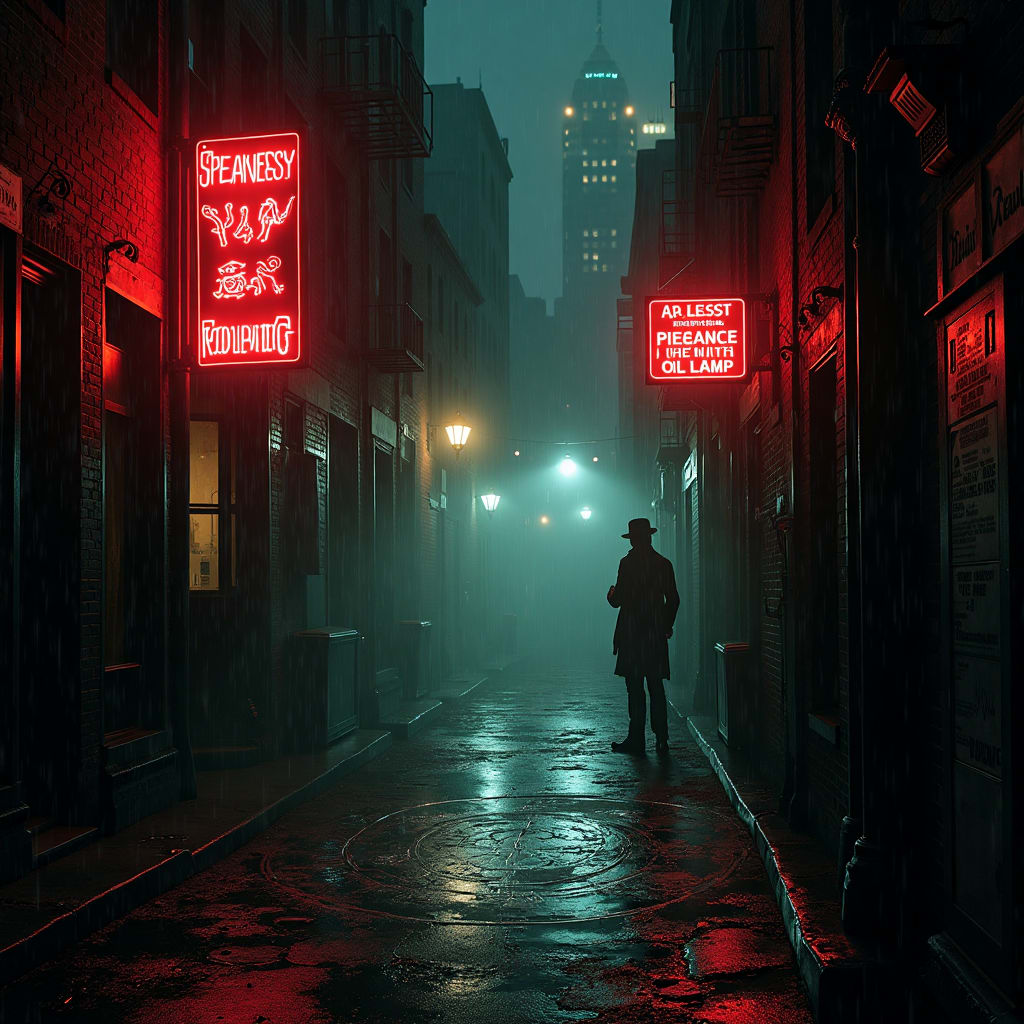
The rain had a way of making everything in New York bleed. Under the yellow haze of gas lamps and the hum of trolley wires, Detective Samuel Greaves lit a cigarette with shaking fingers and stared down at the body. The alley behind 46th and Lexington stank of garbage, gin, and death. A woman lay sprawled on the cobblestones, her throat slashed in a precise arc, a strange sigil carved into her chest—a symbol Samuel didn’t recognize, but had seen before.
This was the third victim in as many weeks.
Each murder bore the same calling card: a carefully drawn occult mark, etched with a precision that suggested ritual, not rage. The press was calling it “The Pentagram Killer,” and newspapers splashed sensational headlines above lurid sketches. But Samuel knew this was no typical murderer. This was something darker.
New York in 1927 was a city of roaring jazz, flappers, and speakeasies. But beneath the rhythm and revelry pulsed something ancient—whispers in the old tenement halls, strange gatherings in crumbling buildings near the river, men in tailored suits with eyes like dead stars. Greaves had seen war in France. He thought nothing could surprise him. But these killings clawed at the edges of his mind.
Back at the precinct, Greaves pulled files, maps, photographs. Each victim—young, single, all from immigrant families, and all reportedly interested in spiritualism or the occult revival sweeping the city's underbelly. Ouija boards, séance clubs, even cursed relics imported from Europe. It was a trend dismissed as a fad among the elite, but Samuel had seen the desperation behind it. People who’d lost husbands to war, children to the flu, lovers to madness—they would believe in anything that offered meaning.
One name kept reappearing in old arrest reports and fringe publications: Dr. Elias Morvant, a disgraced scholar of ancient religions and suspected cult leader. He’d vanished in 1921 after a fire destroyed his bookshop in the East Village. No body was ever found.
Following a trail of whispers and half-mad testimonies, Greaves descended into a world hidden beneath the city: secret libraries, forbidden tomes, and hollow-eyed followers who called Morvant the Gatekeeper. In the ruins of an abandoned church, Greaves found a ritual in progress—robed figures chanting in tongues older than Latin, blood pooling around an altar.
He broke it up with a bullet and a growl.
Morvant was there. Not aged. Not hiding. Alive and watching.
“You don't understand, detective,” Morvant had said calmly as the cultists scattered. “These deaths—these offerings—are not mine. They’re answers. The city is listening.”
Greaves arrested him that night, but Morvant died in his cell before dawn, scrawling a final sigil on the wall in his own blood. The killings stopped. Officially, the case closed.
But Greaves knew better.
Years later, he would walk the streets and see that symbol scratched into brick walls, etched into the bases of statues, even burned faintly into the wood of his own door. The city had gone quiet, but it hadn’t forgotten.
And neither had he.
Thank you for reading this tale of mystery and shadow. Some stories from the past remain with us—not as facts, but as warnings.
About the Creator
Lucian
I focus on creating stories for readers around the world
Pearl
1980 something. we all hung out at Pearl and you and i were nothing special, or so i thought. i mean we all danced, drenched in our own sweat, our own saline solution of fear, too many beers, shots, laughter, tears, fucks in the bathroom and i don't know when we began to be afraid. do you?
By ROCK aka Andrea Polla (Simmons)6 days ago in Fiction
The Mundane Murders
It was a small town in Massachuttes, named Seaside, where the waves broke on the shores of this coastal town which was nestled between two larger cities. It seemed quiet for the most part, but there was darkness looming in the salty air, of this otherwise righteous town.
By Susan Payton2 days ago in Fiction
I wanted to title this something different, but worried that my chosen title might cause problems entering the United States in the future so this is the new title. It's the greatest title. No one has ever written a title better than this. (All titles unrelated to content).
Let me be honest. I am finding this difficult. Now, I like a challenge, a stretch, a bit of an obstacle course. “Write about the decline of the British Empire in the form of a narrative poem in which your protagonist is an artichoke” I read, and flex my fingers. “Write a haiku to evoke the sensation of sibilance using only the first half of the alphabet.” “Well”, I think to myself, “this should be fun.” But “write about a system that isn’t working”? A system that isn’t working? Now? In 2026? ONE system? My favourite system that isn’t working? The sexiest system that isn’t working? The one giving me the most angst day to day? The one giving me the most existential dread? I am, as I say, finding this difficult. I will own that I have contemplated writing a thousand words on why the steady “all on” setting on my fairy lights is the EIGHTH of seven options which must be sequentially activated to get there, because that is a system that some fool came up with and it definitely doesn’t work, and now who is paying the price, eh? But how can I write about my fairy lights when…. When…. When….
By Hannah Moore6 days ago in Humans


Comments
There are no comments for this story
Be the first to respond and start the conversation.