

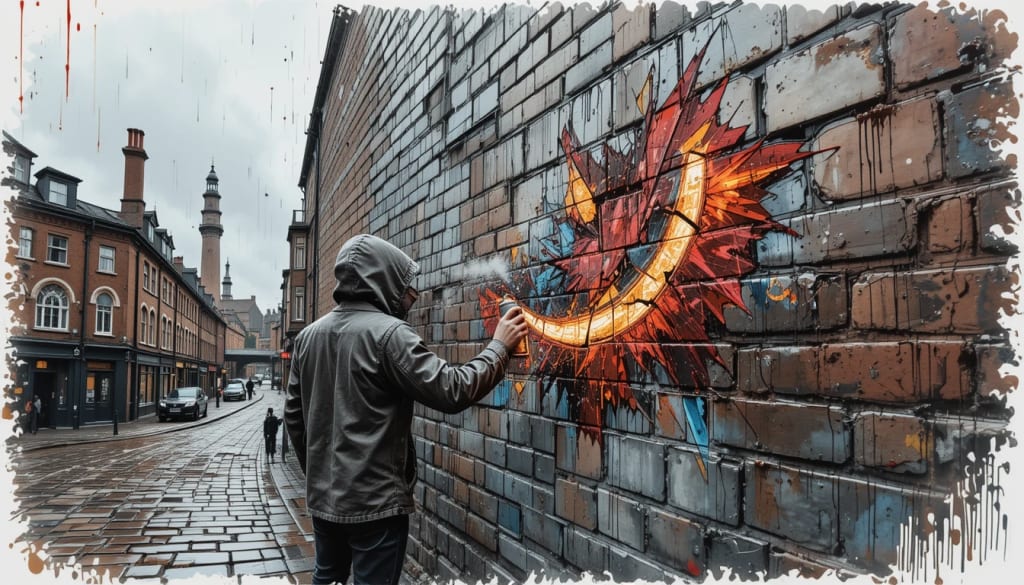
In the gray drizzle of Manchester, England, in 2024, the streets of Ancoats bore the weight of forgotten dreams and urban renewal. For Drake, a 34-year-old street artist known only by his tag, life was a canvas of fleeting moments—murals painted under cover of night, smiles offered to strangers, and a past he couldn’t outrun. His art was his voice, but beneath his vibrant colors lay a crumbling foundation of guilt and loss. This is the story of Drake’s journey to reclaim his smile, woven through the lives he touched and the walls he transformed.
Drake’s days began in a squat above an abandoned textile mill, its cracked windows framing the city’s skyline. His hands, stained with spray paint, clutched a sketchbook filled with faces—smiles he’d seen in passing, each one a fleeting connection to a world that felt distant. Once, he’d been Daniel, a promising art student in London, until a night of reckless choices left his best friend, Mia, dead in a car crash he’d caused. The guilt drove him north, stripping him of his name and ambition, leaving only Drake, a shadow who painted to survive.
His murals were Manchester’s secret treasures—vivid portraits of locals, their smiles larger than life, blooming on crumbling brick walls. They appeared overnight, unsigned but unmistakable, earning him whispers of fame as the “Smile Painter.” Yet Drake shunned the spotlight, his own smile a rare, fragile thing. He lived on odd jobs—cleaning pubs, hauling crates—his earnings spent on paint and cheap coffee. His only constant was Lila, a 60-year-old homeless woman who sold poems outside the train station. Her weathered grin inspired his first mural, and their friendship, built on shared silences and her verses, anchored him.
One chilly morning, Drake met Zara, a 22-year-old photography student capturing Ancoats’ gritty charm for her final project. She snapped a photo of him mid-sketch, his hood up, eyes guarded. “Your art’s everywhere,” she said, her voice bright. “Why hide?” Drake shrugged, uneasy with her curiosity, but Zara’s persistence wore him down. She proposed a collaboration: her photos of his process paired with his murals, a multimedia exhibit to showcase Manchester’s soul. Drake hesitated—exposure risked his anonymity, his past—but Zara’s belief in his work stirred something dormant.
Their partnership began cautiously. Zara trailed him to his painting spots, her camera clicking as he sprayed smiles onto walls. She asked questions, probing gently, and Drake shared fragments: his love for bold colors, his need to capture fleeting joy. In return, Zara spoke of her own struggles—her family’s expectations, her fear of failing. “Your murals make people feel seen,” she told him one night, her lens focused on a half-finished portrait of Lila. Drake’s throat tightened; he hadn’t felt seen in years.
The project drew attention. A local gallery, The Brickworks, offered to host their exhibit, and word spread online. Drake’s murals, once hidden in alleys, trended on social media, their smiles lighting up screens. But fame brought danger. A journalist, sniffing a story, dug into Drake’s past, and whispers of Daniel’s accident surfaced. Drake’s guilt resurfaced, too, in nightmares of Mia’s face, her smile fading. He nearly quit, but Lila’s words stopped him. “Your smiles ain’t just paint,” she said, pressing a crumpled poem into his hand. “They’re medicine.”
The exhibit’s opening loomed, and Drake faced a choice: reveal himself or let his past define him. Zara, sensing his fear, shared her own vulnerability—a photo she’d kept hidden, of her late brother, whose loss had fueled her art. “We carry them with us,” she said, her eyes meeting his. “But we don’t have to carry them alone.” Her courage inspired Drake to finish the centerpiece mural—a massive smile, half-Mia’s, half his own, its cracks filled with gold, a nod to kintsugi, the art of mending with beauty.
The night of the exhibit, The Brickworks buzzed with locals, artists, and curious strangers. Zara’s photos lined the walls, capturing Drake’s hands, his cans, his quiet focus. The mural stood unveiled, its golden cracks glowing under soft lights. Drake, in a clean jacket, stepped forward, his voice raw as he spoke. “I’m Drake. I paint smiles because I lost mine once. This is for those who helped me find it again.” He named Mia, Lila, Zara, his words a confession and a release. The crowd listened, their silence a balm, and applause followed, warm and forgiving.
The journalist’s article ran, exposing Daniel’s past, but the response surprised Drake. Letters arrived at the gallery—stories of loss, of second chances, from people his murals had touched. Lila, now housed through a charity sparked by the exhibit, framed her poem for him, its lines about crumbling walls and stubborn hope. Zara’s project earned her a scholarship, and she and Drake planned a new mural, this one for Mia, to be painted in daylight.
In 2025, Drake stood before a fresh wall in Ancoats, paint cans at his feet. The city had changed—new cafes, fewer shadows—but his murals remained, their smiles enduring. He was Daniel again, too, reclaiming his name as he rebuilt his life. Lila’s laughter echoed nearby, and Zara’s camera clicked, capturing his first true smile in years. The crumbling smiles of Drake had become whole, a testament to redemption, painted one stroke at a time.
About the Creator
Shohel Rana
As a professional article writer for Vocal Media, I craft engaging, high-quality content tailored to diverse audiences. My expertise ensures well-researched, compelling articles that inform, inspire, and captivate readers effectively.
Keep reading
More stories from Shohel Rana and writers in Fiction and other communities.
The Last Stamp of Memory
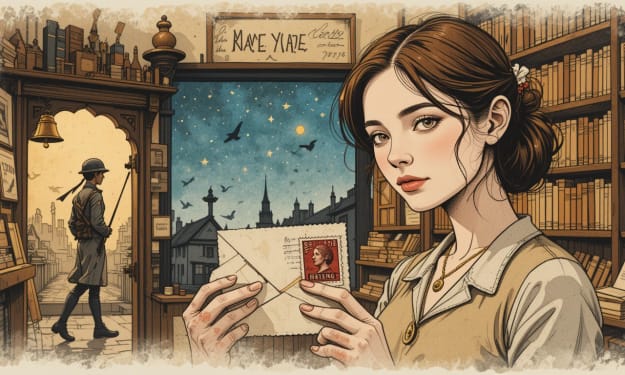
In the quiet town of Eldridge, England, in 2023, the scent of ink and old paper filled the cluttered shop of Mr. Hawthorne’s Philatelic Emporium. For 19-year-old Clara, this was more than a workplace—it was a sanctuary of stories, each stamp a fragment of history. As she sifted through her late grandfather’s collection, Clara uncovered a mystery tied to her family’s past, a tale of love, sacrifice, and the final stamp that would bind her to those she’d lost. This is the story of Clara’s quest to preserve the last stamp of memory.
By Shohel Rana7 months ago in Fiction
Miss Persephone's Manual to a Seemingly Ordinary Life
Miss Persephone was found at the dining table, her blue eyes swollen, her tears arriving and retreating like the tides of the ocean. Earlier that day, her family had visited her in the retirement home where she had lived for eight years. It was her eightieth birthday.
By Imola Tóth6 days ago in Fiction
Autonomy Is The Real Privilege
Good morning, freedom-seekers! Today we’re gonna be looking at autonomy. A strange word, I know; one many would probably look at blankly and run away from on sight. We’re gonna figure out what it actually means, consider how it’s achieved, and decipher just how deeply most of us are tangled up in dependence without realising it.
By That ‘Freedom’ Guya day ago in Humans



Comments
There are no comments for this story
Be the first to respond and start the conversation.