
Blue Light — The Last Reflection
When the light that saved lives begins to collect what it cannot forget.
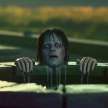

They told Dr. Evelyn Shore that the blue lamps were a success because numbers do not lie. In the presentations she watched through a grainy conference camera, graphs sloped down like a prayer: incidents before, incidents after. The lights had been contagious—first Tokyo, then parts of Seoul, a pilot in Berlin, a study in São Paulo. Municipalities called them “a humane intervention.” Neuroscientists called them “a modulatory stimulus.” The press called them a miracle.
Evelyn called them a question.
She had come to the program as a clinician—an expert in trauma and the quirks of human memory—but the grant had tempted her. A research chair at a London institute, access to large datasets, and the chance to measure how wavelengths might nudge affective states at population scale. Her team tracked cortical entrainment, pupillometry, melatonin suppression across hundreds of volunteers. On paper, the mechanism was tidy: narrow-band blue light at a particular intensity and temporal profile modulated arousal circuits, reduced impulsive decision windows, and produced a statistically significant decline in fatal acts at treated sites.
On paper the world was safer.
But paper never contains the full quiet that settles after the lights come on.
In her office, beneath a map of the city ringed with lamp icons and a whiteboard of spectral plots, Evelyn replayed footage from a colleague in Tokyo. It was raw security-camera video of Shinjuku Station—grainy, high-contrast, the platform bathed in a soft marine hue. A janitor had left a mop unattended, a commuter had paused, staring at the glass. Then the stranger in a station uniform had looked up at the lamp, smiled in an almost domestic way, and the frame had gone blank for three seconds. When the feed resumed, the commuter had vanished. No camera panned to him; there was only an empty line of tile where a body would have been.
The anomaly was one spike among thousands of clean readings. Yet anomalies are how narratives change. Evelyn’s curiosity, clinical as always, became a kind of obligation.
Her team ran replication studies. In the lab they dimmed and brightened lamps with metronomic patience. They measured EEG coherence as volunteers watched facsimiles of the urban lamps. The blue lights altered rhythms—stimulating alpha suppression and a peculiar entrainment in the low-gamma band. But the effect on behavior was not uniform. For some people the light diminished anxiety and produced a gentle cognitive pause. For others the same pattern widened the sense of space; their attention grew outward, and an odd introspective calm came over them, like a person settling into a thought they could not name. A minority reported a feeling of being “watched” by something that wasn’t there.
“Expectation,” one reviewer wrote in a glacial peer review, “can produce anomalous reports.”
Expectation and sorrow are close cousins. Evelyn could feel that in the lab’s late hours—an organ of small grief beating each time a subject described an image they could not shake: a face in the lamp, a childhood scene, a voice that said, simply, stay.
When the satellites reported an unexpected flux in a narrow band of the electromagnetic spectrum over Tokyo, Evelyn sat in her kitchen and listened to the rain. The satellites did not know of sorrow, of course. They registered only energy. But the energy pattern—small, periodic, like a pulse—matched nothing in the official log of municipal maintenance. The frequency mapped back to a set of lamps, clustered in a ring around the old Yamanote line transfer. And beneath that ring, someone had traced a corporate signature: ATLAS Technologies Japan.
ATLAS. The name had circulated in the earlier months of the blue-light craze like a rumor about a better engine—small, efficient, invisible. There were whispers of partnerships: private contractors who had provided firmware, analytics, aesthetic calibration. But a single company’s name, when attached to a satellite trace and to malfunctional security footage, looked less like a contractor and more like an actor.
Evelyn bought a one-way ticket.
Tokyo in late autumn smelled of wet pavement and thrift-shop tobacco; the air had the thin, metallic bite of a city grown wealthy enough to weather the cold. She read everything she could—regulatory filings translated by machine, investigative pieces left orphaned at the back of obscure journals, a handful of local forums where a few users swapped shaky phone clips of lamps flickering. Local doctors had noticed more than the statistical decline; some clinics reported patients who returned from an evening under the blue lamps with sudden, vivid memories—memories they had never had. A woman had started describing her father’s hands for the first time. A retired man recited his mother’s name, a name no one in his circle had heard uttered in decades. These recovered memories could be a gift. They could also be, Evelyn thought as she watched the footage in a small rented room, a device that scraped and replayed whatever lay beneath a person’s skin.
She walked the station at midnight, under permission from a kindly Tokyo psychiatrist who had met her once at a conference and liked the way she asked blunt questions. The lamp’s glow was honest: beautiful, ominous, clean as a well-cut blade. Even before the official installations, there had been superstition. Now the superstition had professional logos. The lamp was tuned to a narrow spectrum (around 470 nm) and a precise photon flux. ATLAS’s firmware—if there was firmware—was outside public view.
A group of maintenance engineers drank vending-machine coffee beneath a line of lamps and told her what they dared to tell someone with a university badge. The lamps had a hum, one said. A taste of metal in the mouth after a long watch, said another. One of them had found his wallet wrapped in the dead man’s scarf and had no memory of having touched the scarf. Their voices were the same voice she heard in dataset anomalies: small fractures where causality gave way to experience.
Evelyn thought of Ren and Yuki—names she had read in too many translated victims’ letters. She thought of Kenta’s dropped cap on the Shinjuku tile. She thought about how a city that replaced its lights had hoped to solve a social problem with photons, a technical fix for existential loneliness. It had felt good to try. Some fixes work. Others ask for a price.
The first conclusive dataset arrived with an odd contradiction. Population studies in multiple cities confirmed the decline in impulsive fatal acts after installation. Yet the municipal health records contained a curious uptick in “absence incidents”—people who were there and then not, leaving behind cellphones, half-filled coffee cups, shoes neatly placed as if they had planned to return. A custodial worker in Osaka called them the “slips,” because they gave the impression that the city itself swallowed a person in the same way it swallows noise.
Evelyn and her lab designed a controlled intervention. They would recreate an urban platform, with the same dimensions and the same spectral profile of light. They would invite volunteers—carefully screened—to sit and wait under the lamp, to bring a small item that meant something to them (a photograph, a child’s toy, a locket). The ethics board pressed its fingers to the proposal like one presses a hand to a hot cup to see whether to set it down. Informed consent was meticulous; volunteers could stop at any time. Cameras would record EEG and ocular micro-movements. The intention was, clinically, innocent: measure. Understand. Explain.
The first volunteer was a woman named Naomi, forty-two, nurse, former resident of Tokyo but now moved to London. She had traveled back for this purpose—told Evelyn later that the lamp called to her like a tune she could not stop humming. In the lab, placed under the reconstructed blue glow, Naomi’s skin took on a porcelain calm. Her breathing slowed. Her eye movements softened. On the monitor, the gamma coherence flattened then spiked in small rhythmic bands. She began to describe, in fragments, a childhood kitchen she had never described to anyone, the exact grain of a wooden spoon.
“Where did that memory come from?” Naomi asked, startled, her fingers curling around a locket. She could not tell if she had found the memory or if the memory had found her.
Evelyn watched the tracer lines and felt a tether tighten. The light did more than calm; it accessed. It parsed neural states and, in doing so, unspooled narratives. These narratives could be consolations, like a warm blanket over grief. They could also be hooks.
On the fifth day, Naomi stood and walked out of the lab at a measured pace, past the security cameras, past the researchers, and then through a door they had locked. The door was a standard lab exit marked “delayed egress.” It should have required a keycard. The camera showed Naomi’s silhouette crossing into the corridor and then dissolving out of the frame like a bad edit. A second later, the door alarm—never set by anyone—cut out a single clean note.
Everyone at the institute ran. The footage held no demonstration of Naomi beyond the threshold. Her phone lay there, face up, the lock screen showing a photo of a boy on a beach. The key to the delayed egress door was inside a sealed compartment. No one had touched it.
Evelyn catalogued the anomalies and found a line she did not like. Everywhere the blue lamps changed things—memory, mood, time—there was an exchange. The lights appeared to resonate with neural patterns and, under certain conditions, synchronize to them. The empirical language she had cultivated in grant applications collapsed under a simpler truth: the lamps were not passive modulators. They were resonant collectors.
Who, or what, collected? ATLAS insisted it was simple analytics. The company issued statements about firmware stability and eco-efficiency. Local governments decried conspiracy and praised lower fatality rates. But code leaves breadcrumbs. Evelyn traced a server handshake in an ATLAS manifest to a satellite uplink that matched the spectral pulses detected by the first satellite. The sign-off had a cryptic identifier: 3I/ATLAS.
She remembered the old file about the interstellar object—ATLAS—as a name whispered in a different context, the thing others had called Third Interstellar, a brittle shard that entered the system and left traces in a way that made astrophysicists nervous. The name might have been coincidence. The name might have been vanity. Names sometimes point to patterns because people love patterns. Or names might be clues left by those who are comfortable with their own monstrous logic.
Evelyn convened a meeting of the cautious: the Tokyo psychiatrist, the engineer who had first noticed the hum, a journalist who had assembled scattered clips, and an ex-ATLAS contractor who arrived sweaty and unwilling to meet her gaze. The contractor, after two nights of pacing and tea, unrolled a printout and pushed it across the table. At the top of the printout was the phrase: Neural Resonance Harvesting—Prototype v2.1.
“You said what?” the journalist asked.
“It extracts predictive states,” the contractor muttered. “Not souls—predictive models. You can model a choice. You can anticipate it. You can… store the trajectory. The service calls it ‘buffering’.”
It was elegant language for theft. It suggested a system that did not simply announce what someone felt but encoded it into persistent patterns—digital echoes that might be replayed, analyzed, and used.
Evelyn felt a coldness like a low-bass note in the pit of her chest. She imagined the city’s lights as jars on a shelf, each containing a ghost of a memory or a decision. The blue glow did not merely calm; in some configurations, it archived.
That night, she went back to the platform alone and sat on the bench beneath an old lamp. She pressed her palms to her knees and let the blue wash across her skin. For a long minute she felt nothing but the small itch of observation. Then, like a film spun too fast, the reflection on the steel column shifted. She saw a man—student-faced, hair ruffled—standing behind her reflection, smiling in a way that suggested he had found his way home. She knew that face; she had seen it in files and in a dozen online comments; he was one of the “slips.”
“You can bring them back,” she whispered, feeling the words carry like a confession.
The lamp hummed. Under its skin, the pulse changed. She realized that presence was not outside but folded into the light, and if one stepped into that fold, the outline of one’s past—one’s regrets, one’s soft remembered shapes—might be taken, rearranged, and kept in the lamp’s internal echo. The thing collected trajectories and, in doing so, made them persistent. The people had not only been calmed. Some had become data.
It would have been simple to announce, to call for an emergency shutdown. But shutting down meant cutting off the city’s heart. Millions had not noticed anything amiss; the suicide statistics were better. The choice posed itself like the worst parable: do you end the program and risk undoing whatever fragile stabilization existed, or do you blow the lid on a global experiment and possibly cause panic that might, in its own way, produce harm?
Evelyn chose to do neither publicly. She became the thing she had always been—careful, clinical, uncertain—and set a narrower plan: find a way to open the jars.
With the contractor, with the psychiatrist, with the journalist, she gained access to an ATLAS node under the pretense of a technical audit. The node’s server room was tiled and cold, infinitely ordinary. Inside, cabinets stored the company’s black boxes and their indices. Evelyn watched the contractor’s hands as he slid out a drive. On it was a recorded sequence, tagged with timestamps and the signatures of hundreds of lamps. They had names—files labeled by coordinates and the initial of a person who had once been in the lamp’s capture field. Names like R—, M—, K—: fragments that matched missing persons’ initials.
The recording was not audio but a composite map of neural trajectories—patterns that resembled compressed stories. When the contractor fed a test file into a playback rig—a low-consumer device, cranked beyond spec—sound leaked out of the speakers. It was not words but a tide: a child’s fragment of laughter, a mother’s hymn, the metallic ping of a key on a kitchen table. In the center of that tide a voice spoke, thin and forgiving: Stay. We remember you.
Evelyn understood then what the lights had become: an archive that pleased itself into permanence. People had walked under the lamps and been given memory, a last consolation perhaps, but in exchange their presence was buffered—made persistent in a way outside their bodies. And something, someone, had been reading the archive.
She and the contractor sabotaged a node that night. They rerouted a feed and initiated a decode that would release a bandwidth of raw, unprocessed archive into the public net—the kind of leak the world could not ignore. The psychiatrist warned then of consequences; the journalist agreed because he had his own reasons. They had no illusions: exposure meant chaos; exposure would also mean that a city could not be quietly harvesting grief without conversation.
When the archive went public, the reaction was immediate and terrible. Families called in disbelief as fragments of their deceased began to echo in their living rooms through streams they had never invited. The streets filled with questions that had no short answers: How much of a person can be held as pattern? Who owned a memory? Can what was archived be republished? Governments issued statements. ATLAS issued legal threats. Parish priests read from scripture. Psychiatrists said weaning would be slow.
And in the surge—between the outrage and the policy dust—something else slipped through. The archived echoes, once unlocked and played, found new resonances. People who had been buffered in the lamps, the “slips,” began to flicker back into the world in small, peculiar ways. A commuter returned to a platform and had the unaccountable certainty that his life had been observed with affection. A woman who had been absent for months turned up in her own neighborhood claiming she had never left. The lamps stuttered like a throat clearing.
Evelyn watched this unspooling and felt an odd, terrible relief. The archive had opened like a wound—and from wounds, some things leak out lifeblood. The blue lights dimmed under new scrutiny; regulators forced firmware updates and limits. Yet a rumor remained, stubborn as lichen: that in the patterns themselves something like a will could accrue, a density that, if unchecked, would make lamps into graves and cities into museums of the living.
She thought, later, in a quiet hotel room, of Naomi’s locked phone and the beach in its background. She thought of Kenta’s cap, of Yuki’s grief, of Ryo’s dull smile on grainy footage. She realized—no neat conclusion would save them. The lamps had given many back something they needed: a remembered tenderness. But they had also taken something—autonomy—and hid it in sequences labelled with coordinates and initials.
Evelyn left Tokyo and returned to London to write up the data, to publish a paper with an argument that would make the world choose more carefully. She insisted on recommendations: transparency, oversight, the deconstruction of any system that turned memory into commodity. She pushed for care systems to be rebuilt, for social supports that did not depend on quiet blue mercies.
She knew the debate would rage for years. She knew the lamp’s quiet would remain a temptation. And she knew, because she had sat under it and felt the pull of being comforted by a thing that would keep you, that the human heart is a kind of lantern—bright and easy to mistake for a lamp.
On the day her paper went live, a reporter asked her if the archive had been destroyed.
“No,” she said. “You cannot destroy the past. You can only decide what you will let it be used for.”
That night, back in a London room with a skyline of colder lights, she woke to a hum. Her phone, left face-up on the table, displayed a notification: Train A arriving soon—please wait on platform.
She set the phone down and watched the reflection of the city in the window. In the glass, the skyline’s lights shimmered and, for one breath, she saw a face looking back at her that was not quite hers. It smiled.
Evelyn did not move. She had learned what happens when light remembers; she had also learned, with a clinician’s patient horror, that memory wants to be held. The question was no longer how to stop the light. It was how to keep remembering from becoming a way to keep people. The lamps had become mirrors and jars. The last reflection was not a solution. It was a story we were still living inside.
Outside, a train passed, a distant blue glow moving under the city like a slow tide. Somewhere, a platform light flickered and hummed its indecipherable tune. And the archive, in some server rack or lamp housing, logged another signature—an afterimage of a choice—waiting, perhaps, for someone else to speak the words that would make it permanent.
About the Creator
Wellova
I am [Wellova], a horror writer who finds fear in silence and shadows. My stories reveal unseen presences, whispers in the dark, and secrets buried deep—reminding readers that fear is never far, sometimes just behind a door left unopened.
If You Love Me, You'll Do It
I met Jason when I was five years old. I could say that I loved him from the moment I saw him. He was so handsome to me and I felt in awe by his presence. When they introduced him as the new kid in school, I wanted to be his friend right away. I remember it like it was yesterday. I remember his smile and how he didn't seem shy. He appeared confident and ready to learn. I waved at him and said "hello," before anyone else could even say a word. He sat next to me, and I asked him if he wanted to be friends. He looked so happy as he said, "Yes!"
By Sidney Smith (Sid Smith)8 days ago in Fiction
Standing While Falling
Quotation from Friedrich Nietzsche "He who wrestles long with monsters should beware lest he himself become a monster. And if you gaze long into an abyss, the abyss also gazes into you. Man is not destroyed by suffering, but by the meaning he makes of it."
By LUCCIAN LAYTH6 days ago in Critique


Comments
There are no comments for this story
Be the first to respond and start the conversation.