
Behind Women's Affection for Pink.
The Power of Pink: Breaking Gender Norms and Redefining Femininity

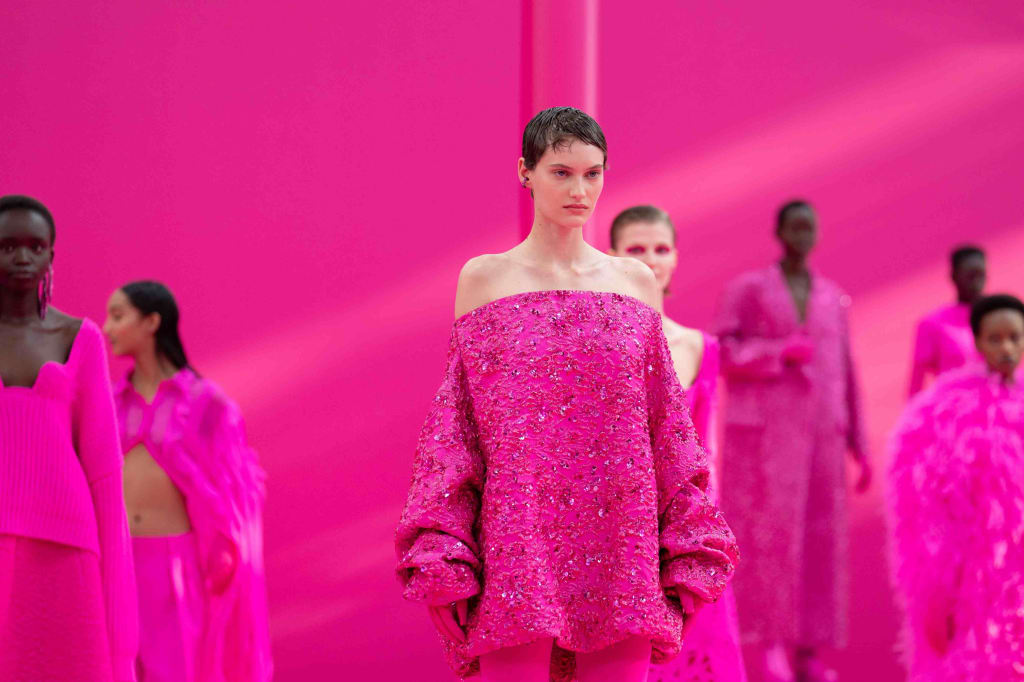
In 1927, Time Magazine embarked on a nationwide survey of major department stores, determined to unravel the mystery surrounding colors associated with girls in their clothing lines. The results, however, proved to be a mixed bag of opinions. Interestingly, even a 1918 catalog suggested that little girls should wear blue due to its delicate and dainty nature. Enter Jennifer Wright, an author known for her captivating writings on history and fashion. According to her, it was only after the war that pink underwent a symbolic transformation, acquiring the association we know today.
Fast forward to 1953, a pivotal moment in the pink color's history. Dwight Eisenhower, the victorious World War II general, assumed the presidency, and it marked a turning point for pink's perception. During Ike's inauguration, Mamie Eisenhower emerged in an extravagant rhinestone-studded pink ballgown—a sight unseen during the war's era of simpler styles. Mamie adored pink and became its beloved ambassador, firmly believing that it enhanced her complexion and beautifully contrasted with her striking blue eyes. Newspapers frequently mentioned Mamie Eisenhower alongside the color pink, which became affectionately known as "Mamie pink." She even quipped, "Ike runs the country, I turn the pork chops," further solidifying her affinity for the color.
Interestingly, Mamie's love for pink had an arbitrary influence on society's perception of femininity. Women embraced the color, deeming it the epitome of ladylike fashion. A notable reference is found in the film Funny Face, featuring a song called "Think Pink," where the protagonist—an editor inspired by Diana Vreeland—exclaims that American women must think pink, bidding farewell to black and blue, which were prevalent during the war years. Pink not only gained popularity in women's clothing but also in home décor. It was a trend that many women genuinely enjoyed, without feeling oppressed.
However, there were individuals like Diana Vreeland who resisted reverting to traditional roles. This marked the moment when pink began to represent non-traditional, strong women, both real and fictional. Think of Donna Mae Mims, the fearless racecar driver donning a pink uniform, helmet, and racecar, or the Pink Ladies in Grease and the Plastics in Mean Girls—shrewd and somewhat intimidating female characters. A striking cover of People magazine featured Hillary Clinton wearing a vibrant pink jacket, accompanied by a caption urging women to shatter the highest, hardest glass ceiling. Here, Clinton epitomized the antithesis of Mamie Eisenhower's intentions, proving that pink transcends mere color—it symbolizes personality and challenges assumptions of what women can achieve.
Ultimately, Hillary Clinton, like many others, strives to show the world that despite her accomplishments, she is just a girl, no different from anyone else. The allure of pink lies not only in its vibrant hue but in its power to redefine gender norms and highlight the potential within each individual.
About the Creator
King David
Prepare to be entertained, informed, and moved. Explore the pages of King David's stories and embark on a journey where business insights, scam awareness, and romance intertwine to create a reading experience unlike any other.
Keep reading
More stories from King David and writers in Fiction and other communities.
Unmasking the Fraudsters: Revealing the Latest Scam
Indian Scam Call Centers: A Billion-Dollar Industry That Preys on the Unsuspecting Every year, Indian scam call centers manage to siphon off millions of dollars from unsuspecting victims worldwide. Their crafty tactics know no bounds, as they employ various methods to gain your trust. Picture this: they pose as the IRS, menacingly threatening you with jail time if you fail to send them money immediately. Alternatively, they might masquerade as generous benefactors, claiming they want to shower you with wealth. These companies are infamous, not only within the Indian government's knowledge but also among police forces and governments globally. Astonishingly, they continue to swindle around $70,000 each day from unsuspecting victims.
By King David3 years ago in Criminal
Miss Persephone's Manual to a Seemingly Ordinary Life
Miss Persephone was found at the dining table, her blue eyes swollen, her tears arriving and retreating like the tides of the ocean. Earlier that day, her family had visited her in the retirement home where she had lived for eight years. It was her eightieth birthday.
By Imola Tóth5 days ago in Fiction
Simple Sammy
Exposition Sammy Frederickson lived in a small, quiet town. He was a small, quiet boy who kept himself to himself. As his family had next to nothing, his friends were animals in the forest surrounding his shack of a home. With no modern gadgets, his entertainment was communing with nature, no matter the weather.
By Julie Lacksonenabout 22 hours ago in Fiction
Thoughts on Vocal and the way the world is
"Death cannot stop true love, only delay it." – Wesley in The Princess Bride. I decided to come back to Vocal on a very cold and dark night at the end of December. I had been, and still am, convalescing from a horrible staph infection that had gone misdiagnosed for months. This, paired with the increasing challenges of being healthy, making the best choices for my co-parented child, being a wife, and being a director at a new job, was a lot to manage.
By Jazzy 2 days ago in Confessions


Comments
There are no comments for this story
Be the first to respond and start the conversation.