
**The Enigma of Agartha: Unveiling the Myth of the Inner Earth Civilization**
**Introduction**
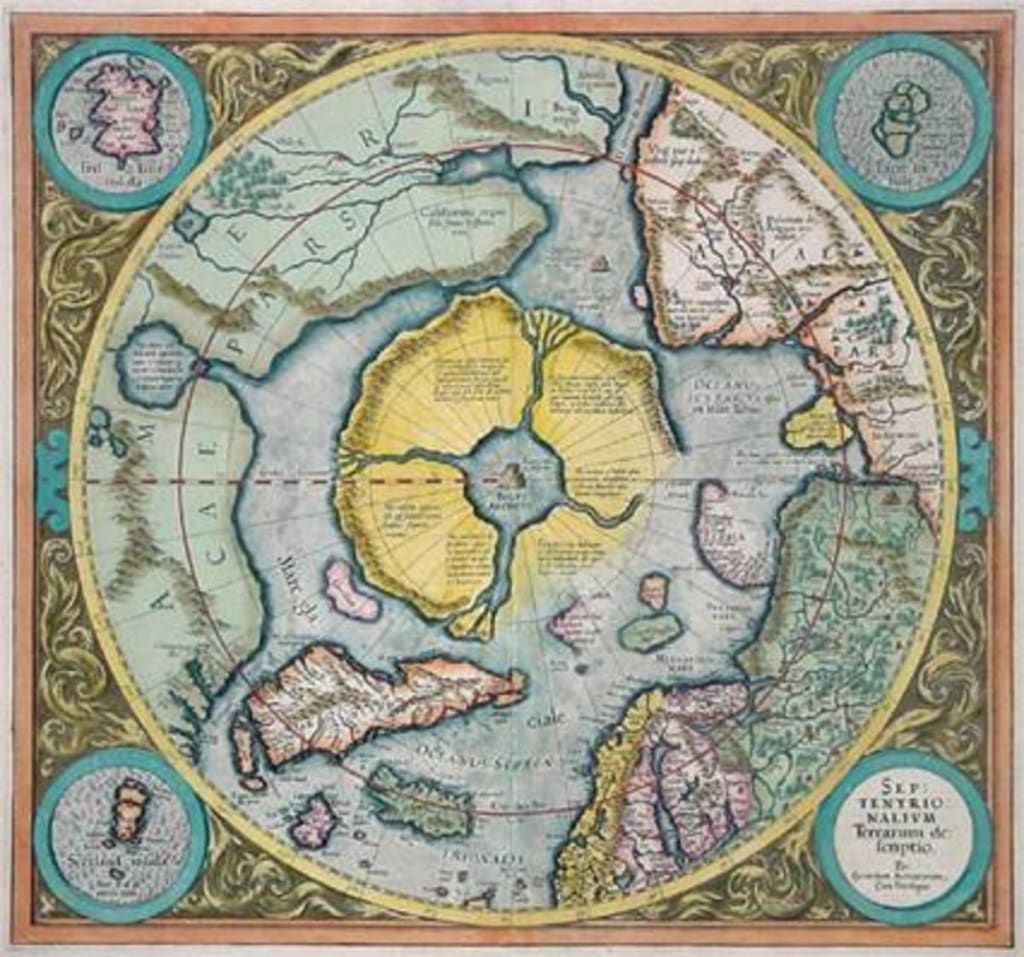
For centuries, the human imagination has been captivated by the idea of hidden civilizations beneath the Earth's surface. Among these captivating legends, one stands out with its mysterious allure – the legend of Agartha. This mythical realm, said to exist within the hollows of our planet, has intrigued adventurers, conspiracy theorists, and seekers of the unknown. While Agartha remains firmly in the realm of legend and myth, its origins, influence on popular culture, and its connections to esoteric beliefs make for a fascinating exploration.
**Ancient Origins and Mythological Roots**
The concept of a subterranean civilization is not unique to Agartha. Throughout history, diverse cultures have crafted narratives of hidden realms within the Earth. In Hindu mythology, Patala is described as the underworld realm inhabited by serpent beings. In Tibetan Buddhism, the hidden land of Shambhala holds spiritual significance. Agartha, however, gained prominence in the 19th and 20th centuries through the works of authors like Jules Verne, who wrote "Journey to the Center of the Earth," and the Theosophical Society founded by Helena Blavatsky.
**Theosophical Influence and Madame Blavatsky**
Theosophy, a spiritual and philosophical movement that emerged in the late 19th century, played a pivotal role in popularizing the legend of Agartha. Helena Blavatsky, a prominent figure in the Theosophical Society, introduced the idea of a hidden world inhabited by advanced beings in her works. Blavatsky's teachings, including the concept of "Aryan" and "Subterranean" races, intertwined with Agartha's narrative, fostering a new layer of intrigue.
**The Hollow Earth Hypothesis**
The Hollow Earth hypothesis, which suggests that the Earth is not solid but contains vast underground cavities, further fueled the Agartha myth. Pioneered by scientists like Edmond Halley and John Cleves Symmes Jr., this theory found its way into both scientific speculation and fictional storytelling. Proponents of the Hollow Earth theory used Agartha as a plausible explanation for the supposed existence of a hidden civilization beneath the Earth's crust.
**Agartha's Imaginative Evolution**
As the 20th century progressed, Agartha continued to evolve within various forms of media. Pulp fiction, science fiction novels, and conspiracy theories integrated Agartha into narratives of advanced technology, lost civilizations, and secret societies. Agartha's inhabitants were often depicted as spiritually enlightened beings possessing advanced knowledge and technology far beyond humanity's grasp.
**The Nazism Connection**
The fascination with Agartha took an eerie turn with its association with Nazi ideology. Some conspiracy theories claim that high-ranking Nazi officials believed in Agartha's existence and sought contact with its inhabitants. These theories, while largely unsubstantiated, highlight the malleability of the Agartha myth, allowing it to adapt to different historical contexts and narratives.
**Modern Interpretations and Pop Culture**
In the digital age, Agartha's myth continues to thrive. The internet has become a breeding ground for conspiracy theories, esoteric beliefs, and imaginative storytelling. Online forums, blogs, and social media platforms provide a platform for enthusiasts to discuss, dissect, and speculate on the mysteries of Agartha. Additionally, Agartha has become a recurring motif in video games, literature, and movies, further embedding its presence in contemporary pop culture.
**The Significance of Myth**
While Agartha remains a captivating and enduring myth, its true significance lies in its role as a cultural mirror. It reflects humanity's innate curiosity about the unknown, the desire for hidden knowledge, and the yearning for a higher spiritual realm. Agartha's adaptability and persistence highlight the human need to explore beyond the visible world, to seek deeper meaning, and to weave tales that resonate with our collective psyche.
**Conclusion**
Agartha, the enigmatic realm within the Earth, continues to be a beguiling legend that intertwines mythology, esoteric beliefs, and the human thirst for exploration. Emerging from ancient roots and evolving through various cultural influences, Agartha's narrative has proven its resilience across centuries. Whether viewed as a product of human imagination, a reflection of cultural desires, or a canvas for speculative fiction, Agartha's allure persists as a testament to the power of myth and the enduring capacity of the human mind to conjure the extraordinary from the ordinary. As long as there are dreamers and seekers, the legend of Agartha will continue to resonate across time and space.
About the Creator
The One Who Stayed in the Dream
1 It started with the dream. Every night, I saw him. It was always the same. A boy with dark hair and calm eyes, sitting across from me at a café that doesn’t exist. The walls were pale yellow, the windows fogged from the rain outside, and there was always jazz playing softly in the background.
By Yamuni Kaijumia day ago in Fiction



Comments
There are no comments for this story
Be the first to respond and start the conversation.