
A Touch of Freedom
Finding joy in the unexpected

By Clive Thomas
When Cole awoke that morning, he wasn’t expecting anything out of the ordinary. The apartment was the same; compact, shabby, paint peeling from the walls. The grey venetian blinds were still somehow hanging together, concealing the dusty window that gave him some privacy from the apartment block opposite. He dragged himself up, tossing back the doona at a weak attempt to make his bed. Boiling the kettle, he dropped a tea bag in his cup, which was still dirty from the night before. He had run out of detergent and wouldn’t be allowed into the supermarket for another couple of days. Cole scribbled ‘detergent’ on a scrap of paper. Hopefully, there would be some left. So many items were rationed it was ridiculous. But not as ridiculous as the latest laws.
At first it had been out of necessity; ‘Social Distancing’ to avoid contracting the virus, but now, ever since that brief but disastrous war, things were so much more severe. The government didn’t want people gathering anywhere, anytime. Even small groups were banned, and why? No one would give an honest answer, and he knew better than to push. Too many people had disappeared after raising questions that were considered against the interest of the ‘Community’. Community! What community? The very idea of community had disappeared long ago, along with most other pursuits and activities that made him feel half human. Cole longed for freedom. The freedom to choose where to go and when, without the feeling of being frowned upon, watched, pursued.
But Cole knew the limits. If the officers weren’t on patrol, the drones were. Inanimate, inhuman, with robotic voices that ordered and demanded, and of course cameras that fed information back to Control. At least with an officer, there was a chance they would understand, would feel some sympathy. Not the drones. Their very inhumanity was the secret to their success. They didn’t have feelings; they didn’t make mistakes. And the incessant whine of their motors was like a mosquito at night, irritating, annoying, and ultimately responsible for the lack of peace.
Today, as usual, he would walk. Walking wasn’t banned, in fact it was encouraged. It was part of the thirty minutes of exercise permitted twice daily, part of the government’s push for a ‘healthier Community’. Still, it was time away from the apartment, and Cole needed to get away. He’d not been at work for months now and was beginning to go crazy. He just needed to breathe, to get away from the dismal grey walls; walls that he couldn’t afford to paint. And today at least the sun was shining, that at least they couldn’t control.
As Cole stepped out into the warm Spring day, he kept his head down and marched towards the park. Still called Mount Pleasant Recreational Park, it resembled little of the park that he had known from his youth. Yes, it was still green, but gone was the lake, the swing sets, and even the tables and benches where families would sit. The paths were still there, designed to encourage walkers to complete their laps, and at least they had retained the toilets. Although they were so dirty, only the desperate would want to use them, and the smell certainly discouraged anyone from loitering for a conversation, however brief.
Today, however, Cole walked past the park entrance and continued along the main road towards the forest. It was several kilometres away, but what the hell. What would he say if he was questioned? He hadn’t thought about it, really. He was just out for a walk and fancied a change, that was all. What could they do? Arrest him? Yes, that’s exactly what they could do, but today he didn’t care. He needed a break from the monotony, the monotony of living - no, existing. ‘Living’ was too vibrant a word for his present situation.
But just as Cole reached the once busy crossroads, he heard the familiar whine of the drone. It was getting closer and closer and, as he stepped into the road, it hovered into view. The tinny, robotic voice projected loudly through the onboard speakers.
“Citizen! Where are you going?”
“I’m just going for a walk…” he mumbled, deliberately.
“Citizen! Where are you going?” the drone repeated, flatly.
“I said, I’m just going….”
He was cut short as the siren on the drone suddenly shrieked, the light flashing blue. He sighed, expecting a car to appear at any minute. But instead of hovering above his head, screaming an alarm, the drone whizzed away. In the distance he could hear another siren, heralding an emergency elsewhere in the town. He was safe, for now. It was not that the forest was completely off limits. Had he had his bike, it might have been considered a legitimate form of exercise, frowned upon maybe, but tolerated. He wasn’t approached again.
The forest had been left untouched in the latest round of urban developments, considered too much on the outskirts of town to be worthwhile. It also offered some means of a natural border and barrier, a deterrent. Yet, while it covered hundreds of hectares, the only ‘legal’ riding track was on the near edge of the forest and ran more or less parallel to the main road. It was therefore easily patrolled, if the officers could indeed be bothered, but generally, and thankfully, it was not considered a time-effective use of ‘Community resources’.
As Cole had expected there was hardly anyone about. Not many people rode the track anymore, and there were few, if any, walkers. But it was what he needed today, or what he sensed he needed, he wasn’t quite sure. In fact, he wasn’t sure of anything anymore. He breathed in deeply, then exhaled. And again, trying to force the stale air from his lungs. It was the colours that he first noticed. The ferns were much more vivid than he remembered. A bright, verdant green, fresh and clean. The forest was still alive and thriving, it seemed. In fact, the further along the track he walked, the richer the colours seemed to become. The earth was a deep, moist brown and forest flowers were in bloom, resplendent in hues of red and orange. Of course, all of nature had been thriving. Ever since the cars had stopped and the factories had closed, the smoke and pollution were gone, and the air was so much cleaner. Cleaner and fresher than it had been in decades. And there it was, the irony of the current situation. For nature to thrive, human activity must cease.
He didn’t want to think about it. The deaths. There had been so many, and so quickly. At first it was just the elderly, the sick or the prone, but then came the war. Thankfully short-lived, the toll was nevertheless high. And still the virus continued. He shuddered at the thought. When would it end? Cole took another deep breath, pausing to stretch and trying, at the same time, to replace an ever-growing sense of hopelessness that constantly pervaded his thoughts. Then he saw it. Though tiny, its colours were unmistakeable. It was a little blue wren.
Remembering how he used to see them quite regularly when he was young, he recognised it easily as it flitted from shrub to shrub. Then, perhaps sensing the human’s presence, it flew away, deeper into the forest. Cole sighed, disappointed. For a fleeting moment he had felt just a hint of joy, the simple pleasure of seeing even the smallest of nature’s glorious creations. He stood and stared into the forest, lost for a moment in thought. Then just as suddenly, the wren reappeared. It flitted cautiously onto a nearby branch, settling for a moment before leaping to the next, gaining more and more confidence, it seemed, in his presence.
Tentatively, Cole took another step closer to the bird, then another, but this time it made no attempt to flee. It just happily darted from shrub to branch, to shrub, gradually leading him away from the track and further into the depths of the forest. He laughed out loud. Was the bird toying with him? It didn’t seem to mind him at all, as it flew towards him, then away, then hovering nearby, then leaping to safety as he approached. This continued for several minutes, Cole laughing and giggling with delight, something he had not felt in months, if not years. But then just as suddenly, the wren was gone.
Cole stared intensely at each shrub and tree, as if willing the wren to reappear, but no matter how he strained, his eyes couldn’t detect the vivid blue, even amongst the deep greens of the forest. He moved forward a few more metres, carefully stepping over fallen logs and trying to avoid the ferns and flowers that grew in abundance. Wait, was that it? He thought he saw something blue among the leaves. Pushing aside a heavy green bough, he stopped dead. It wasn’t the bird he had seen; it was water. There, perhaps two or three hundred metres away was a lake. Even from a distance he could see the sunlight reflecting off the ripples, caused by the gentle breeze. He had never seen it before and had forgotten that it even existed, but there it was. Determined to take a closer look, Cole headed towards the lake, skirting the dense ferns that attempted to block his way.
The lake seemed to stretch for several kilometres, north and south, and was at least a kilometre wide. Pushing his way forward, he became aware of the ever-increasing sounds. Birds. Birds that he had not heard for years, and some that he had never heard before. As he drew closer to the lake’s edge, he came upon a small patch of grass, the perfect picnic spot, if picnics had been allowed. He stood and stared. After months of lockdown, he couldn’t have dreamt of being in such a place.
The grass beneath him was dry and soft, inviting. He lay down, looking up at the sky, now clearly visible out of the forest canopy. It was pale blue, clear, with just a few tufts of cloud. Birds flew across his path of vision. Some he recognised, some he didn’t. They darted, swooped and dived. Squawking and screeching, their voices clear and sharp, resounding and echoing off the water. He was amazed. Had he not followed the wren he would never have seen the lake. It was invisible from the track, with the density of the undergrowth, and it was clearly not visited by many if anyone at all. He doubted that even the drones had been used out here, the canopy was so tight. He could lie here for days and no one would find him.
Cole sat up, smiling at the childish delight he took in the scene before him. Tall reeds grew out of the water near the bank. Small ducks paddled their way in between them, dipping and ducking now and then for food. Herons stretched their legs gracefully on the shore, while out on a semi-submerged log, a cormorant sat drying its wings. Cole glanced down towards the southern end of the lake, watching the light dancing on the water, and decided to head that way. Overhanging willows impeded his progress as he made his way along the bank, trying to keep his feet on solid ground. Then suddenly he stopped. There, leading out from the bank, down into the shallows of the lake was a wooden boat ramp! A boat ramp! But that wasn’t what surprised him the most. Hidden by the trees and almost invisible until he was right upon it, he was shocked to find an old, wooden boatshed.
When most recreational activities had been severely curtailed, and many facilities destroyed, removed, or at least cordoned off, the boatshed had remained. Even the drones, with their all-seeing eyes, had missed this one. Then again, the lake was probably so far off limits, and much of the forest so overgrown, that there was never a need to remove it, if indeed they even knew of its existence. Cole wondered when it was last used. Had there been many boats here then? There certainly weren’t anymore, and probably hadn’t been for a long time. He pulled and tugged at the vines covering the walls of the shed. Surprisingly, they came away quite easily, although in some parts they were very thick. A window! Balling his hand into a fist he rubbed at the dusty, brown glass, trying carefully not to push too hard. He didn’t want to break it and cut himself in the process. But the dust on the window refused to budge. He stepped back, dipped his hand into the water and tried again. Instantly his hand turned brown with grime, but it was working. He circled his fist around until there was a relatively clear spot that he could peer through. Standing on a fallen log, he could just see through the window, and that’s how he found it. The boat.
He wasn’t sure why he was so surprised but felt almost elated at the thought. Ha! They had missed something! There, inside, was an old boat. A wooden boat by the look of it, although it was difficult to gauge from his viewpoint. He would need to take a closer look. Stepping away from the window, he made his way around the boatshed. The side and rear walls were almost completely blanketed in the ivy and vines that had grown so densely over the years. There must be a door, an entry, underneath all the greenery that had concealed it so well. He tugged at more of the vines. They were stubborn, refusing to relinquish their secret, but then he found it. Not quite fully covered, the frame was just visible. Cole pulled vigorously, snapping the gnarled branches where he could, the thin vines pulling away with less resistance, eventually revealing the door.
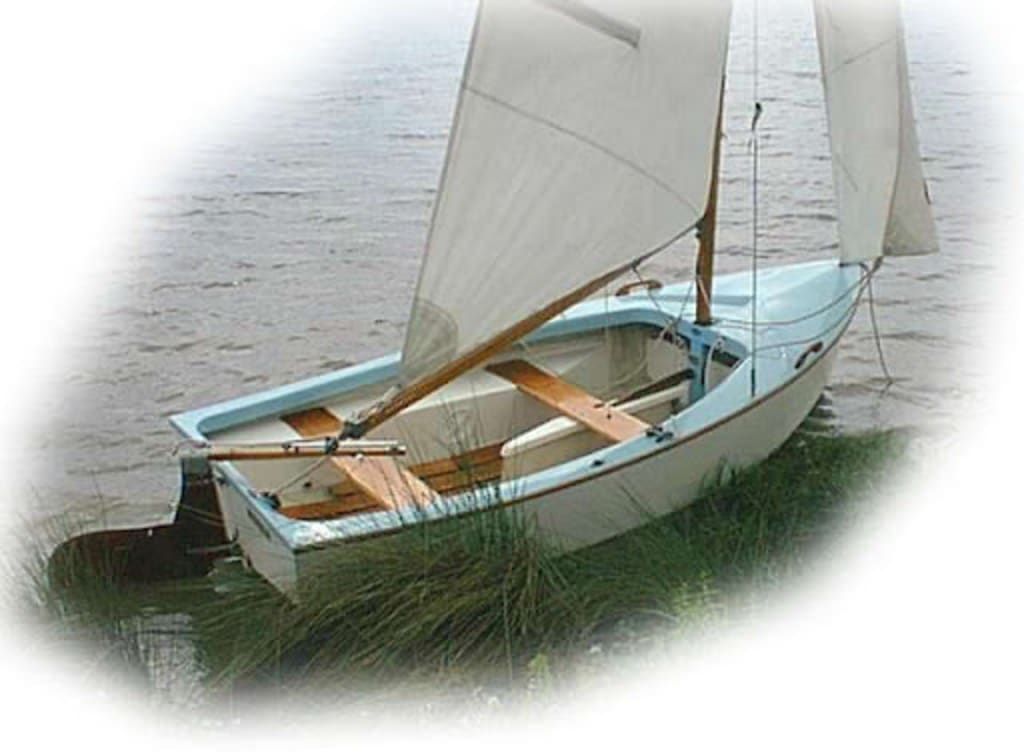
He twisted the old brass handle which spun uselessly in his hand. Then he pushed against the door but it was clearly locked. There was nothing for it, he would have to break in. He was about to shove his shoulder against the door when he paused. Was the building still structurally sound? Or would the whole thing tumble in on top of him the moment he stepped inside. He shrugged. What did it matter, he was here, now. Crack! The door frame gave way more easily than he was expecting, and he had to stop himself from tumbling inside. Cole paused, his eyes trying to adjust to the dim and dusty interior of the shed. Brushing aside the cobwebs, he stepped inside. The wooden boards creaked under his weight but seemed sound enough otherwise. As his eyes grew accustomed to the minimal light streaming in from the dusty window, he gazed upon the boat. It was old, for sure, but had clearly been well looked after in its day. He brushed the sides, the gunwales, admiringly, dust flying into the air with every stroke. He sneezed, then grinned widely. It felt like he had just discovered the tomb of an ancient pharaoh!
But wait, yes, it was a sailboat, or at least had been. There, stowed neatly inside, although like everything they were coated in dust and dried leaves, were the spars, the mast and boom, bundled up neatly with rope. Covering his mouth and nose with a tissue, he gently lifted one of the ropes. It was synthetic and, although frayed at one end, seemed just as strong as ever. He gently tried to move the spars without creating a dust storm, his throat was already feeling dry. The mast and boom were wooden but, like the boat, had been well maintained. He lifted the mast out of the boat and propped it against the wall of the shed. Still attached were the wires used to secure the mast to the boat’s deck. Being stainless steel, they had easily survived the years of neglect. Even the shackles looked fine, although they were too tightly locked for him to move. Then he checked the sails.
Neatly folded and stowed on the bottom of the boat, browning slightly with age, were the sails. Cole lifted them out, trying carefully to avoid disturbing the dust, but more importantly wondering how fragile they might be. He was almost surprised when they didn’t fall apart in his hands. In fact, they seemed okay. He stepped outside and placed them on the grass. Waiting until his eyes now became re-accustomed to the bright daylight, he lifted up the smaller of the sails, the ‘jib’. Closing his eyes, he shook it open, dust flying everywhere. He coughed, then shook again. He paused while the dust settled, then opened his eyes. Yes, the sail looked fine. He even tugged at the corners, expecting them to give way, but the stitching held. Cole repeated the process for the larger sail, the mainsail. It too, while more discoloured, was surprisingly intact.
Well, what a discovery! he thought to himself, as he started to fold up the sail. Then he stopped. Why not? Yes, it had been many years since he had sailed, but after all it was a lot like riding a bike, you don’t forget, however old you are. Leaving the sails on the grass he ducked back inside the shed. Waiting again until he could see in the dim light, he then walked around the boat, pushing down on the gunwales. Cole tapped on the hull, the deck, then inside on the floor. The wood echoed back, reassuringly. He looked around for something sharp. There on a shelf, along with an empty glass bottle, was an old screwdriver and a rusty pair of plyers. He grabbed the screwdriver, holding it by the steel end, and tapped on the wood again. Then grabbing the handle, he attempted to probe the deck and the floor with the steel. Nothing gave way. The boat was sound.
Glancing about, Cole quickly located the other pieces of equipment. There was the rudder and tiller, hanging neatly on the wall, also fine. The centreboard casing had seemed okay. As for the centreboard, well he would have to wait until she was afloat before finding out. The ropes were fine, but what about the pulleys and shackles? He grabbed the pliers and, forcing them closed around the shackles, twisted hard. The shackle pins moved, slightly. It was enough. He then tried the double doors, the boatshed’s main entry. The bolts were stiff, and he had to heave with all his weight to get them to move. He gave the doors a good kick, which helped, and gradually, the bolts slid free. Slowly he pushed the doors open but as the hinges creaked and groaned, he shied away at the noise. He paused, could anyone have heard? He had come so far, he wasn’t going to give up now. As the doors opened wide, he had to shield his eyes against the brightness of the midday sun bouncing off the water. But it was a sight too beautiful to miss.
Cole stepped out of the shed once more and prudently glanced around. If anyone was about, Community Officer, or otherwise, he would have a hard time explaining his presence. Thankfully, no one was around, and he eased his way back through the door. Ahead, the water glistened, beckoning. It was like a portal to a new and exciting world, except this was the old world, the world as it used to be. It didn’t take him long to step the mast and he attached the stainless-steel wires, which held it securely to the deck. He couldn’t undo the shackles by hand, but the old pliers did the trick. The boat had a gaff, the top half of the mast, which lay angled back into the boat. He would raise it once they were afloat. There was also a decent painter, the tow rope, and hopefully it was long enough for him to float the boat and still have hold of her. She was almost ready. Attaching the main sail to the wooden boom, he then locked it onto the mast. He would leave the jib behind today. One sail would be enough.
“Well, here goes…” he shouted, eagerly, “Launching the good ship…”. He paused. What was she called? He hadn’t thought to look. He peered closely at the hull, at the stern and bows. All boats should have a name, but there was none that he could see. “Freedom!” he announced, “I hereby call you ‘Freedom’ and may god bless her and all who sail in her.” It seemed a silly thing to say but fitting at the same time.
The wooden hull complained as he dragged the boat along the shed floor. If there were rollers underneath, they certainly weren’t rolling. He winced at the thought of the wooden hull being gouged and stripped of paint, but being a fairly lightweight vessel, he pushed her to the doorway without too much effort. Checking that he had a firm grip on the painter, he eased her down the ramp, just a metre at a time. Again, the ramp had no working rollers, but gravity helped the boat slide towards the water. He knew he would have trouble getting her back up into the shed later, but that was later. Right now, all he could think about was getting the Freedom afloat and rigged. Whatever else happened that day, nothing would stop him now.
His heart sank for a second when water seemed to be seeping into the boat, but it was momentary only and little more came in. Dry wood would swell again, effectively blocking any leaks. He checked that the painter was securely tied to the ramp, then stepped tentatively aboard. He had taken off his shoes and socks and allowed his feet to feel the cool, clean water that splashed around the boat. He stamped his feet like a child, giggling at the splashes he made. Then, checking that everything had been attached securely, he hauled on the halyard that lifted the spar and the sail. Slowly and stiffly the sail crept up the mast. The mast groove was full of dust but still the sail climbed, until the gaff and mainsail together stood proudly vertical. When Cole was satisfied that the sail was fully extended, he tied off the halyard on the cleat at the foot of the mast, overlocking in a figure of eight as he used to do, so long ago.
The sail shook suddenly, as if waking after a long and deep slumber. The boom swung briefly in the freshening breeze, and he had to duck to avoid being clouted on the head. Cole turned to the stern and dropped the rudder into place, checking the tiller was secure. He was ready. Freedom was ready. Together they would explore the lake, like pioneers of old. It was definitely unchartered territory as far as Cole was concerned. He had completely forgotten about the lake and now he was about to set sail for distant shores! He untied the painter, his heart beating rapidly. It was not so much nerves as excitement. The kind of excitement a child feels on a rollercoaster ride. Fear and exhilaration all at once.
Pushing the bow away from the ramp, he hauled on the mainsheet, just a little, expecting her to dart forward, but felt instead a sideways drift back towards the ramp. Of course, the centreboard. He hadn’t adjusted the centreboard. He pulled at the rope handle but it wouldn’t move, seated snugly in its casing. Grabbing with two hands, he heaved at the top of the board and gradually, stiffly, it budged. Not far, but enough. Almost immediately, and before he had drifted back to the bank, Freedom, pulled forward. He tightened in the main sheet, grabbing it in his teeth as he held onto the tiller. Like a racehorse eager to run, the little boat surged forward. Suddenly, water began to foam at her bow, and the ripples on the lake splashed and creamed as the hull moved silently onward. Cole shifted further forward in the boat, leaning out slightly for balance. Then he tightened in the sail some more.
Though a little stained and brown, the synthetic sails had withstood the neglect of time and curved beautifully in the breeze. And as they ventured further out into the lake, the boat gathered speed.
“Yee haa!” cried Cole, his excitement bubbling like the water at the bow. “Yaa hoo!” he cried again, no longer worried about the thought of being observed. Heaving on the mainsheet, Cole pushed at the tiller and turned the boat into the wind and away on the opposite tack. Shifting his weight, he pulled tighter, the boat instantly responding. It was as if, with a life of her own, little Freedom was enjoying the moment almost as much as he was. As if she had waited for this exact time when someone would discover her, and once more set her free.
They were united, man and boat. Free to roam the waters, up and down the lake, the fresh, cool breeze wiping away years of monotony and hopelessness. All were erased, if only temporarily, in these magical, blissful moments upon the water. Even if the chance never happens again, Cole thought, even if he is discovered, reported, apprehended, it would have been worth it. Such was the joy he felt. Unrepentant joy. A sense of pleasure not felt for many, many years. Memories once lost now came flooding back, as he pictured in his mind those familiar, joyful times, so long ago. A single tear welled in his eye.
The lake was surrounded by lush forest, but nearer the bank, great swathes of reeds sat and swayed in the wind. Waterfowl of every kind played, swam, ducked and bobbed upon the surface. There were birds he had never seen before, and some perhaps only once or twice. They squawked as the vessel came close, flapping wildly, then settling again just a few metres away. Cole turned about and headed back down the lake, keeping a cautious eye on the boat ramp and bank, just in case. But the longer he sailed, the less worried he became. No one else was here. No one knew. It was his secret and one he would keep for as long as he possibly could.
Then all at once the breeze faded, as if tired of its own activity. So, letting the sail flap, Cole loosened the mainsheet and pushed the tiller aside. He lay down on the thwart and looked up at the clear, blue sky. Here and there light feathers of cloud sauntered across, but otherwise it was like a fine summer’s day. And as the boat drifted slowly on the lake, the gentle movement calming and pleasant, in the warmth of the sun he closed his eyes. Just for a moment he closed his eyes, allowing himself to dream that he was back, back before all this began.
He wasn’t sure how long he had been asleep, but clouds had covered the horizon, and the sun no longer held its warmth. He sat up and looked about. He couldn’t even see the boat ramp and for a moment he panicked. Where was he? How long had he been drifting? Had anybody seen him? But the lake was as it had been, devoid of all human life, except his, and now just a little darker with the approaching clouds.
Tacking back and forth, Cole headed north, willing the little boat to move faster through the water. What if he was caught? What would he say? Would Freedom be lost to him forever? He tried to focus on his task, but made slow progress up the lake. The sky was darkening by the minute, clouds threatening from above. Thankfully, the boat ramp re-appeared, though well concealed by the willows that shrouded the lake’s edge, and he made his way towards it, on one final tack.
Relieved, he lowered the sail and gaff before climbing carefully up onto the ramp. But he couldn’t haul her up, she was just too heavy. Without some kind of help there was no other option, and Cole had to resort to breaking some of the smaller trees and saplings to use as rollers. While he hated to destroy any part of this perfect environment, the last thing he wanted was to damage Freedom’s hull. A hole would be impossible for him to repair, without suspicion. Finally, with some effort he was able to pull her up the last few metres into the shed. There seemed no point in de-rigging the boat. If he was going to return, it would be soon, and if he could never come back? Well, then it no longer mattered. So, he wrapped the sail loosely around the boom and coiled the mainsheet and halyard neatly, as he had once been taught.
Satisfied, Cole breathed an audible sigh. It was one of relief but also sadness. What had once been a wonderful recreational activity was now illegal. How had it come to this? But there was no time to waste, he was already late. Hurriedly he closed the double doors, then pulled the side door to. Again, he looked around, warily. It would be devastating to be discovered now.
The dusk was encroaching as he almost sprinted back towards the town. The curfew had started and there would be officers about. But Cole reached his apartment, without being harassed, and he sighed with relief. He had risked so much today, but it had been worth it, for just a touch of freedom.
THE END
© Clive Thomas 2021
About the Creator
Keep reading
More stories from writers in Fiction and other communities.
Affection and Healing for Yourself
During the night of the last quarter moon, I gathered my ritual supplies. I carefully handled the chunk of black tourmaline that would protect me from your overall negative and narcissistic energy. I carefully walked the house with my stick of selenite in hand, asking the universe to cleanse our working space.
By Alisha Wilkins ✒️🦋🖋️5 days ago in Fiction
✈️ “The Island That Wasn’t on the Map”
The storm struck without warning. Flight 907 had been cruising smoothly over the Pacific when the lights flickered, the engines groaned, and a violent jolt threw passengers into panic. Before anyone could make sense of the chaos, the plane plunged downward, swallowed by black clouds and lightning that cracked like shattered glass.
By Sherin ABUMUSTAFA5 days ago in Fiction



Comments
There are no comments for this story
Be the first to respond and start the conversation.