
A Seat at the Table
Mina never thought much about family dinners.

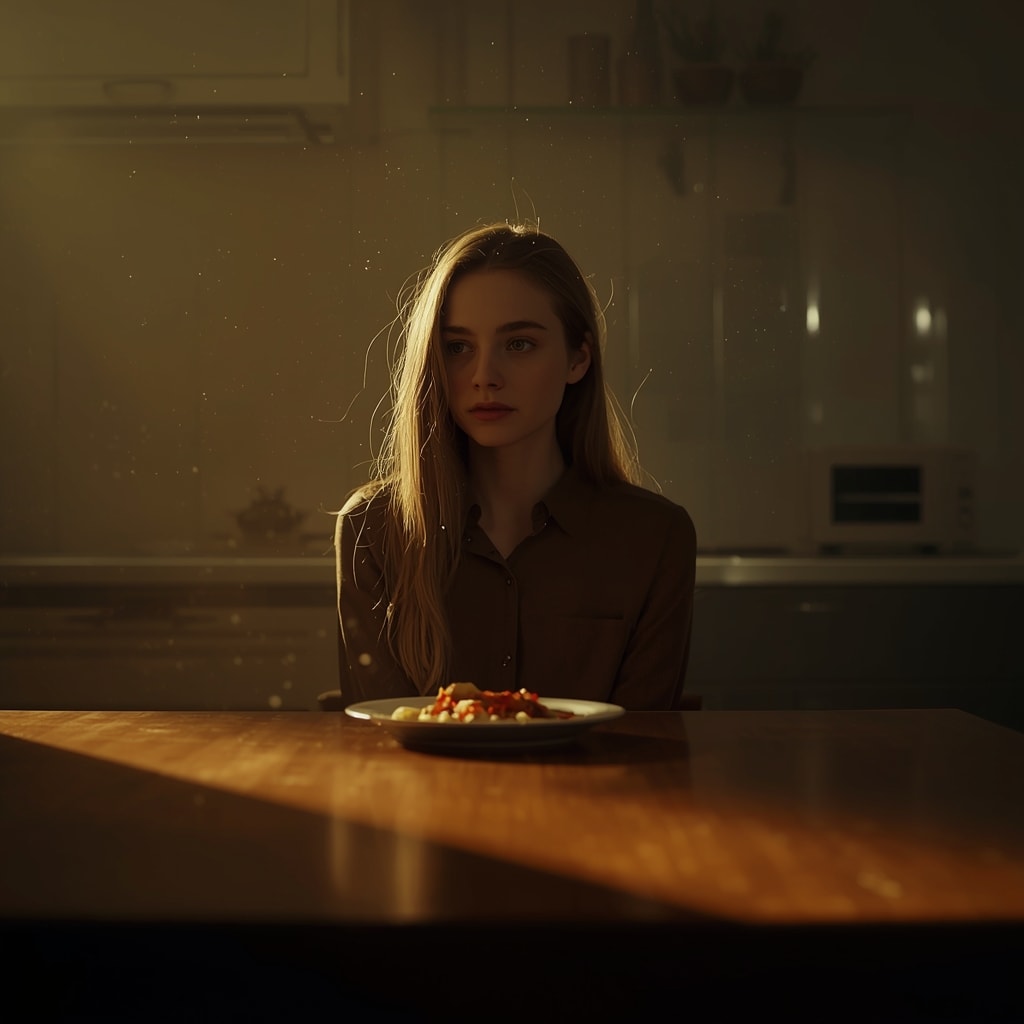
Mina never thought much about family dinners. She had her own apartment, her own life, and her own rules. She told herself she didn’t need anyone to share meals with, that she preferred solitude, and that cooking for one was simpler, cleaner. But tonight, the smell of roasted chicken drifting from her mother’s old kitchen down the hall made her pause. It wasn’t just the aroma—it was memory wrapped in warmth, and it clung to her like a familiar voice calling her home.
Her mother had passed last spring, leaving the house empty and the table set for someone who would never sit there again. Mina had avoided it for months, filling the fridge with frozen meals, the living room with noise—TV, music, arguments over text—but the smell cut through everything. It penetrated the walls, the doors, the carefully constructed routines she had built to ignore absence. She hadn’t realized until that moment how much of herself she had left behind at that table.
She found herself unlocking the door and stepping into the kitchen. The house smelled of dust and memory. The table, once a battleground of laughter, correction, and gentle arguments over spilled milk or too much salt, was bare except for the faint film of time. She ran her fingers over the polished wood, tracing the rings of cups long washed away, and felt a strange ache—simultaneously sharp and tender.
Mina pulled out a chair, the one her mother had always insisted went at the head. Sitting there, she imagined her mother opposite her, smiling with eyes crinkling at the corners, reaching for the gravy like she always did. She could see her father’s chair, the one he always claimed was too close to the wall, yet he would scoot it out anyway, insisting on being part of the chaos. The room felt alive in the memory, though no one was there.
She reached for her phone and typed a message she would never send: “I miss you. I tried to cook today. It wasn’t enough. But I’m trying.” She didn’t know who it was for—maybe her mother, maybe herself—but the act of typing made her feel less hollow, less like absence had swallowed her completely. She set the phone down, closed her eyes, and let the quiet settle around her, thick and full, like a blanket that had been waiting.
Opening the fridge, she found some leftover vegetables and a small piece of chicken from the weekend. It wasn’t much, but it would have to do. She chopped, stirred, seasoned with fingers that remembered her mother’s guidance better than her own instincts, and placed the meal carefully on the plate. The kitchen smelled of roasted herbs and oil, carrying the echoes of laughter and tiny corrections. She laughed softly at the absurdity of talking to someone who couldn’t reply, cooking for a memory, but it felt right.
Mina picked up her fork and hesitated, staring at the food. She thought about all the nights she had avoided this table, all the meals she had eaten alone in silence, telling herself she was too busy, too independent, too grown-up to notice the absence. But sitting here now, she realized that loss doesn’t erase connection. It changes it. It shifts the shape of love and care, but it doesn’t make them vanish.
As she took her first bite, she felt warmth that had nothing to do with the food. It was the recognition that absence need not equal emptiness. That she could create small rituals for herself, even when someone she loved was gone. That the table could still hold meaning, even if some chairs remained forever empty. She imagined setting the table for herself every Sunday, lighting a candle, calling a friend to share in laughter over distance, speaking aloud the memories that had kept her tied to those she loved.
Her phone buzzed. A message from a friend, asking if she wanted to grab coffee tomorrow. Mina looked at the table, the food, the empty chair, and smiled. She realized then that some seats remain empty forever, and some people leave without warning, but the table itself endures. And she could choose to sit at it, to honor it, and to carry the echoes of love forward into her life.
She stood, cleared the plate, and left the kitchen, feeling a little lighter, a little more anchored. The house was quiet again, but the quiet was no longer oppressive. It was companionable. She had found her place—not beside her mother, not beside her father, not even beside anyone else—but at her own seat, in her own home, with her own heart, carrying memory like a gift rather than a burden.
About the Creator
Salman Writes
Writer of thoughts that make you think, feel, and smile. I share honest stories, social truths, and simple words with deep meaning. Welcome to the world of Salman Writes — where ideas come to life.
Keep reading
More stories from Salman Writes and writers in Fiction and other communities.
The Man Who Smiled at Strangers
Every weekday morning at exactly 7:40, the same man stood outside the coffee shop and smiled at strangers. Not a wide, attention-seeking smile. Not the kind that demanded a response. Just a small, gentle smile, like he was acknowledging something simple and human that most people had forgotten how to see.
By Salman Writes2 days ago in Fiction
So You Decided To Become a Nurse Practitioner:
So you decided to become an "Advanced Practice" nurse. Congratulations!... is what I would say if this was a good idea. Grad school? In this economy? What were you thinking? Likely it was something along the lines of either 1) “I've seen these other chucklefucks do it— Why can't I?” or even 2) “I've got a nice career, I should shake it up. I miss feeling like I have no clue what I'm doing.”
By Sandor Szabo4 days ago in Fiction
How to 'Go Down a Rabbit Hole'
How-to 'Go Down a Rabbit Hole' Ask yourself: are you putting off anything you could be doing right now? - Maybe a little more productive? Any cottage task, such as washing leftover potion from the cauldron, or finally getting around to dusting the vacant cobwebs? If you’re reading this, one could assume you’re not ready to burst your procrastination bubble. No one is here to stop you, nay, you'll only find encouragement, unless you’re mortally wounded- don't ignore that - find your nearest healer. First rule of this guideline.
By Nikki Torino Wagner5 days ago in Fiction


Comments
There are no comments for this story
Be the first to respond and start the conversation.