

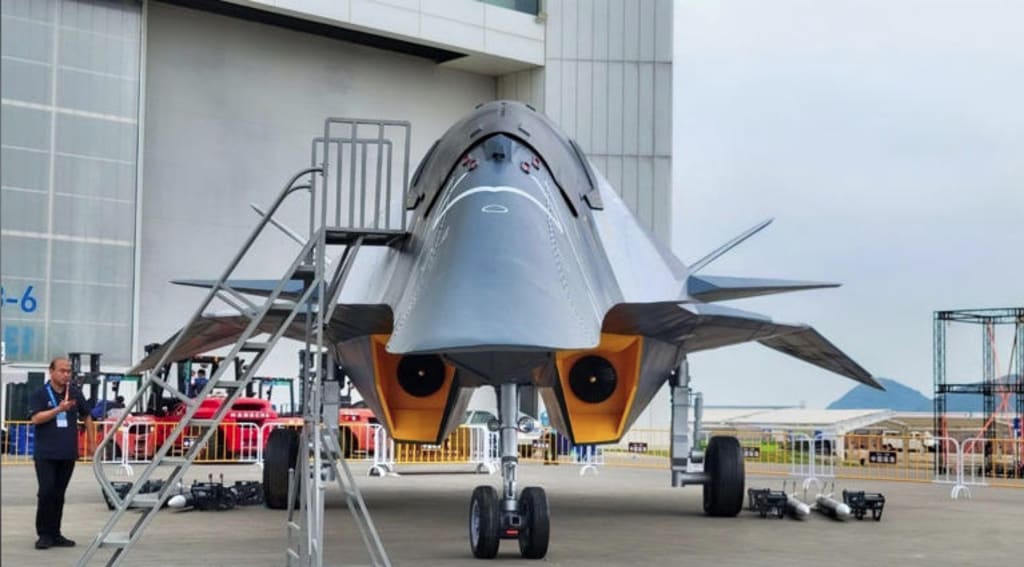
What a mess: Although fighter jets are significant military assets and iconic aviation symbols, not all have been successful. This article examines five of history's worst fighters. Due to its VTOL design flaws, the Soviet Yakovlev Yak-38 had poor handling and was prone to engine failure, limiting its effectiveness.
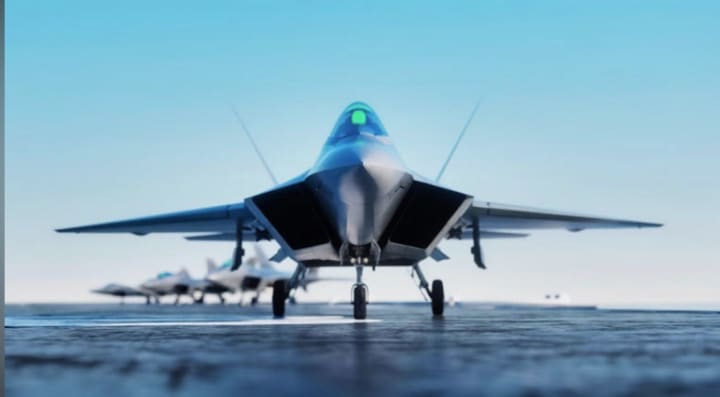
The MiG-23 was unstable, its engines were unreliable, and its combat record was subpar. The American Convair F-102 Delta Dagger had design flaws and a high accident rate. Nazi Germany's rushed and poorly built Heinkel He 162 had little impact on World War II. Lastly, the unusual design, low power, and lack of dependability of the Vought F7U Cutlass led to its early demise.
The Five Worst Fighter Jets in Aviation History
The fighter jet may be the most well-known type of aircraft in aviation history. When your average civilian thinks of an aircraft, the fighter jet is often the image that appears, with its sleek silhouette, roaring engines, and relative instability.
Since their introduction more than a century ago, fighters have advanced. The fighter jet is a concept that is constantly evolving, from the basic biplanes of World War I to supersonic, super-cruising, ultra-maneuverable, stealth-capable fifth-generation fighters. It is far more than an aviation icon. It is a foundational weapon, integral to war planning and military force structure. Militaries around the world spend vast percentages of their overall budget on fighter design and development. Indeed, the F-35 Joint Strike Fighter is the world's most expensive weapon system. Fighter platforms are worth the praise and the military investment, especially top airframes like the F-15 Eagle or the F/A-18 Hornet. However, the history of aviation is littered with failed fighter projects. Let’s consider five of the worst fighters of
Yak-38 Yakovlev
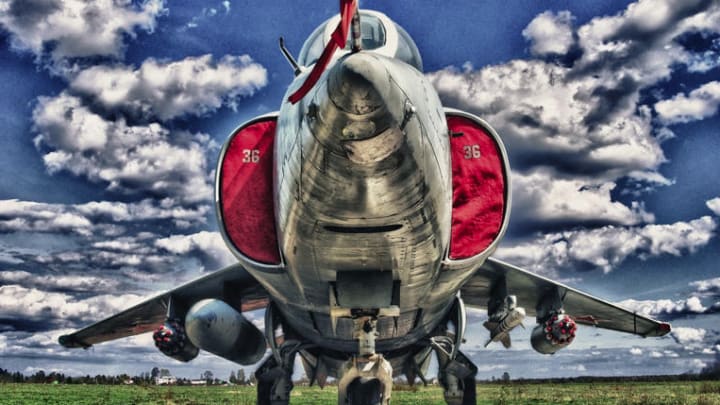
The Soviet Union spent the Cold War competing with the West to develop the most capable military technology. When the British unveiled the Harrier GR.1 in 1967 – a “jump jet” capable of vertical takeoff and landing (VTOL) – the Soviets scrambled to counter. The Yakovlev Yak-38, a VTOL aircraft with acceptable performance, was their response. However, the Yak-38's rear thrust engine and two lift turbofans were integrated into the aircraft, making it extremely challenging to control. The Yak-38 would spin out of control in the event of a failure of either of the lift fans. And because the lift fans were sensitive to dirt and dust (like the kind found in Afghanistan), the lift fans were prone to failure. The Yak-38 was also a tactical failure because it had only four hardpoints and a 320-kilometer operational range. When the Soviet Union fell, the Yak-38 was abandoned, whereas the Harrier is still in service today.
Mikoyan-Gurevich MiG-23
Mikoyan-Gurevich, a Soviet/Russian aerospace manufacturer, has a long history of designing successful products. With good reason, the company abbreviation "MiG" has become synonymous with "enemy aircraft" in the West. But MiG has also produced its fair share of duds.
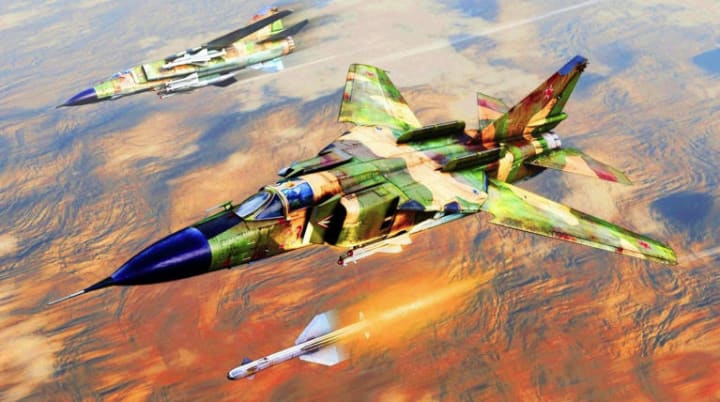
The MiG-23 was supposed to be another feather in MiG’s cap, like the MiG-15 or the MiG-21 before it. However, the sweep-wing MiG-23 turned out to be a nightmare due to its poor handling, unstable engine, frequent overheating, and early engine failure. The MiG-23's maintenance costs were much higher than anticipated, and its combat record was much worse. The MiG-23, which was stationed in Syria and Iraq, was defeated by F-4s, F-14s, and F-15s. Even the MiG-21, which the MiG-23 had been designed to replace, bested the MiG-23 in combat. The MiG-23 was unceremoniously retired (except in Syria and North Korea) in favor of the MiG-27.
F-102 Delta Dagger Convair
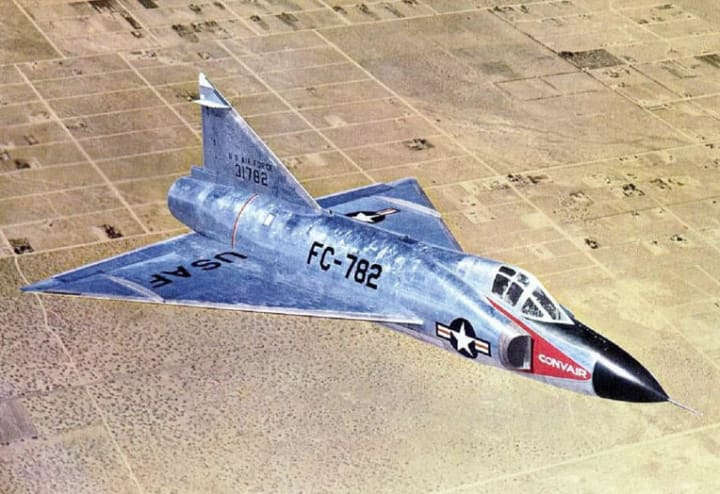
The "Century Series" Convair F-102 Delta Dagger was America's first all-weather supersonic jet fighter and the first American aircraft with a delta wing. When it first went into use in 1956, problems started right away. The F-102, which was designed to be a high-speed aircraft, was unable to reach Mach 1. As a result, the fuselage had to be redesigned to accommodate transonic wave drag. After the redesign, the jet was able to reach Mach 1.22, but there were still other issues that needed to be fixed. The Air Force did not apply uniform fixes to the F-102 fleet, which resulted in a wide range of F-102s' capabilities. The F-102’s biggest problem, however, was its safety rating. There were 1,000 F-102s made, but 259 of them were lost in accidents, resulting in the deaths of 70 pilots.
Hertz He 162
It is due to Nazi Germany that jet technology was first introduced with the Messerschmitt Me 262. The Nazis tried a last-ditch effort to produce more fighter jets late in the war and during the regime. The end product was the Heinkel He 162, also known as the People's Fighter or "Volksjager." Like the Volkswagen automobile, the He 162 was made to be made cheaply and with semi-skilled labor. Why? Because the Nazis had virtually exhausted their war economy by the end of the conflict, they were having difficulty maintaining it. As a result, the He 162 was primarily constructed of wood because metal alloys were unavailable. The design was completed in about two months, and as you might assume, the jet flew poorly. Three-hundred He 162s were rushed into action, but it was far too late. The He 162 vanished into obscurity without influencing the war, and Nazi Germany fell apart.
Vought F7U Cutlass
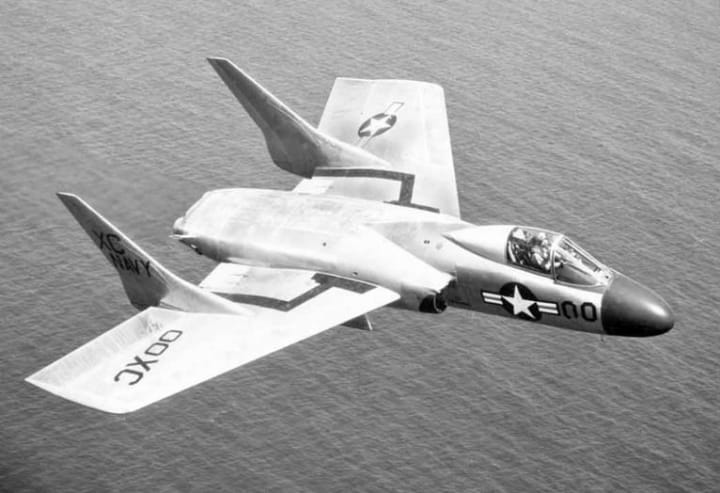
In my opinion, the F7U is very cool looking, and it marked the first time the Americans had built an aircraft with swept wings and an afterburner. Despite its extraordinary agility and ability, the unusual design was plagued by numerous issues. The engine was underpowered, earning the F7U the nickname “Gutless Cutlass.” In a similar vein, numerous novel systems proved to be unreliable. Pilots stayed away because of the jet's poor safety record, and it was retired in 1959.
About the Creator
Shaeen Sarker
Always better version
Keep reading
More stories from Shaeen Sarker and writers in Fiction and other communities.
Top Ten: remarkable experimental aircraft
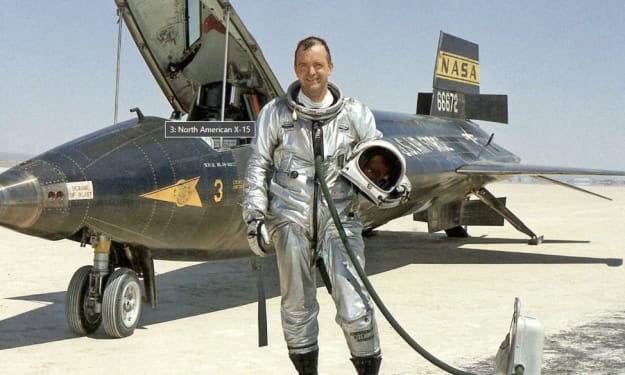
The spectacular North American X-15 was the pinnacle of the US series of ever-faster X-planes. Despite the fact that the previous record was set in 1967, this unparalleled aircraft continues to be the fastest aircraft ever built with a human pilot. It was carried to a high altitude beneath the wing of its NB-52 mothership before being released at 45,000 feet at a speed of about 500 miles per hour. At that point, the aircraft's rocket propulsion would propel it to speeds exceeding Mach 6 and altitudes exceeding 100 kilometers.
By Shaeen Sarker9 months ago in Fiction


Comments
There are no comments for this story
Be the first to respond and start the conversation.