
Top Ten: remarkable experimental aircraft
Story By Sun

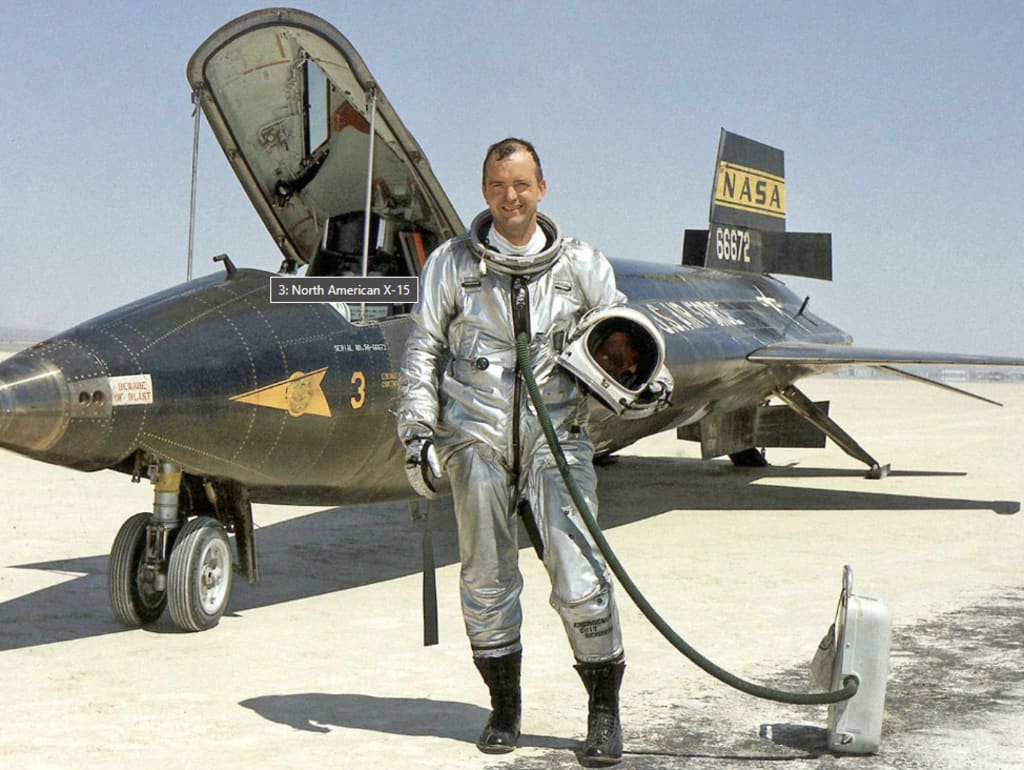
The spectacular North American X-15 was the pinnacle of the US series of ever-faster X-planes. Despite the fact that the previous record was set in 1967, this unparalleled aircraft continues to be the fastest aircraft ever built with a human pilot. It was carried to a high altitude beneath the wing of its NB-52 mothership before being released at 45,000 feet at a speed of about 500 miles per hour. At that point, the aircraft's rocket propulsion would propel it to speeds exceeding Mach 6 and altitudes exceeding 100 kilometers.
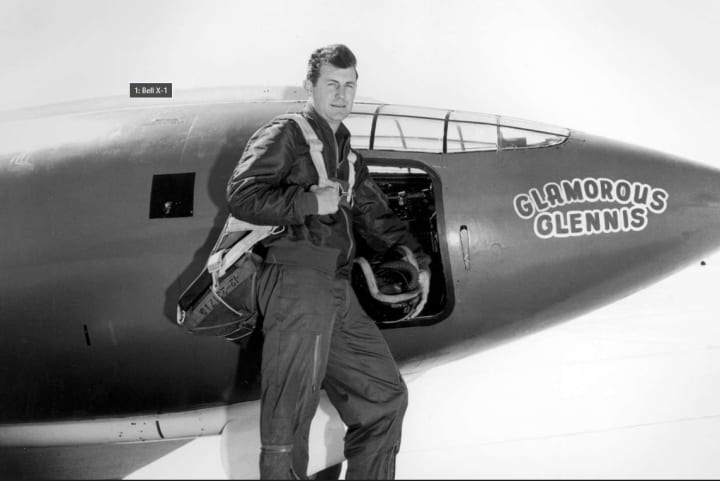
The simplest method for producing sufficient thrust was to use a rocket engine, but due to its enormous fuel consumption, such an aircraft would need to be launched from a mothership at an altitude in order to avoid the fuel-consuming process of taking off and ascending to heights. The Bell X-1 had a small straight wing and a shape similar to a.50-caliber bullet. On 14 October 1947, test pilot Charles ‘Chuck’ Yeager (pictured) flew the X-1, nicknamed Glamorous Glennis for his wife, launched from a B-29 ‘mothership’ and achieved a speed of Mach 1.06. In controlled, level flight, the Bell X-1 was the first aircraft to break the so-called "sound barrier."
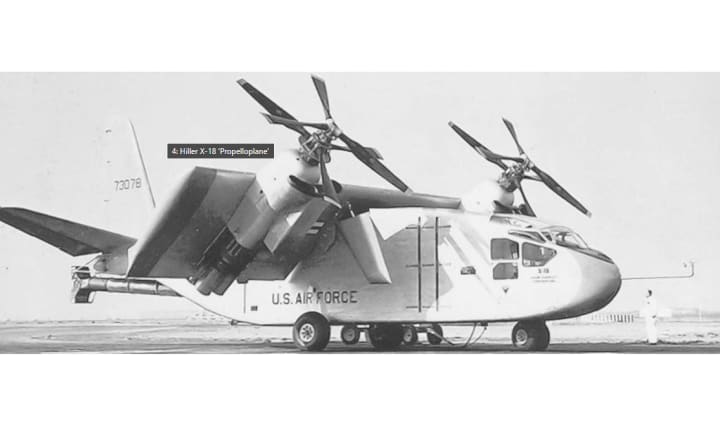
Eliminating the need for a runway gives an aircraft an enormous degree of flexibility, allowing operations wherever required. While a helicopter can take off and land vertically it is far slower than an aeroplane. The search for a faster form of vertical take-off and landing (VTOL) has been approached in many different ways.
One way to affect vertical flight is to rotate the entire wing, including its engines, 45 degrees, a concept known as a ‘tilt wing’. Numerous components, including its massive coupled turbofan engines, were taken from a failed VTOL fighter project in order to save money. The pitch was controlled by a Westinghouse J34 jet engine.
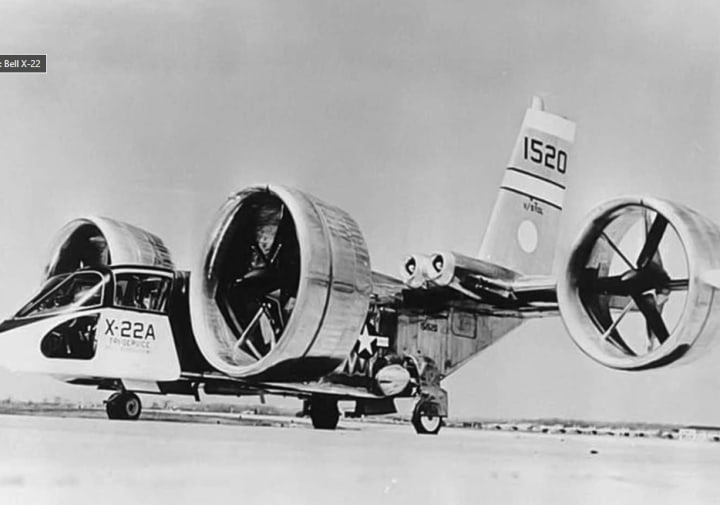
The Bell X-22 was designed to investigate the controllability issues associated with wingtip swivelling ducts and the viability of a rapid VTOL troop transport. On March 17, 1966, it took off for the first time. It reached a top speed of 310 mph (515 km/h), which is significantly faster than that of a standard helicopter but falls short of the goal speed of 326 mph (525 km/h). The Bell Boeing V-22 Osprey is currently used by Japan's and the United States' military forces. The Osprey is a tilt-rotor aircraft with only the engine moving, not a tilt-wing aircraft. The tilt-rotor has been more successful than the tilt-wing model for a number of reasons, one of which is that the tilted wing's "sail effect" during takeoff and landing is extremely difficult to control.
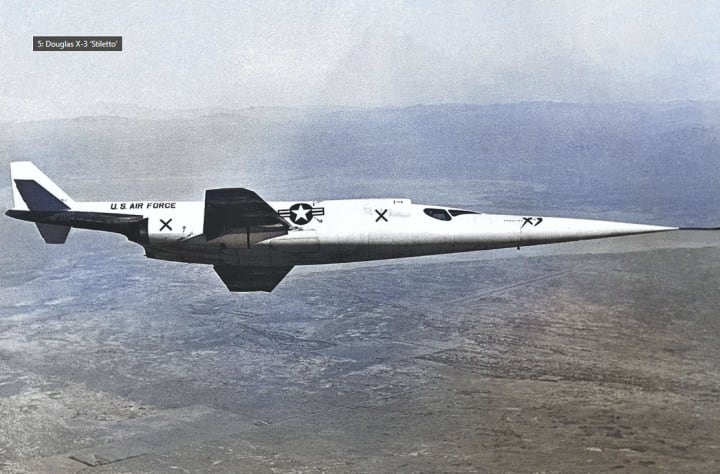
Engine developmental issues resulted in the X-3 having 18 per cent less power than required. The original planned engine type, the Westinghouse J46, grew too large in diameter across its development and was replaced with a smaller weak engine type, the Westinghouse XJ34-WE-17.
Though it failed in its goals, the X-3 did at least pioneer the use of titanium in major aircraft structures – and, less laudably, the achievement of one the fastest take-off speeds of 260mph. A useful spinoff of this high-speed take-off was that it inspired a new generation of tyres of greater heat resistance!
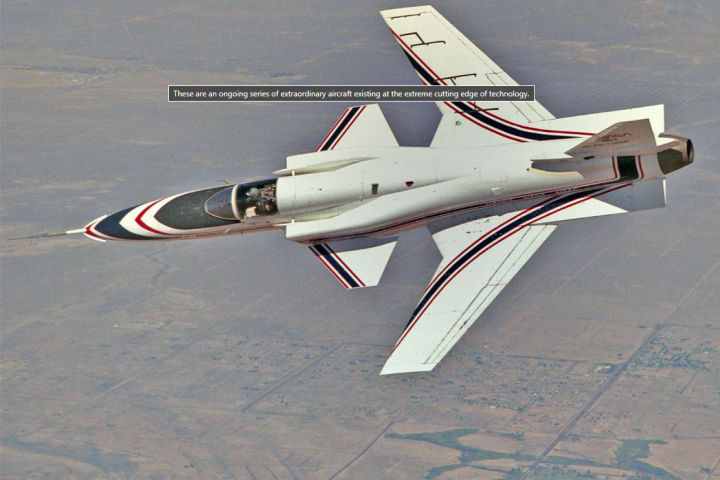
Almost every aircraft today has a swept-back or delta wing and can travel more than 500 mph. The swept forward wing, on the other hand, offers a number of advantages for the same wing area, including a higher lift-to-drag ratio, improved agility, increased range at subsonic speed, enhanced stability at high angles of attack, and a shorter take-off and landing distance. The US Defense Advanced Research Projects Agency (DARPA) and the United States returned to this promising idea in 1977 as a result of the development of stronger materials. The forward-swept wing concept was the subject of proposals for a research aircraft from the Air Force Flight Dynamics Laboratory, which is now the Air Force Research Laboratory.
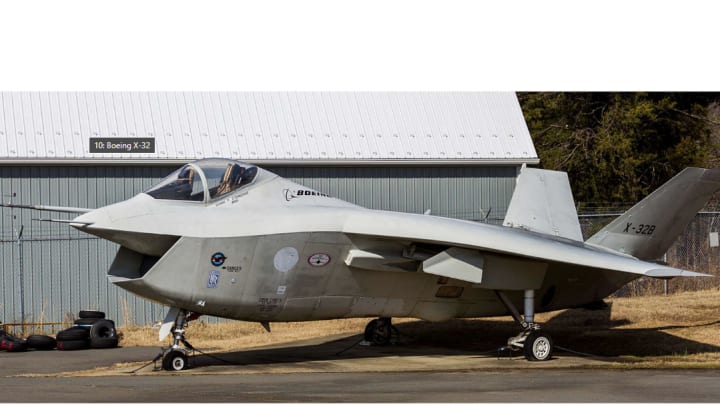
The X-32's design proved to be problematic. The Department of Defense was not impressed by the basic configuration, which was different from what a hypothetical F-32 would be. Additionally, the aircraft lacked power and was overweight, and in order to perform a vertical takeoff, one section had to be removed beforehand. The F-35 Lighting II is currently in service as a result of the decision to go with the rival Lockheed Martin X-35. The Boeing X-32 was a charismatic and intriguing design that attempted to create a supersonic stealthy fighter bomber with a Short Take-Off Vertical Landing (STOVL) but was ultimately unsuccessful.
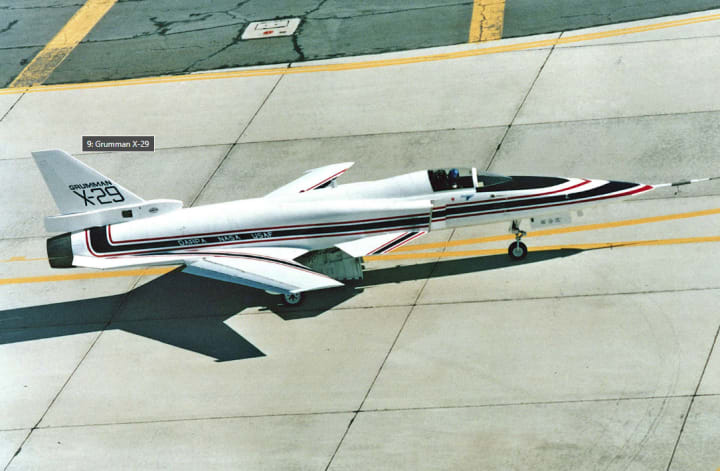
To save time and money, the Grumman company proposed an X-29 which upcycled many parts from other existing aircraft, and it defeated a rival bid from General Dynamics with a modified F-16. The two X-29 aircraft were flown at NASA Ames-Dryden Flight Research Facility (now Armstrong Flight Research Center) at Edwards Air Force Base, California, from 1984 to 1992.
The forward-swept wings were mounted well back, with canards (horizontal stabilizers to control pitch) in front of the wings. The X-29 demonstrated dazzling manoeuvrability, supersonic performance and an impressively light structure. Air moving over the forward-swept flows inward toward the root of the wing instead of outward (as on a conventional aircraft). This reverse airflow kept the wing tips and their ailerons from stalling at high angles.
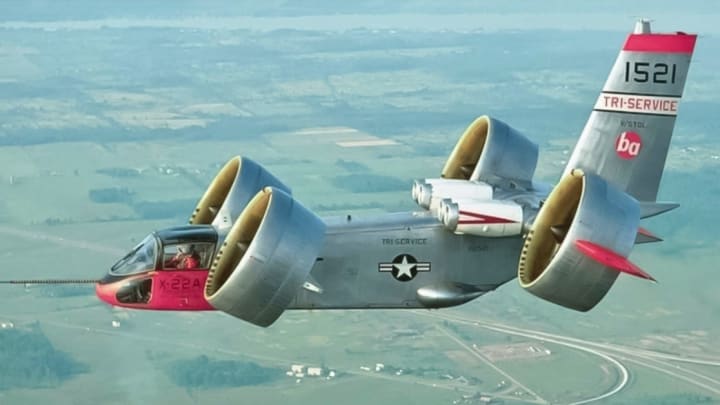
By swiveling your entire engine, you can direct the thrust to achieve vertical take-off and landing. Although aircraft with propellers mounted in wingtip swiveling ducts have long been a staple of science fiction, they are actually even older, dating at least back to the 1966 X-22. The X-22's four wings carried its three-bladed propellers. Four gas turbines were arranged in pairs on the rear wings to power the propellers. Tilting the propeller blades and utilizing control surfaces (elevators and ailerons) downstream of the propellers provided control.
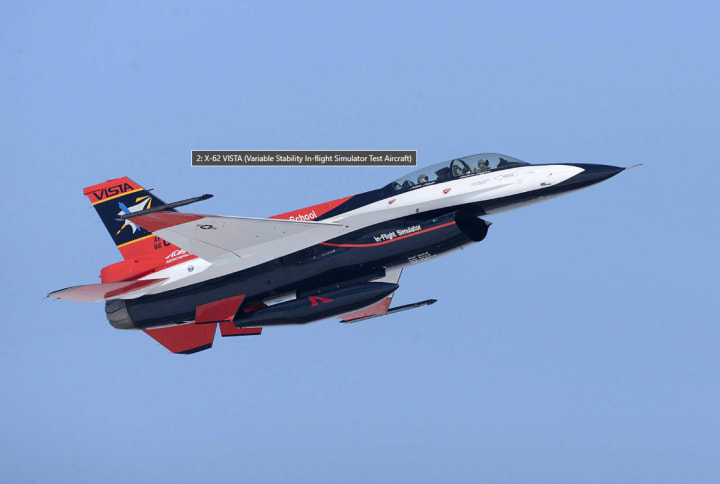
The versatile F-16 fighter has often found itself working in the realm of research. An odd assortment of wings, control services, inlets, nozzles, and "black boxes" have been added to F-16s over the years. One of the most recent models in this long line of research F-16s is the X-62. It began as the F-16's NF-16D conversion and featured a multi-axis thrust vectoring (MATV) engine nozzle that enabled high levels of active control of the aircraft following a stall. To put it another way, the aircraft's thrust could be steered to allow for controlled flight in seemingly impossible directions (or attitudes toward flight direction). In a dogfight, this could provide a decisive advantage, but it also has interesting applications.
About the Creator
Shaeen Sarker
Always better version
Keep reading
More stories from Shaeen Sarker and writers in Fiction and other communities.
5 Worst Fighter Jets
What a mess: Although fighter jets are significant military assets and iconic aviation symbols, not all have been successful. This article examines five of history's worst fighters. Due to its VTOL design flaws, the Soviet Yakovlev Yak-38 had poor handling and was prone to engine failure, limiting its effectiveness.
By Shaeen Sarker9 months ago in Fiction
The Mediation, Friday, November 9th, 2012
Anton sat at the large oak table in the mediation services office. He had already been there for twenty minutes. He was fifteen minutes early and eager to get this over with. He already knew that she wasn’t going to agree to anything. If Karin thought he killed it at the first court date, wait until she sees what’s about happen here.
By Anton Mathias Heft 3 days ago in Fiction



Comments
There are no comments for this story
Be the first to respond and start the conversation.