
Winter Recipe of the Day: Red Wine-Braised Short Ribs
Braise to Impress
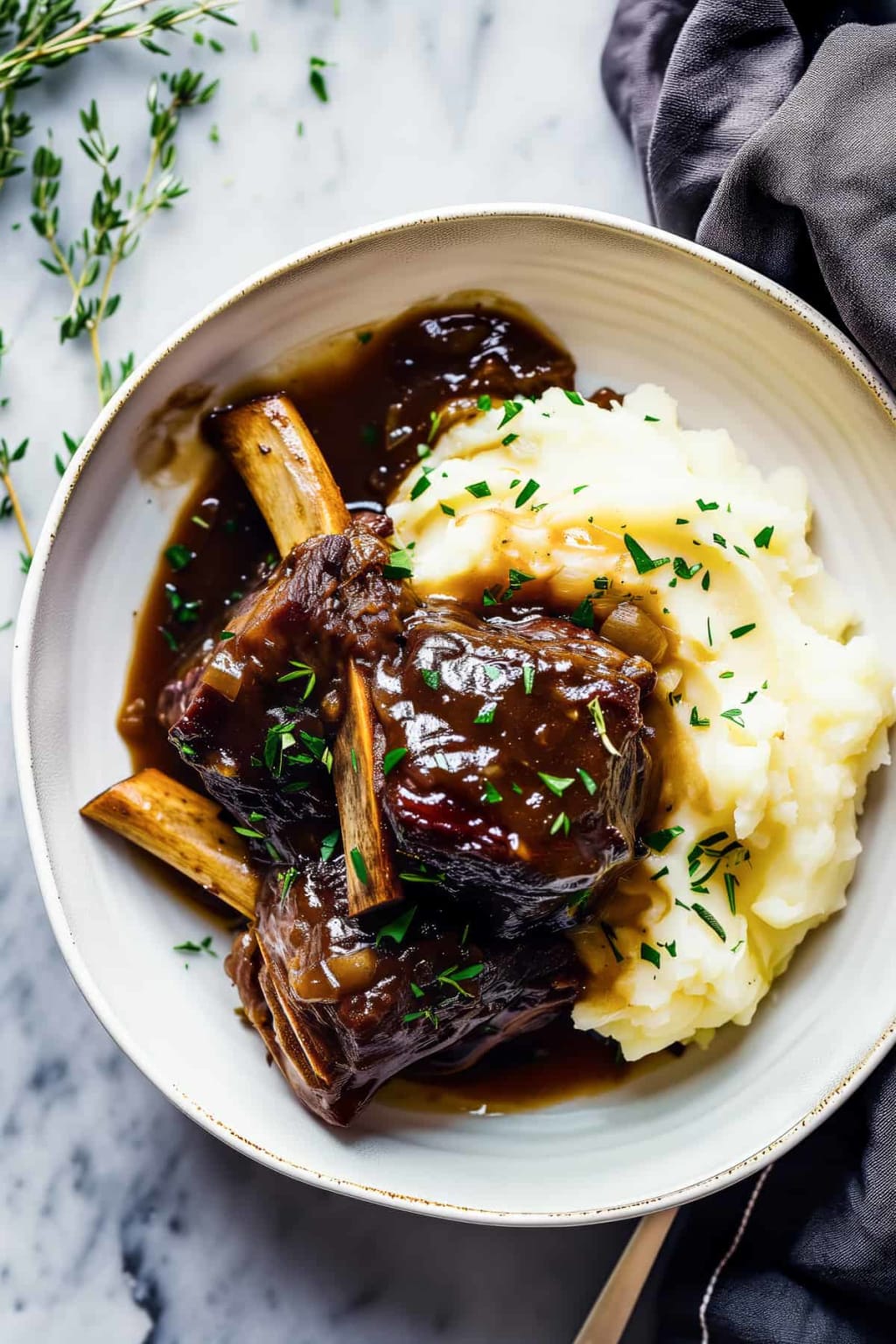
As the weather turns colder, there’s nothing more comforting than filling your home (and tummy!) with the warmth of a home-cooked meal. It’s the perfect way to heat up your kitchen and satisfy your cravings— a win for your taste buds and your gas bill. I'm looking at you Eversource.
Today’s Winter Recipe of the Day is a dish that’s stood the test of time, beloved by everyone from gourmet French chefs to Grandma Sue Ellen herself: Red Wine-Braised Beef Short Ribs.
Also, it's your lucky day because I happen to detest the recipe blog standard of starting the post with a 7 paragraph ode to the authors childhood in Ohio and other things that are truly not relevant. You’re here for the food, and I respect that. So, let’s dive in.
First things first—getting the right beef short ribs. Trust me, not all short ribs are created equal. You’re looking for ribs with at least an inch and a half of marbled meat on top of the bones. The fat should be evenly distributed throughout the meat, with maybe a little cap of fat on top—but nothing too excessive. If you spot ribs with lots of muscle striations and a huge fat cap, run the other way. That meat will cook up tough and dry, which is basically a culinary tragedy.
Or just don't bother trying to eye-ball it and simply ask your local supermarkets butcher to cut you a good cut of shortrib. See? Easy as pie.
Before we continue, here's the ingredients you'll need.
Ingredients
5 pounds (2.3kg) beef short ribs (see note)
Kosher salt and freshly ground black pepper
1 tablespoon (15ml) vegetable or other neutral oil
2 celery ribs (about 3 1/2 ounces; 100g each), cut into 1/2-inch dice
2 large carrots (about 8 ounces; 225g each), cut into 1/2-inch dice
1 large (14-ounce; 400g) yellow onion, cut into 1/2-inch dice
5 medium cloves garlic, smashed
2 tablespoons (30ml) tomato paste
1 (750ml) bottle dry red wine
1 quart (940ml) good-quality brown beef stock, brown chicken stock, white chicken stock, or store-bought chicken stock (see note)
1 packet unflavored gelatin, such as Knox (2 1/2 teaspoons; 10g), only if using store-bought stock
4 sprigs fresh thyme
2 bay leaves
1 (750ml) bottle ruby port wine
Slurry made from 1/2 teaspoon cornstarch mixed with 1 teaspoon water (optional)
Anyway, here's the recipe:
Step 1: Warm It Up
Preheat your oven to 300°F (150°C). Yes, we’re starting slow and low—this is a marathon, not a sprint.
Step 2: Season and Sear
Take your short ribs and generously season them with salt and pepper. Heat up a splash of oil in a large Dutch oven over medium-high heat until it’s shimmering like the top of a crème brûlée. Working in batches (because crowding the pot is for amateurs), brown those ribs on all sides. Give each side about 4 minutes to develop a glorious crust. Once browned, transfer them to a platter and repeat with the rest. Admire your handiwork; this is flavor in the making.
Step 3: Veggie Time
Pour off all but 2 tablespoons of the fat from the Dutch oven. (If you poured off too much, you’re not winning awards for measuring, but it’s fine—add a bit of oil back.) Toss in your celery, carrot, onion, and garlic. Stir, sauté, and wait for them to soften and take on a golden hue. This will take about 6 minutes. Add tomato paste, stir for another minute, and lower the heat if things get too smoky. You’re cooking, not starting a fire.
Step 4: Wine Not?
Pour in the dry red wine.
*Pausing here for a moment for dramatic effect* - I know we're in a recession that everyone's afraid to call a recession but, the quality of wine can really make or break the dish. Nothing in a bag. Nothing Yellow Tail or Barefoot. Let's say a $14 bottle minimum. Ok, back to regularly scheduled programming.
Scrape up all those browned bits stuck to the bottom of the pot—this is liquid gold. Bring it to a simmer and then add stock. If you’re using store-bought stock, sprinkle it with gelatin first (science magic) before adding it to the pot.
Step 5: Nestle and Braise
Return those browned short ribs (and their juices!) to the Dutch oven. Add some thyme and bay leaves for a little herbal sophistication. Partially cover the pot, pop it in the oven, and let it cook until the beef is so tender it’s practically weeping. This will take about 2–3 hours, so go relax.
Step 6: Port Patrol
While the ribs are doing their thing, grab a saucepan and gently simmer some port wine until it’s reduced to a syrupy ½ cup. It’ll take about an hour. Think of it as the sauce’s bougie cousin.
Step 7: Skim and Strain
Once the ribs are done, carefully transfer them to a platter (watch out—bones might pop out like uninvited guests). Tent with foil. Skim the fat off the top of the braising liquid, then strain it through a fine-mesh sieve, pressing on the solids to extract every last drop of goodness.
Step 8: Reduce and Combine
Rinse out the Dutch oven (or don’t if you like a rustic vibe) and pour the strained liquid back in. Simmer it gently until reduced to about 2 cups. Add the port reduction for extra oomph. If it’s still a little thin, whisk in a cornstarch slurry until the sauce coats the back of a spoon.
Step 9: Taste and Glaze
Season the sauce with salt and pepper to taste. Return the short ribs to the Dutch oven, coating again in sauce to rewarm and glaze them.
Step 10: Serve and Savor
Plate the ribs, ladle the sauce generously, and serve. Pair with mashed potatoes, veggies, or just a spoon if you’re feeling bold.
P.S.
Stock Talk: Homemade stock is ideal; it’s the secret to velvety sauce. Store-bought? Add gelatin and carry on.
Enjoy the slow-braised magic. You're welcome.
About the Creator
Keep reading
More stories from Rachel LaBella and writers in Feast and other communities.
Rabbit Meat Might Be Available for Purchase in CT
Somebody call Elmer Fudd, because it could soon be rabbit season in Connecticut. A new legislative proposal in Connecticut may soon allow local farmers to sell rabbit meat to restaurants and grocery stores, expanding opportunities for small farms to meet growing consumer demand.
By Rachel LaBellaabout a year ago in Feast
My Tous les Jours Trip
As someone who lives in a rural area, I don't get the chance to visit fancy restaurants or bakeries that often. So, when a friend told me about a French-Asian bakery that's less than an hour away, I knew I had to check it out and grab some pictures for social media. Tous les Jours ended up providing an immersive experience that went above and beyond my expectations--although I did leave with a few reservations.
By Kaitlin Shanks23 days ago in Feast
Gluten-Free Food Market Outlook: Growth, Innovation, and the Future of Clean Eating
Introduction: A Market That Has Moved Beyond Niche What was once a narrow category aimed at people with celiac disease has rapidly evolved into one of the most dynamic segments of the global food industry. Gluten-free foods are no longer limited to medical shelves or specialty stores—they now occupy prominent space in supermarkets, cafés, online platforms, and even fine dining menus.
By Marthan Sir7 days ago in Feast




Comments (1)
Nailed it. A gorgeous work.