
Why Deep-Sea Creatures Look Ugly: The Science Behind Their Strange Features
Read full article thank you

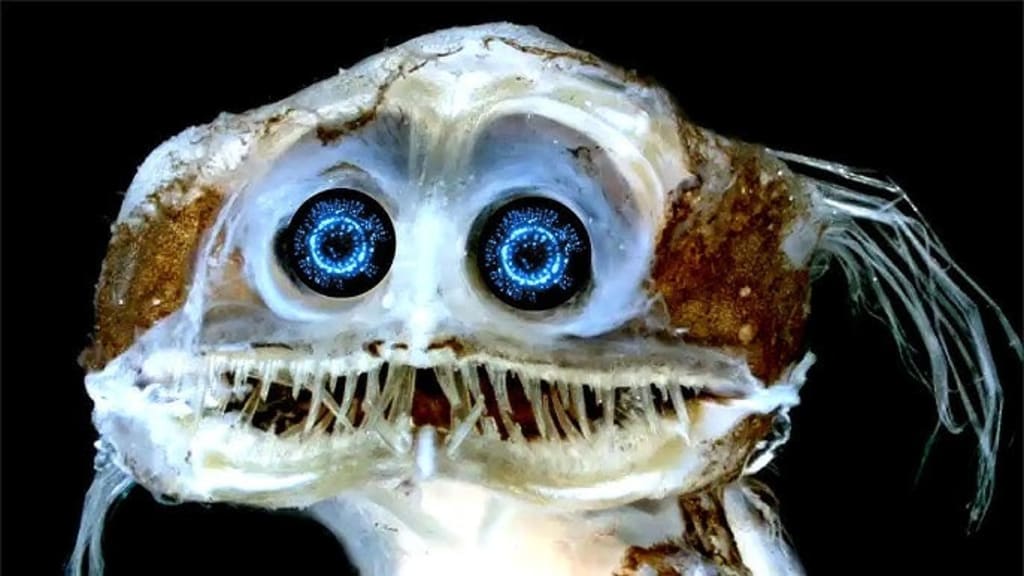
It is an unknown world thousands of meters below the surface of the oceans, and creatures there live that are grotesque and horrific to the human mind. Grotesque forms sometimes form the basis for simultaneous fascination and horror. Do you ever wonder why such creatures are "ugly" by conventional standards? Behind this fascinating play of evolutionary adaptation, environmental pressures, and survival strategies lie many reasons.
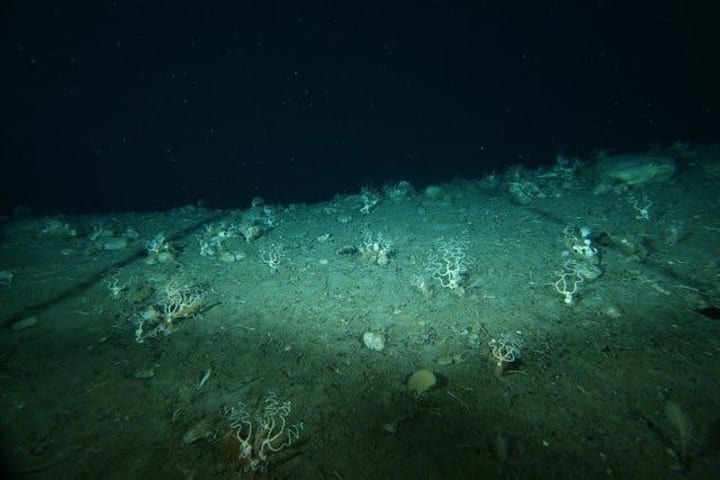
The Dark Abyss: A World Without Light
A World in Darkness Deep sea is very hostile; it is dark, cold, and very deep with pressures that could crush anything which sinks there. Sunlight does not penetrate any deeper than 200 meters; hence, animals living in this world have learned to survive there in perpetual darkness. It has a great influence on their look as well. Some deep-sea animals, for example, the giant squid, possess enormous eyes to detect the faintest glimmer of bioluminescence. Most animals seem translucent or milky white just because pigmentation is not needed in a world where no light is present. The bleak, alien appearance is merely "unsightly" because it is utterly beyond our everyday experience at the surface.

Survival of the Fiercest: Adaptations to Predation
In the deep-sea where food is rarely available, survival often hinges on predatory efficiency. Many of the sea creatures of deep waters have gruesome features, in which they maximized chances by catching prey by such features evolved. For example, the gulper eel has an oversized mouth for it to gorge up much bigger prey that it catches than that of the gulper itself. The anglerfish has a lit-up bait to attract the unsuspecting prey in the dark. Some have unusual body shapes like elongated eel-like, or other flattened fish shapes that they can swim through water without using much energy to move about. Features like these appear monstrous to us but are efficient enough to get them by and help them live in a somewhat harsh environment.
Bioluminescence: Beauty or Beastly?
There are so many wonderful features of the deep sea, and one of the most wonderful is bioluminescence.
Although it is such a beautiful feature of life in the deep sea, it may not be aesthetically pleasing all the time. Some of the major reasons include attracting prey. The prey comes closer to the location of the dragonfish with light. Other creatures like the lanternfish will apply the methods of counter-illumination to evade predators' detection. The faint light from above will quench their glow and predators will never detect them. Other bioluminescent flash mating patterns for mates or scares away competitors. The organisms look pretty strange and terrifying to naked human vision so they appear "repulsive".

Extreme Environment, Extreme Evolution
Living here is extreme: the deep-sea environment tests extreme conditions of life. Thus, most had to evolve themselves to be as grotesque, but very important for survival purposes. Given these pressures, it is its very "ugly" gelatinous body structure that will best represent an adaptive variation in an organism with extreme pressure being put on its survival. A slow metabolism combined with the minimum amount of muscle mass has occurred among most sea dwellers due to an inadequate food supply. Many species in the same family sift out food and filter through sea bed sediments around themselves to make themselves more distinctive shapes.

Evolutionary Isolation: Nature's Experiments
Nature experiments through the deepest sea as an isolated ecosystem on earth. Such isolation from human civilization causes evolution to take quite unusual turns; and unique species, sometimes of bizarre appearance, emanate from these experiments. Features appear in small, isolated populations which would make them strange or unappealing to our sensibilities. Some species retain such things that provide little purpose, but add up to their alien look. It works instead to create an experimental "lab" in which nature tests different forms and functional features that are improbable to appear where the conditions do not reach those extremes.
What Is the Ugliest-Looking Sea Creature?
Most of these deep-sea animals are only strange, but the goblin shark is probably as grotesque an animal one could ever experience in the seas. Boasting with its so-called long snout full of electro-rectors that protrude before the jaw as in snatching prey with outwardly extended movement, it reveals all pinkish and translucent skins beside its bizarre features in a peculiar form that hardly can be identified as a thing different from any of the rest among other deep creature products. This includes a vampire squid, with eyes that glow like red hot embers, and webbed tentacles to swim through dark waters. Then, there is the barreleye fish which has a head through which one can see its upward-facing eyes.

A Question of Perspective: Beauty Is in the Eye of the Beholder
Our concept of beauty is related to the well-known symmetry properties but is less represented in the animals of deep-sea. Actually, "beauty" highly depends on one's judgment rather than by the standards of human beings. On the biological front, the changes are marvellous fantastic solutions by which their own surroundings impose constraints on them
Mass media roles for changing people's perceptions:
The media will exaggerate on how "beastly" the deep sea creatures look in the movies and documentaries and on social media. Attention-grabbing and maintaining the interest are indeed what such an exaggeration will do; however, they misrepresent what such creatures truly look like as their forms are marvelous creations of evolution that should be appreciated, not ridiculed.

Conservation and Awareness
Deep sea creatures are, in fact, sensitive ecosystems that we consider indispensable in maintaining a healthy planet. All of us tend to misconstrue or frown at the sight of such creatures and say they look ugly. But knowing how their unique adaptations have evolved for the deep and the ecology helps bring out nature within oneself.
Conclusion
Sure, not the least "ugly" pretty to our eyes, are deep-sea creatures an example of the greatness of evolution and adaptation. All those odd features make sense in one of Earth's harshest environments. Once one appreciates why the forms are this way, we shift from a space of fear and ridicule to a place of awe and respect. Indeed, probably, the deep sea is one of the last frontiers of our time in terms of exploration, and reminds us of how a universe with this power to create or renew does not cease to surprise us.
About the Creator
Keep reading
More stories from soman Goswami and writers in Feast and other communities.
Top 6 mysterious and creepy YouTube channels: that will shocked You
The internet is full of weird, interesting, and mysterious content. But YouTube has the prize for intrigue. In its years, this platform has become a hotbed for some of the most mysterious channels, making its viewers scratch their heads for answers. From cryptic messages to scary video edits, these six mysterious YouTube channels are guaranteed to fuel your curiosity. Let's enter the world of the unexplained.
By soman Goswamiabout a year ago in Feast
Astragalus: An Ornamental, Supportive, and Culinary Herb
Astragalus Root/Milkvetch Astragalus is a popular remedy for various ailments today. Commonly found in health food stores and herbal shops in the form of tinctures, grounded encapsulated powders, or as part of an herbal infusion, or sometimes added to teas, astragalus usually makes the list for its purported immune-system and energy-supporting benefits.
By J. Chauncey5 days ago in Feast




Comments
There are no comments for this story
Be the first to respond and start the conversation.