
The Power of Infographic Design
Transforming Data into Captivating Visual Stories


In the digital age, where our screens are bombarded with endless streams of information, catching and holding attention has become a challenge. Enter infographic design—the perfect marriage of data and visuals that transforms dry facts into captivating narratives. Whether you’re a marketer, educator, or business professional, infographics provide an innovative way to present complex information in an engaging, digestible format.
In this blog, we’ll explore the enduring appeal of infographic design, why it’s a must-have tool in today’s communication arsenal, and how you can create unique, customized infographics that stand out.
Why Infographics Are More Relevant Than Ever
The human brain craves visuals. Studies reveal that visuals are processed 60,000 times faster than text, and people tend to retain 65% of information presented visually, compared to just 10-20% of text alone.
With the average person’s attention span shrinking to just 8 seconds, infographics have become the go-to solution for capturing interest and conveying essential information at a glance. But their appeal doesn’t stop there:
1. Versatility Across Industries
From education to marketing and healthcare to technology, infographics can simplify and illustrate virtually any topic. Businesses use them to explain processes, showcase statistics, or highlight the benefits of a product. Educators rely on them to break down complicated concepts for students. Nonprofits utilize infographics to raise awareness about critical issues.
2. Boosting Engagement and Shareability
Infographics are naturally designed to be visually appealing and easy to share. Platforms like Instagram, Pinterest, and LinkedIn thrive on visual content, making infographics a top choice for spreading ideas. A well-designed infographic can generate 94% more engagement than text-based content alone.
3. SEO and Brand Visibility
When optimized with relevant keywords, infographics can boost your website's search engine rankings. Their shareability increases backlinks, driving more traffic and improving your site’s domain authority.
4. Data Made Digestible
Gone are the days when data-heavy reports bored audiences to tears. Infographics condense complex statistics into visually striking, easy-to-understand formats, making data not just accessible but compelling.
Elements of a Captivating Infographic
So, what makes a good infographic stand out in a sea of digital content? It boils down to a combination of thoughtful design and strategic messaging. Let’s break it down:
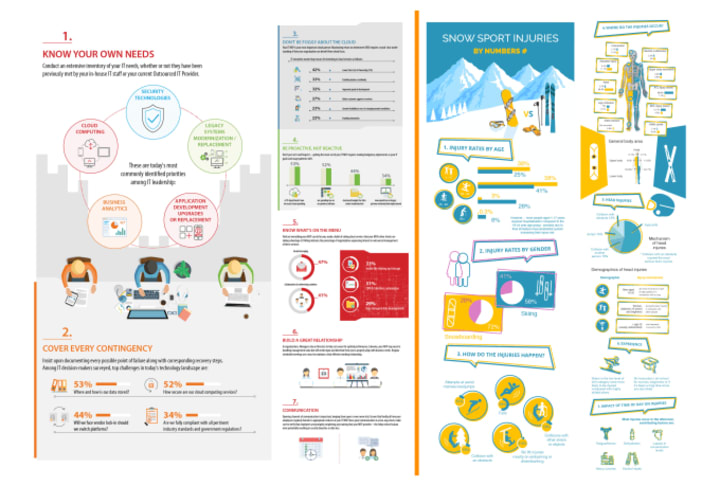
1. A Clear Objective
Before diving into design, ask yourself: What’s the purpose of this infographic? Are you trying to educate, entertain, or persuade? A clear goal will guide the structure and content of your infographic.
2. Eye-Catching Visuals
Color Palette: Choose a color scheme that aligns with your brand or the infographics theme. Use contrasting colors to highlight key information.
Typography: Use clean, legible fonts. Limit your infographic to 2-3 font styles to maintain consistency.
Icons and Illustrations: Visual elements like icons, charts, and graphs not only break up text but also enhance understanding.
3. Data Storytelling
People love stories. Arrange your data in a way that tells a story with a clear beginning, middle, and end. Start with an intriguing statistic or question, present supporting information, and conclude with actionable insights.
4. Brevity and Clarity
Less is more. Infographics are not the place for long paragraphs. Stick to concise phrases and bullet points, using visuals to fill in the gaps.
5. Customization
A generic template won’t cut it if you want to stand out. Customize your infographic to align with your brand’s voice, audience, and goals. Use unique design elements that resonate with your target audience.
The Process: How to Create Unique Infographics
Creating an infographic may seem daunting, but breaking it into steps can make the process seamless and enjoyable:
Step 1: Define Your Audience
Who are you creating this infographic for? Are they professionals, students, or casual readers? Understanding your audience will dictate the tone, style, and complexity of your infographic.
Step 2: Gather Your Data
Data is the backbone of any infographic. Use reliable sources like industry reports, academic studies, or surveys. Make sure your data is up-to-date and relevant.

Step 3: Choose a Template or Start from Scratch
While pre-made templates are convenient, starting from scratch allows for full customization. This ensures your infographic is one-of-a-kind and tailored to your message.
Step 4: Design with Intention
Use design tools like Canva, Adobe Illustrator, or Visme to bring your vision to life. Focus on balance—don’t overcrowd your design with too many elements. White space is your friend!
Step 5: Test and Revise
Before publishing, test your infographic with a small audience. Are the visuals clear? Is the information easy to understand? Gather feedback and make revisions as needed.
Trends in Infographic Design
The world of infographic design is constantly evolving. To keep your designs fresh and relevant, consider incorporating these trends:
1. Interactive Infographics
Interactive elements like clickable hotspots, animations, and expandable sections make infographics more engaging and dynamic.
2. Minimalism with Impact

Simplicity is key. Minimalist designs focus on clean lines, bold typography, and selective use of color to emphasize key points.
3. Bold Data Visualizations
Infographics are moving beyond basic pie charts. Creative data visualizations—such as radial bar charts or pictograms—add a wow factor while maintaining clarity.
4. Micro Content Infographics
Instead of a long, comprehensive infographic, microcontent infographics focus on a single topic or statistic. These are perfect for social media platforms where brevity is valued.
Why Customized Infographics Are Game-Changers
In a digital world filled with cookie-cutter content, customization is your secret weapon. A unique, personalized infographic:
Strengthens Your Brand: Incorporating your brand colors, fonts, and logos creates a cohesive identity.
Speaks Directly to Your Audience: Tailoring your infographic to address your audience’s specific needs or pain points fosters a deeper connection.
Stands Out from the Crowd: Original designs catch the eye and leave a lasting impression, making your content memorable.
Conclusion: The Future of Infographic Design
Infographic design isn’t just a trend; it’s a powerful communication tool that’s here to stay. By blending creativity with functionality, infographics make even the most complex ideas accessible, engaging, and memorable.
Whether you’re crafting a compelling case study, simplifying a process, or sharing key statistics, a well-designed infographic can elevate your content and amplify your message.
In a world where attention spans are fleeting, infographics cut through the noise. So, embrace the power of design, get creative, and start transforming your ideas into stunning visual stories.
Ready to make your mark with unique, customized infographics? Let your creativity shine and watch your audience grow!
About the Creator
Direct2u
Marketer & business promoter with expertise in driving growth for products and services. Specializing in digital marketing, brand strategy, and tailored campaigns that boost visibility, engage and deliver measurable results Click Link!!
Kratom Powder Benefits: What Research and Experts Actually Say
Interest in herbal products has grown rapidly over the last decade. People now explore natural botanicals for different wellness routines, and kratom often appears in that conversation. Many online searches focus on kratom powder benefits, but the topic requires careful discussion.
By thomas oshobo4 days ago in Feast




Comments
There are no comments for this story
Be the first to respond and start the conversation.